How to Clean a Baby High Chair
This post contains affiliate links. If you buy through them, we may earn a small commission at no extra cost to you.Learn more.
Learning how to clean a baby high chair is really two habits: a quick wipe after every meal, and a deeper clean about once a week. Get the daily wipe down to under a minute and the weekly clean stays easy. Skip it for a few days and food dries into the cracks, and then it’s a real job. We’ve fed a baby in a high chair daily for a year and a half, so this is simply how we do it, mild soap and water and not much else.
One quick note. Whatever your chair is called, a high chair or a feeding chair, the steps are the same. And before you put any part in the dishwasher or soak the straps, check the manual for your chair, because a few parts aren’t made for that.
What you need
Nothing fancy, and nothing harsh. Around a baby, mild dish soap and warm water does almost everything, so you can skip the strong sprays.
- Warm water and a little dish soap
- A soft cloth or sponge
- An old toothbrush for the buckle and the tight gaps
- White vinegar, only for stubborn dried-on mess or smells
- A dishwasher, if your chair’s tray is dishwasher-safe
The daily wipe (under a minute)
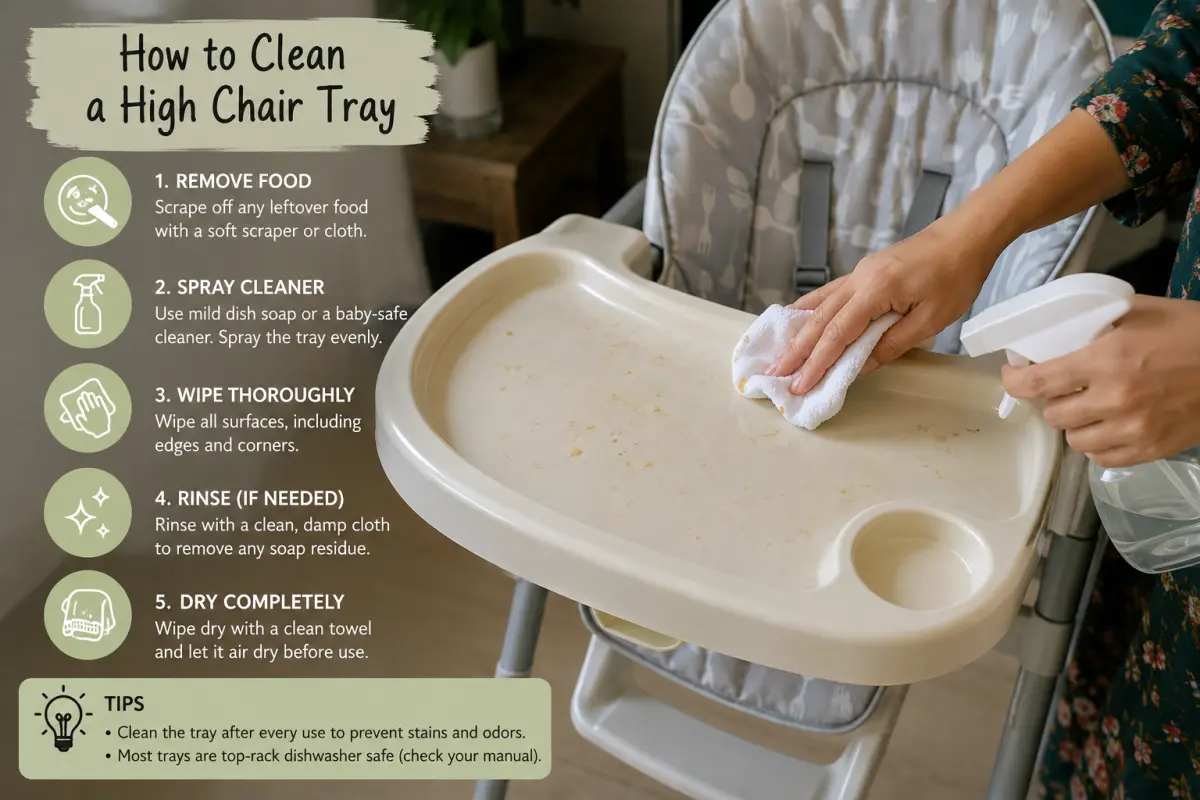
The single best thing you can do is wipe the tray and seat right after the meal, while the food is still soft. Warm water and a soapy cloth, a quick pass over the tray, the seat, and anywhere that got splattered, and you’re done. This one habit is what keeps the weekly clean from ever becoming a chore, because nothing gets the chance to dry on and harden.
The weekly deeper clean
Once a week, give it a proper going-over. It takes a few minutes and resets the whole chair.
Take the tray off and wash it. If it’s dishwasher-safe, that’s the easy route, but check your manual first, because not all trays are. If yours isn’t, warm soapy water and a cloth does the same job by hand.
Take off the seat pad if it comes off, and clean it the way it’s meant to be cleaned. A wipe-clean pad just needs a soapy wipe. A fabric pad usually comes off and goes in the washing machine, so check the label and let it dry fully before it goes back on.
Wipe down the frame, the legs, and the footrest, since splatter lands there too and gets sticky if you leave it.
Getting into the cracks and gaps
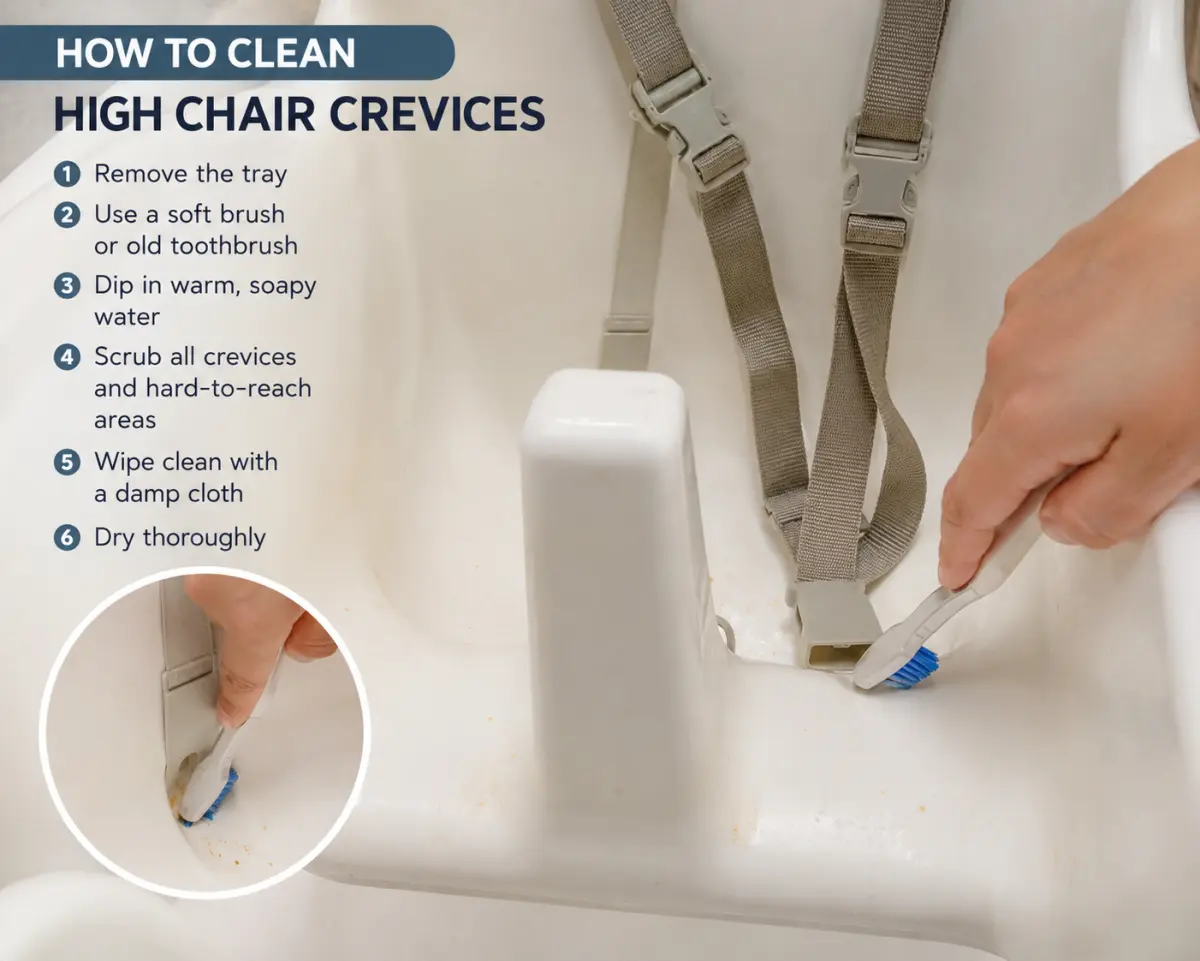
This is where food really hides, and where a quick wipe never reaches: the gap between the seat and the frame, the edges of the tray, and the slots the straps pass through. An old toothbrush and a bit of soapy water is the trick. Work it into the gaps, then wipe away what you loosen. Doing this once a week stops the slow build-up that makes a chair look old and grubby before its time.
Cleaning the harness and straps
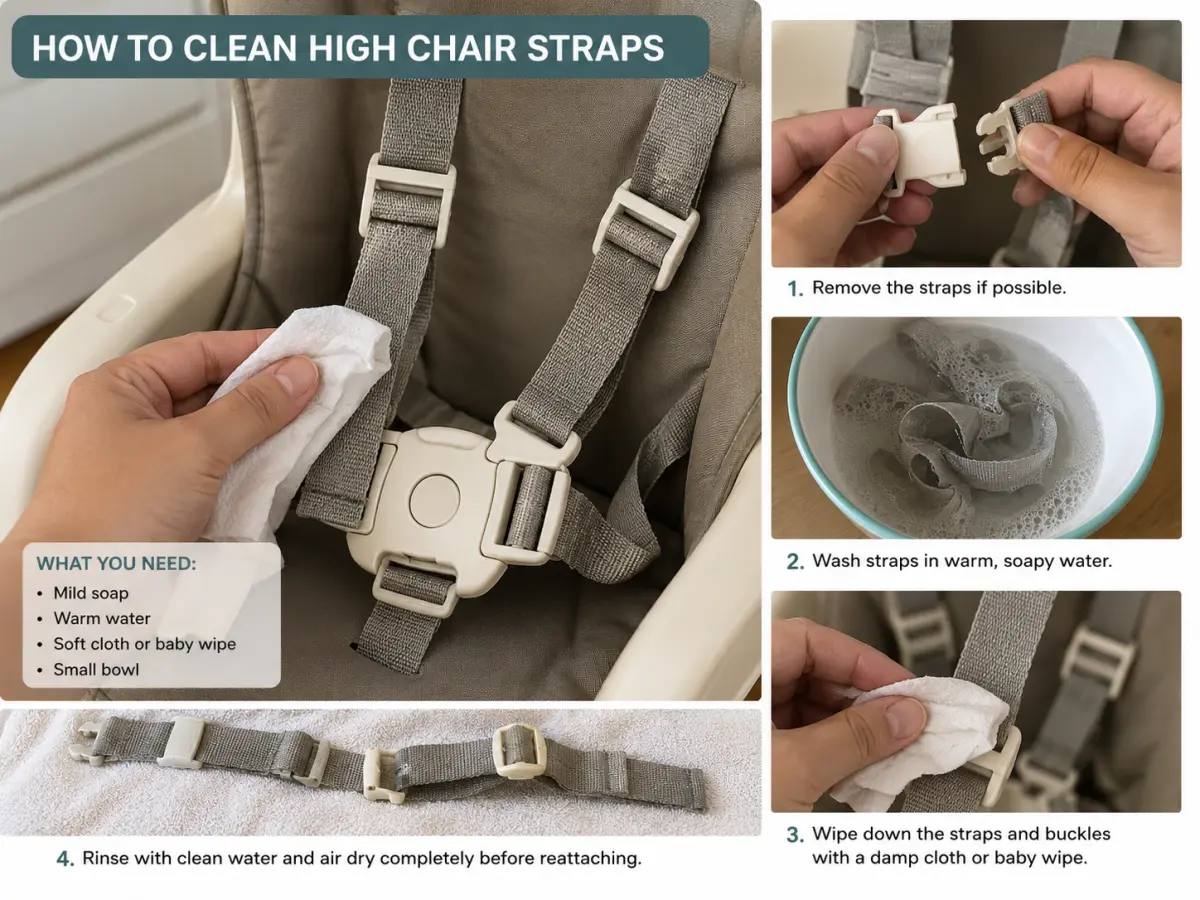
The straps are the part everyone forgets and the part that gets the grimmest, because food packs into the buckle and dries there. Wipe the straps down with warm soapy water, and use the toothbrush on the buckle itself. For a stubborn smell or dried-on mess, let the straps soak in warm soapy water for a bit, or use a little white vinegar mixed with water, then rinse and let them air dry all the way through before the next meal.
One thing to check first: some straps come off for washing and some are not meant to, so look at your manual before you remove or fully soak them.
Dried-on food and stains
If you missed a few days and the food has gone hard, don’t scrape at it. Lay a warm, wet, soapy cloth over the spot for a few minutes to soften it first, then it wipes off easily. White vinegar diluted with water helps on stubborn marks and smells. Bright foods like tomato and carrot can leave a faint stain on a light seat, and that is more about the food than the chair, so don’t scrub hard enough to damage the surface chasing it.
How often, in short
A wipe after every meal, and a deeper clean once a week. That’s it. The daily wipe is the part that matters most, because it’s what keeps the weekly clean quick and keeps the chair looking good for years instead of months.
The bottom line
Cleaning a baby high chair is easy if you never let it get bad: wipe after meals, deep-clean weekly, use an old toothbrush on the straps and gaps, and keep to mild soap and water. How easy a chair is to clean also depends a lot on the chair itself, which is why we treat it as a top thing to look for in our high chair buying guide. If you’re still choosing one, see which high chair we actually use. The easiest tray of the three we own is the one in our Graco high chair review, where a lift-off insert means only the dirty part goes to the sink.
Frequently asked questions
How do you clean a baby high chair?
For everyday mess, wipe the tray and seat with warm water and a little dish soap right after the meal, while it's still soft. Once a week, do a deeper clean: take the tray off and wash it (many go in the dishwasher, but check your manual), take off the seat pad and wash it, and use an old toothbrush to get food out of the straps and the gaps around the seat. Mild soap and water is all you need.
How often should you clean a high chair?
A quick wipe after every meal, and a deeper clean about once a week. The daily wipe is what stops food drying into the crevices, and it takes under a minute. Skip it for a few days and the weekly clean turns into a real job, so the wipe is worth the habit.
Can you put a high chair tray in the dishwasher?
Often yes, and it's the easiest way to clean one, but not always. Check the manual for your chair before you do, because some trays and inserts aren't dishwasher-safe. If yours isn't, warm soapy water and a cloth does the same job by hand.
How do you clean high chair straps and get the smell out?
Wipe them down with warm soapy water, and use an old toothbrush on the buckle where food packs in. For a stubborn smell or dried-on mess, let the straps soak in warm soapy water first, or use a little diluted white vinegar, then rinse and air dry fully. Check your manual before removing or soaking straps, since some aren't meant to come off.