High Chair Buying Guide: What to Look For
This post contains affiliate links. If you buy through them, we may earn a small commission at no extra cost to you.Learn more.
This high chair buying guide is about what to look for, one feature at a time, before you spend any money. Whether you call it a high chair or a feeding chair, it’s the same product, and the same few things decide whether you will be glad you bought it or quietly annoyed by it every day. This is not brands, and not a ranking, just what matters. We own three high chairs and have used one of them daily for a year and a half, and this is the checklist we wish we’d had.
One honest note first. We review the gear. Whether your baby is ready for a high chair, and how to use one safely, are questions for your pediatrician and the AAP, not for us, and we link their guidance where it matters. What we can tell you is what to check for in a shop or a product photo, because we have lived with the results.
Build quality and durability
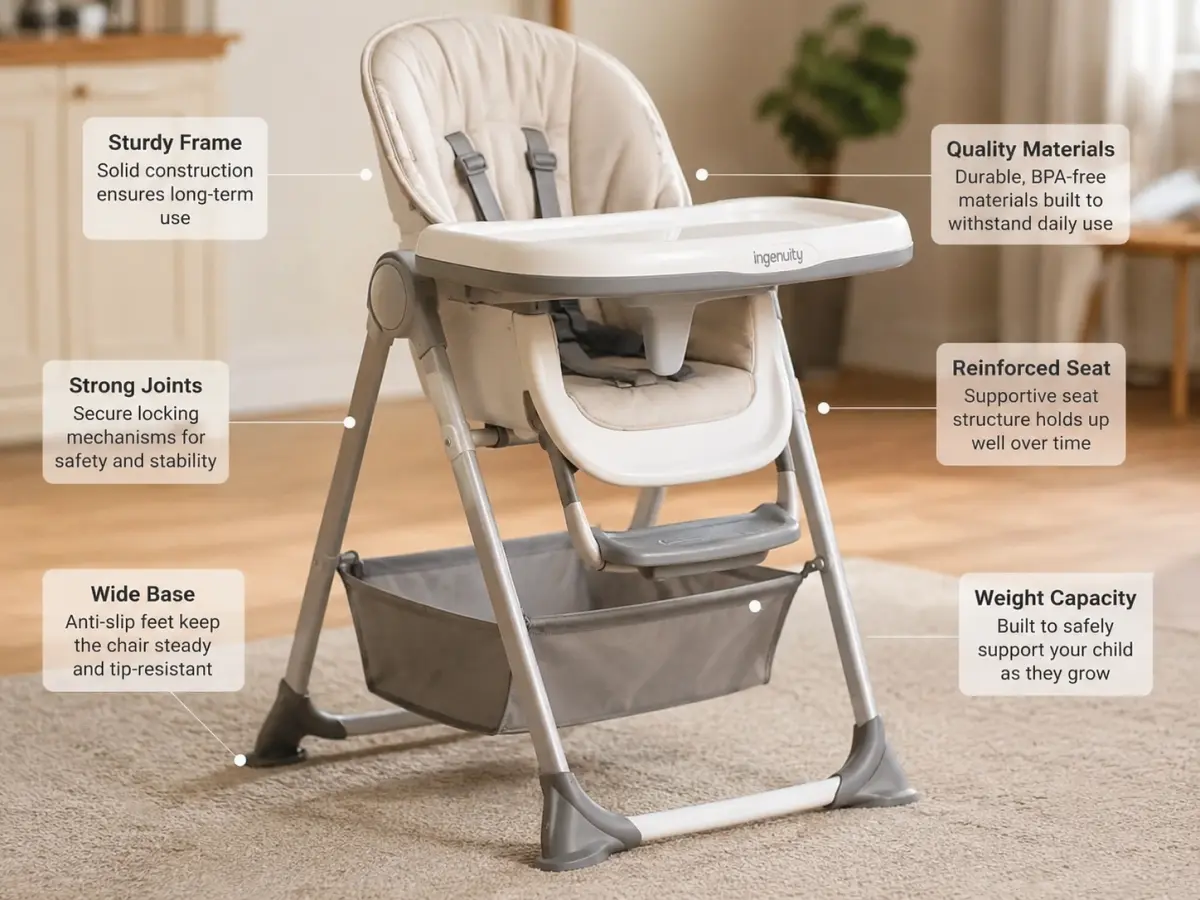
This is where a good chair and a cheap-feeling one really show the difference, and it is the hardest thing to tell from a photo online. What you want is a frame that does not bend when you press on it, joints that feel solid rather than just clipped together, and a seat that does not creak or sag when weight goes on it. A high chair has to handle two years of a child leaning and pushing on it, so a firm, stiff chair now is what saves you from a wobbly one later.
We can’t give you a lab test, only what we’ve handled across three chairs. The best-built of ours feels the most solid in the frame and has the least movement in the joints, and it is the one we would still trust to stay sturdy after the most use. Cheaper chairs show it first in the joints and the seat back, so press on those before you buy.
Materials
The materials decide two things: how long the chair lasts, and how much of your life you spend cleaning it. For the seat, a smooth wipe-clean pad (often sold as PU) is the easiest to live with, because food comes right off it. Fabric pads look cosier but soak up everything, so if you go that way, make sure the pad comes off fully and goes in the washing machine, not just a sponge wipe.
For the frame, solid plastic with a metal core lasts well and stays light. What you want to avoid is anything that feels hollow or thin where the weight sits. A wipe-clean pad on a firm frame is the mix we would look for, and it is what our sturdiest chair uses.
If you’re torn between the two main materials, we go deeper on that choice in wooden vs. plastic high chairs, including cost, cleaning, and how long each type lasts.
The harness
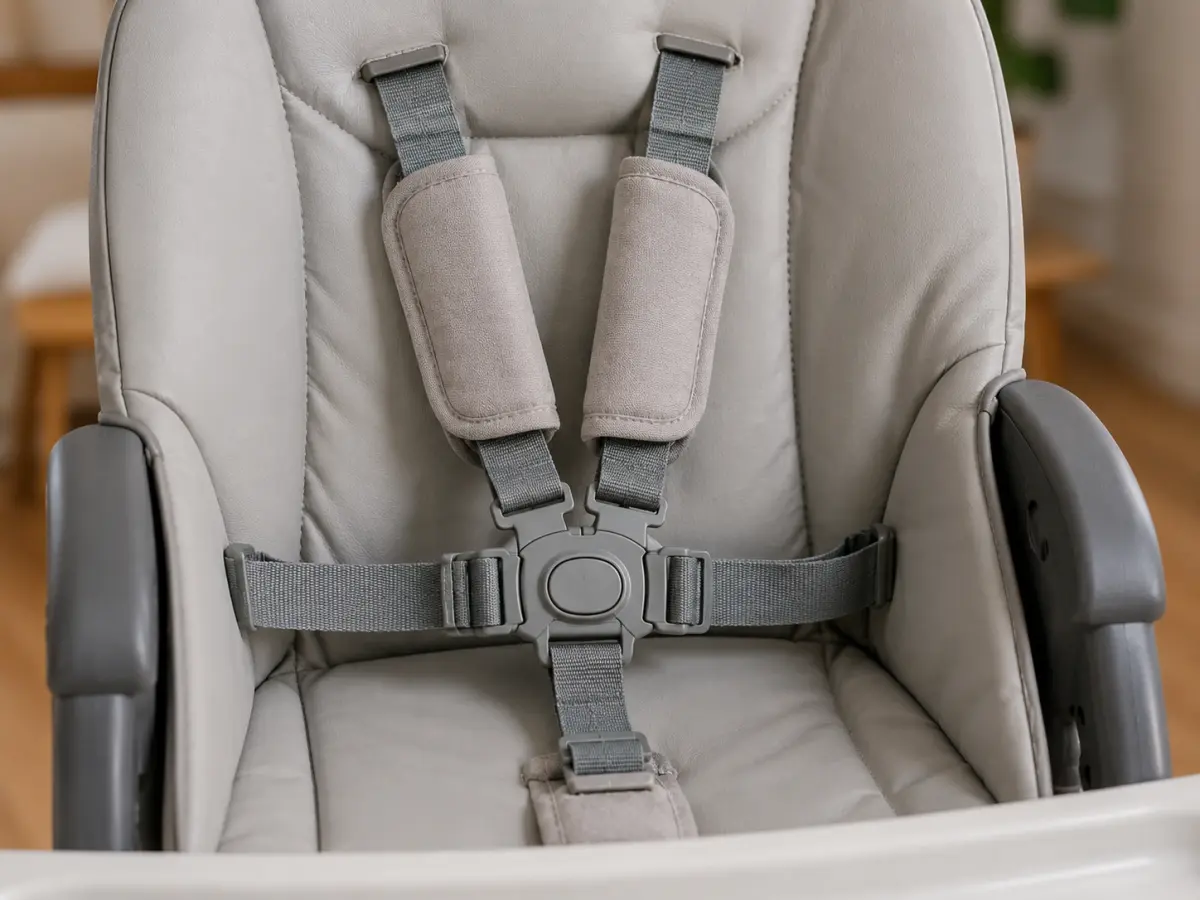
Beyond the safety of it, which is the AAP’s job and not ours, the harness is what keeps a wriggly, easily distracted baby in the seat long enough to actually eat. A good one holds firmly at the shoulders and hips, has a crotch strap so the baby can’t slide down or climb out, and adjusts as your baby grows. A weak or fiddly harness is the difference between a calm meal and a wrestling match, so look closely at how the straps clip in and adjust before you buy.
A lot of parents want a 5-point harness, which holds both shoulders, both hips and the crotch, rather than a 3-point that holds only the waist and crotch. If that matters to you, it is worth checking the chair has one before you buy.
How easy it is to clean
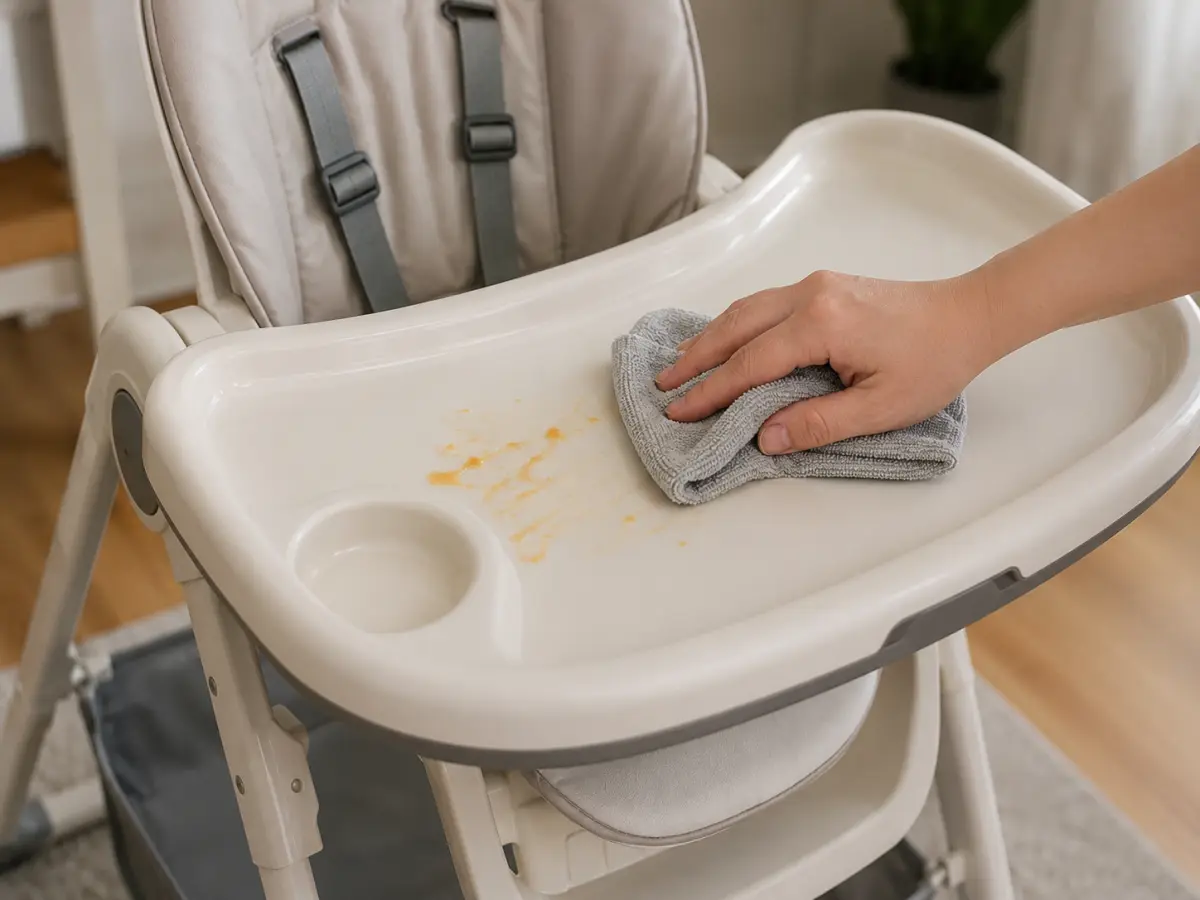
This is the most overlooked thing to look for, and the one you will feel every day. A high chair gets covered in food daily, so what saves you is a tray you can take off and put in the dishwasher, a seat pad that comes off and washes, and as few deep cracks and fabric seams as possible for food to hide in. When you look at a chair, look right at the spots where dried food would collect: the harness slots, the gap between the seat and the frame, the edges of the tray. Fewer places for food to hide is worth more than any number of extra features. Once you own one, our guide on how to clean a baby high chair walks through the daily wipe and the weekly deep clean.
Stability and the base
A chair that feels like it could tip is a chair you never fully relax around. Look for a wide base over a slim one that tucks away neatly, because the wide base is what keeps the chair down when a toddler pushes off it. On the safety side, which is theirs and not ours, the AAP says to keep a high chair away from counters and tables, because a child can push off them and tip the chair over. A stable base is something to look for, not skip.
Recline and height settings
Two settings are worth having. Recline lets a younger baby use the chair sooner, sitting back a little, and a height setting lets the chair line up with your dining table, your kitchen counter, or a low table. A chair with a few recline and height settings fits more of your home, and more of your baby’s first two years, than a fixed one. More than about three of each is not worth chasing, so don’t pay extra just for a higher number.
Folding and storage
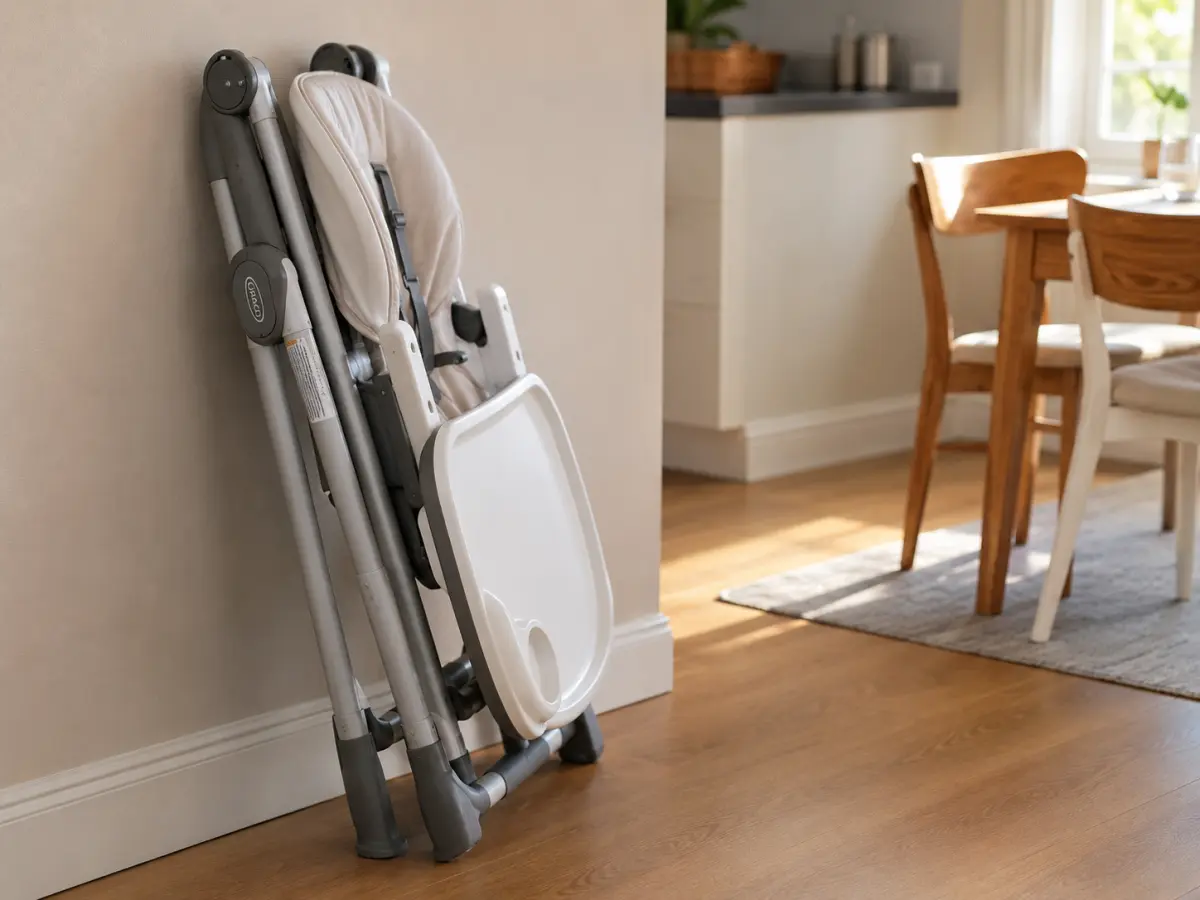
Be honest about whether you really need this, because it is the feature people pay too much for. For everyday use at home, being portable barely matters, and a heavier, sturdier chair is usually the better buy. What matters more is storage: check whether the chair folds flat or just folds narrow, and whether it stands on its own once folded, because “compact fold” can still mean a chair you lean against a wall instead of tucking away. Wheels help you move a big chair from room to room. The compact chairs we own, ranked on exactly this, are in the best high chairs for small spaces.
If you truly travel or eat out a lot, don’t try to make a big chair portable. A light hook-on seat that clamps to a table does that job better, as a second seat rather than your main one.
The safety features to check, and where we stop
You can look at safety features while buying without giving safety advice, so here is the short list to check on the chair itself: a working harness with a crotch strap, a safety label such as JPMA, and a wide, stable base.
Where we stop is how you use it. How to strap a baby in, when they are ready, and where to put the chair have real answers from people who are qualified to give them. The AAP’s high chair safety tips cover always using the straps, never leaving a child alone in the chair, keeping it away from counters and tables, and never letting a child stand in it. Read those, follow the manual that comes with your chair, and ask your pediatrician about timing.
What we’d skip
Features that sound good in a listing and then never get used. We bought a chair partly for a rocking mode our baby turned out not to like, so we paid for something that mostly sits idle. Every extra mode is also one more part that can break or trap food. The simplest chair in our house is the one we reach for most, and that is not by chance.
The bottom line
Buy for a solid, well-built chair, a harness with a crotch strap that really holds, and a tray and seat that are easy to clean. Treat a stable base as a must, recline and height settings as really useful, and folding as something you only pay for if your home or your travel truly needs it.
When you’re ready to pick a specific one, we have put a baby in three of them for months and written up which high chair we actually use and why. If a compact chair is what your kitchen needs, the one we bought for that is covered in our Graco high chair review, and all three compact chairs we own are compared in the best high chairs for small spaces. And if you’re still putting the whole feeding corner together, the registry checklist has the short list of what earns its place.
Frequently asked questions
What should you look for when buying a high chair?
In the order it matters day to day: a solid, well-built chair, a harness that really holds your baby, a tray and seat that are easy to clean, a wide base that won't tip, and enough recline and height settings to fit your table. Folding and extra modes only matter if your home or your travel plans truly need them.
What material is best for a high chair?
For the seat, a smooth wipe-clean pad (often called PU) is easier to live with than fabric, because food comes straight off it. Fabric can work too, as long as it comes off fully and goes in the washing machine. For the frame, look for solid joints that don't bend when you press on them. We can't give you a lab test, only what we've handled: our sturdiest chair has a wipe-clean pad and the least wobble.
Is a 5-point harness necessary on a high chair?
A lot of parents want one. A 5-point harness holds both shoulders, both hips and the crotch, which stops a wriggly baby sliding down or climbing out. A 3-point holds just the waist and crotch and is still fine for a younger baby. The AAP says to always use the straps, including the crotch strap, whenever a child is in the chair. Follow the AAP and the manual on safe use.
How important is it that a high chair folds or is portable?
It depends on your kitchen. If space is tight, check how it folds, flat or just narrow, and whether it stands on its own once folded. If you travel or eat out a lot, a light hook-on seat is a better answer than trying to make a big chair portable. For everyday use at home, being portable barely matters.