When can a baby start using a high chair?
This post contains affiliate links. If you buy through them, we may earn a small commission at no extra cost to you.Learn more.
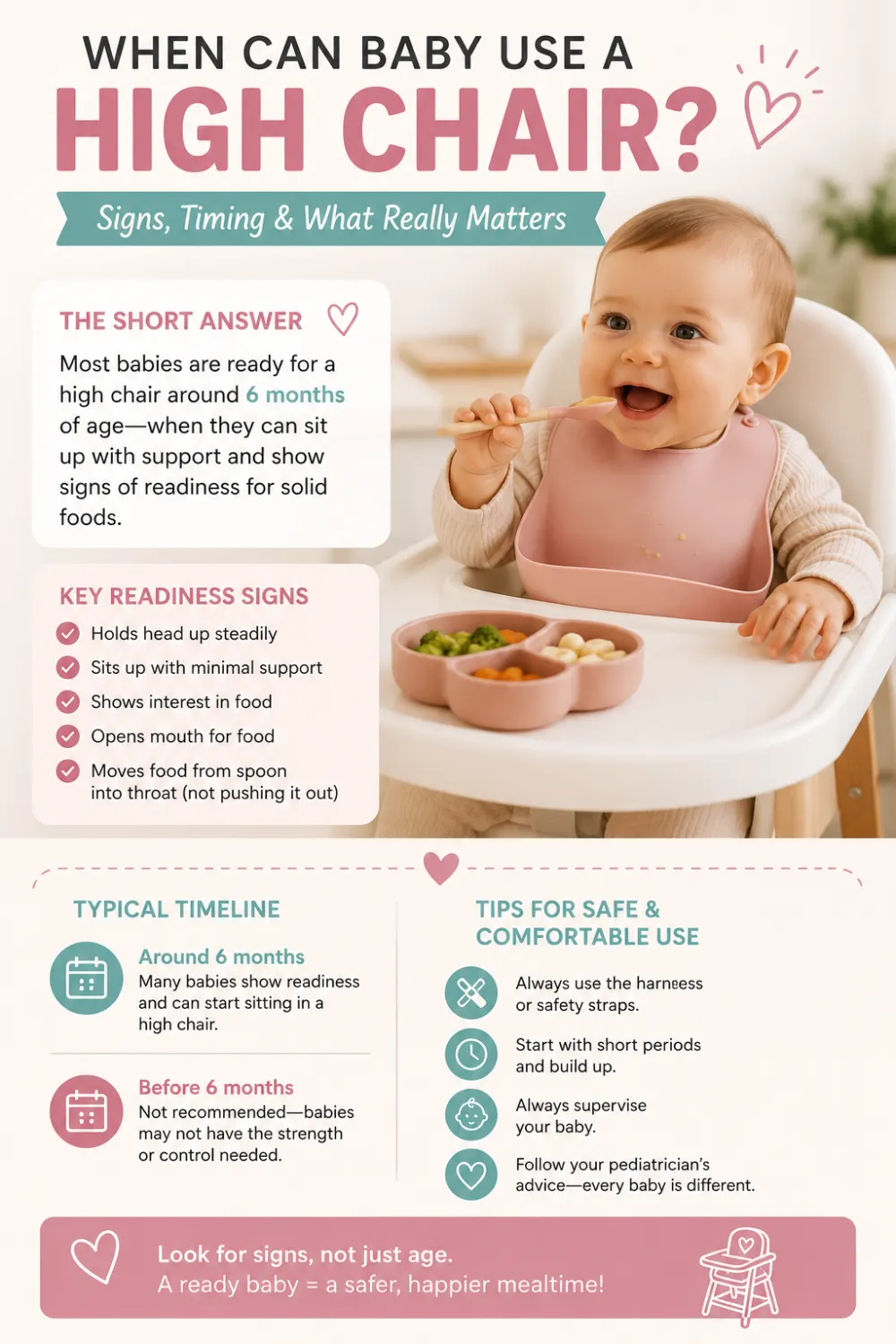
The short answer, if you don’t read another word: most babies can use a high chair around six months, once they can hold their head steady and sit up with a little support. But when a baby can use a high chair is really a question for your pediatrician, not for a blog, because it depends on your own baby and not on a calendar. What we can do here is lay out what the AAP and the CDC actually say about the timing, and what to check on the chair itself so it is ready when your baby is.
One honest note before we start. We review the gear. We own three high chairs and have used one of them daily for a year and a half, so we can tell you a lot about the chairs. Whether your baby is ready to sit in one, and when to start solid food, are medical questions, and we send you to the people qualified to answer them rather than guessing. Everywhere the timing touches your baby’s development, the link goes to the AAP or the CDC on purpose.
What the AAP and CDC say about the timing
The usual answer of “around six months” is not a number we made up. It tracks the point when most babies start solid food, and a high chair is where that food gets eaten. The American Academy of Pediatrics recommends starting solid foods around 6 months, and the same page lists the signs that a baby is ready, one of which is being able to sit up, with support, and hold their head steady. That head and trunk control is exactly what a high chair asks of a baby, which is why the two arrive together.
The CDC frames it as a range rather than a single day. Its milestone checklists put sitting with a little support earlier, and sitting without support at around 9 months. Both of those are averages across a lot of babies, so your baby landing on either side of them is normal. The point is that a high chair suits a baby who can hold themselves fairly upright, and the harness is there for the part they cannot do yet.
So the honest timeline is: most babies are ready around six months, some a little later, and the only person who can tell you about your baby is your pediatrician. Read the AAP and CDC pages above, then ask at your next check-up.
The readiness signs, and whose job they are
The AAP’s own list of readiness signs for solids doubles as a fair guide to whether a baby suits a high chair, because the same body control drives both. Their page describes a baby who can hold their head up steadily, can sit up with support, leans toward food and opens their mouth for it, and can move food from a spoon into their throat rather than pushing it back out. We are quoting that list, not writing our own, and we link it so you read it from the source.
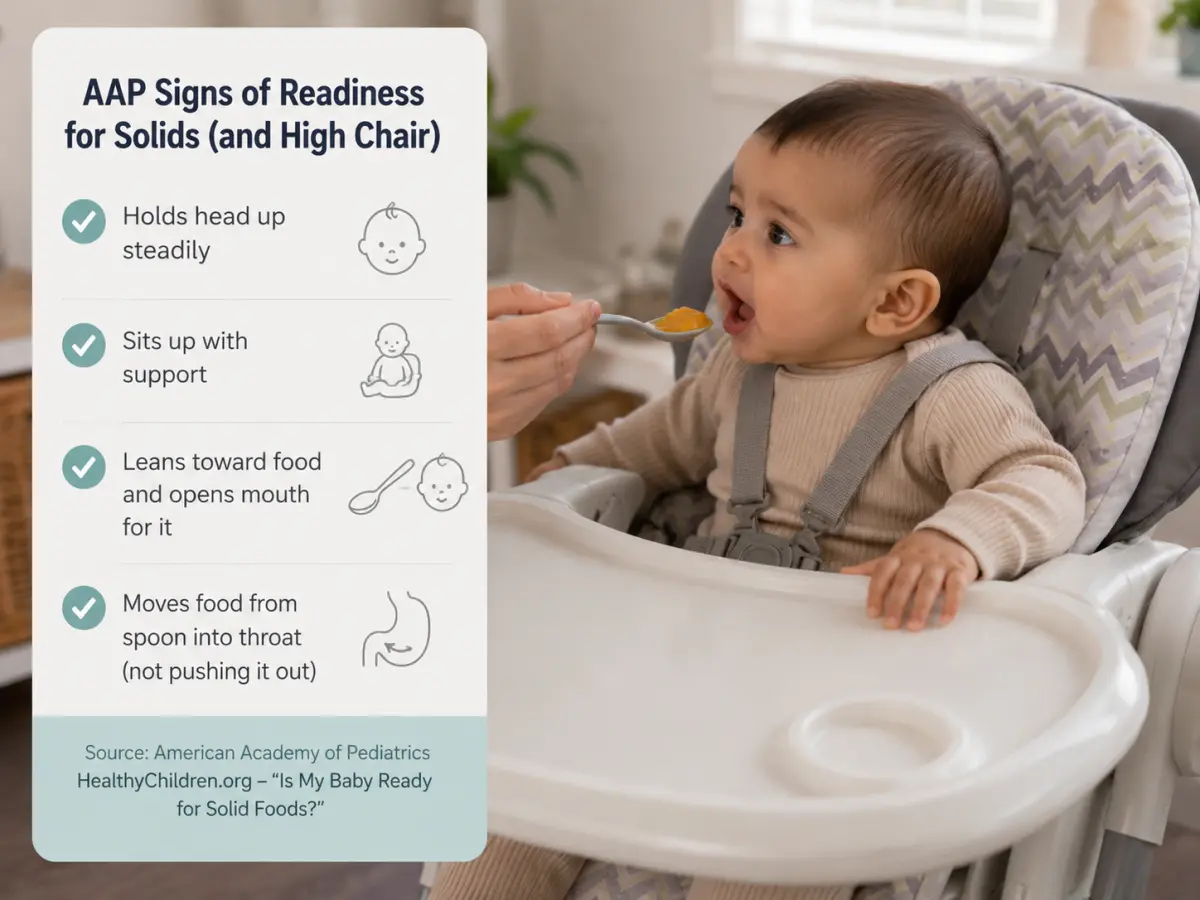
What we will not do is turn that into a checklist you tick off at home to decide your baby is ready. That call belongs to your pediatrician, who can see your baby and knows their history. Follow the manual that ships with your chair and the AAP rather than a blog, including this one. If you want the reasoning behind that line, it is the same one the high chair buying guide draws: we cover the chair, they cover the child.
Can a baby use a high chair before six months?
This is the question we get asked in a roundabout way, usually as “my baby is four months, can I just sit them in it.” The answer is not ours to give in the way people want. Some high chairs recline, so a younger baby can sit back in the seat rather than fully upright, and some list a lower minimum age or weight than others. All of that is set by the chair maker, in the manual, and it is the manual plus your pediatrician that decide whether it applies to your baby.
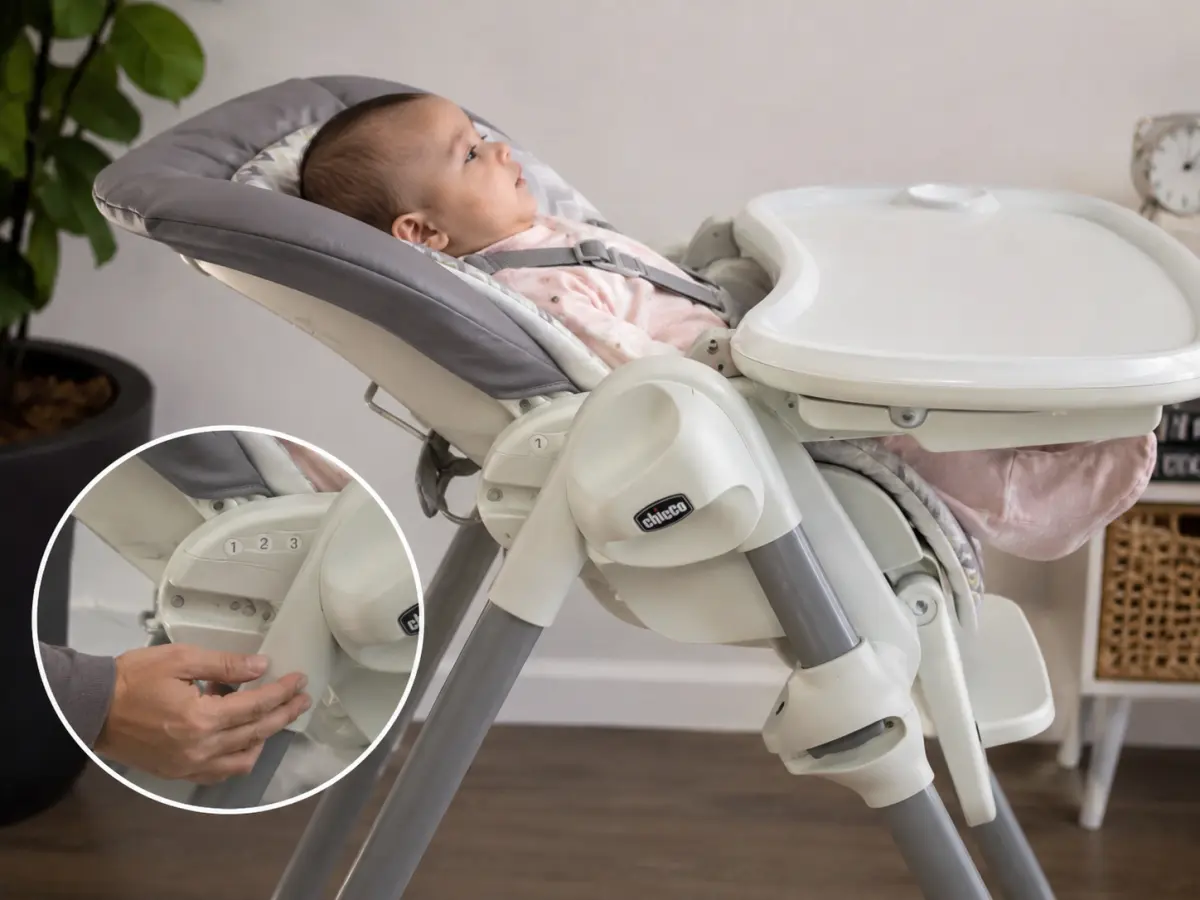
What we can tell you as the people who own the chairs is a practical thing: a reclined feeding chair is a seat, not a green light to start solids early. The recline lets a chair be used sooner as a place to sit near the table, but when your baby actually eats solid food is a separate question with its own answer from the AAP. Keep the two apart in your head. A chair that can recline from four months does not mean a baby should eat from four months.
If you do use a chair early, the manual becomes the rule, not a suggestion. Use the harness every time, including the crotch strap, never leave your baby alone in the chair, and keep it away from counters and tables. Those four come straight from the AAP’s high chair safety tips, and they are worth reading in full before the first meal.
When a baby can sit in a high chair on their own
There is a difference between a baby who can use a high chair with a harness holding them upright, and a baby who can sit in it unaided. The first comes earlier, roughly with solids, because the chair does the supporting. The second is a milestone the CDC puts at around nine months, and even then the harness stays on. A baby sitting well without support is not a reason to stop strapping them in, because the harness is there for the wriggling and the standing up, not just the sitting.
This is the part parents relax on too soon, so it is worth being plain: sitting unaided on the floor and being safe in a raised chair are not the same skill. Follow the manual and the AAP on harness use for as long as your child is in the chair, whatever they can do on the floor.
Getting the chair ready before your baby is
Here is where our side of the job actually helps, because you can have the chair sorted well before the timing question is answered. If you are expecting, or your baby is a few months off six months, that lead time is the easy part to get right. A good chair set up and checked now means that when your pediatrician says go, you are not shopping in a hurry.
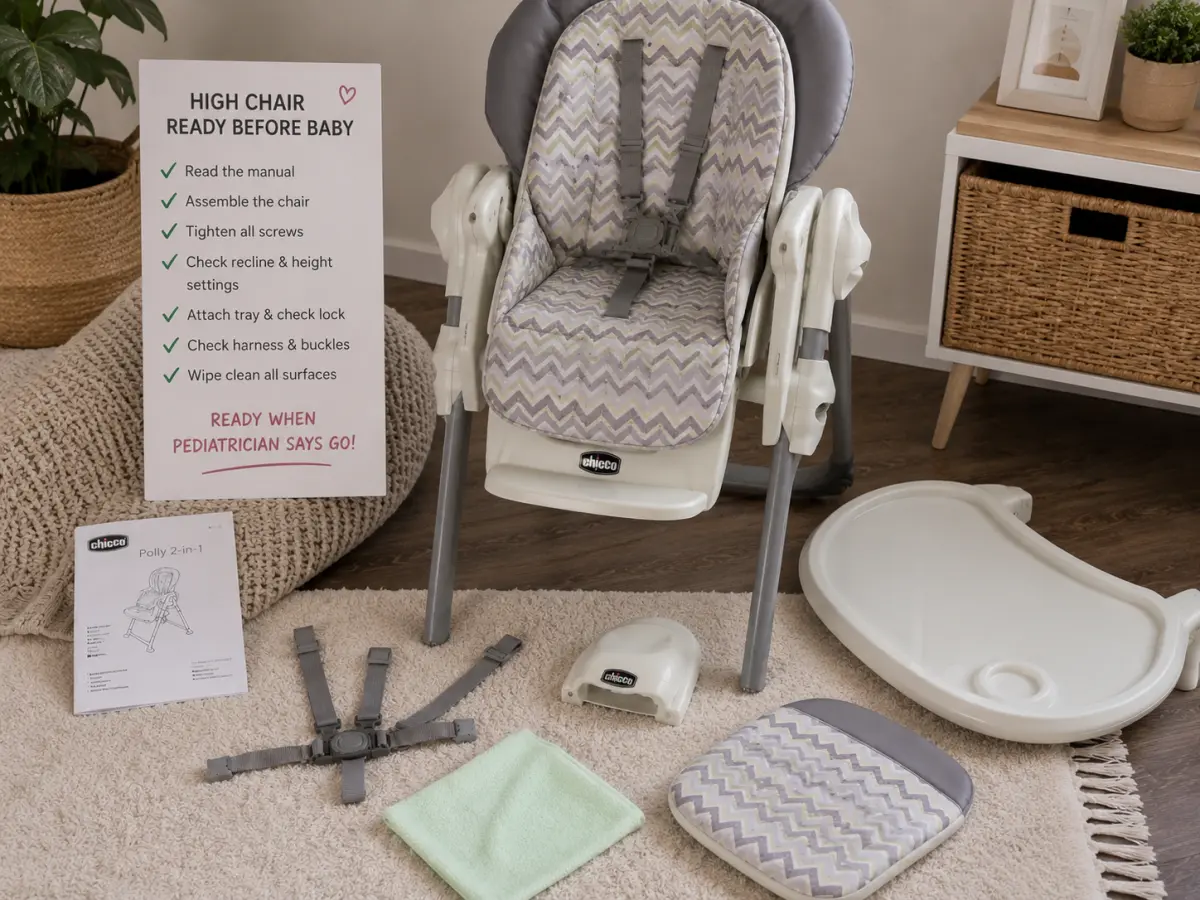
Three things are worth checking while you wait. The harness should hold firmly at the shoulders and hips and have a crotch strap, because that is what will keep a distracted baby in the seat long enough to eat. The seat and tray should wipe clean or come off to wash, because you will do that after every meal and the cracks are where dried food hides. And the base should be wide and stable, so a toddler pushing off it later does not tip it. We go feature by feature through all of that in the high chair buying guide, and if you want to skip the theory, we have put a baby in three chairs for months and written up which high chair we actually use. For a small kitchen, the compact one we added second is in our Graco high chair review, and all three compact chairs we own are compared in the best high chairs for small spaces.
If your kitchen is tight, the answer is not always a full-size chair. A hook-on seat that clamps to the table, or a booster that straps to a dining chair, does the same job in less space, and either can be the first seat rather than a big chair. That choice is about your room, not your baby’s age, so it is squarely on our side of the line to help with.
Where our job ends
When a baby can start using a high chair comes down to your baby’s head and trunk control and your pediatrician’s read on it, sitting alongside the AAP’s guidance on starting solids around six months. We can point you at those sources, and we can make sure the chair itself is a good one that is ready and clean when the time comes. We cannot, and will not, tell you that your particular baby is ready, because that is a real medical judgment and we are parents who review gear, not doctors.
So use this as the map: read the AAP on starting solids and its high chair safety tips, check the CDC milestones, ask your pediatrician about your baby, and follow the manual that comes with your chair. Then, when you are ready to set the feeding corner up, the registry checklist has the short list of what earns its place and what to skip.
Frequently asked questions
Can a 3 month old sit in a high chair?
Most feeding chairs set a minimum age or a minimum head-control requirement in the manual, and many are meant for babies who can already hold their head steady, which usually comes later than 3 months. Some chairs recline so a younger baby can sit back in them, but that is the chair maker's call, written in the manual, not ours. Check the manual that ships with your chair and ask your pediatrician before you use one early.
What age can a baby sit in a high chair without support?
The CDC's milestone checklist lists sitting without support at around 9 months, and sitting with a little support earlier than that. Babies vary, so this is an average and not a target. A high chair with a harness and a supportive seat can hold a younger baby upright before they can sit unaided, but whether your baby is ready is a question for your pediatrician, not a chart.
Do you need a high chair before starting solids?
You need somewhere safe and upright for your baby to eat, and for most families a high chair is the simple answer. The AAP says a baby should be able to sit up, with support, and hold their head steady before starting solids, which is roughly when a high chair starts earning its keep. A clip-on booster or a hook-on seat can do the same job in a small kitchen. Follow the AAP and your pediatrician on the timing of solids.
Can you start using a high chair too early?
Yes, if you ignore the chair's own minimum age or weight, or use it before your baby has the head and trunk control the manual asks for. Using a chair before a baby can hold their head steady is exactly the case the manual and your pediatrician are there to rule on. Read the manual first, use the harness every time, and ask your pediatrician if you are unsure.