Wooden vs. Plastic High Chairs: Which Is Right for You?
This post contains affiliate links. If you buy through them, we may earn a small commission at no extra cost to you.Learn more.
Wooden vs plastic high chairs comes down to this: wood is the one you buy to look good and last for years, and plastic is the one you buy to spend less, clean faster, and get more settings for a young baby. It’s the same choice whether you call it a high chair or a feeding chair. Neither is simply better. The right pick depends on your budget, your kitchen, and how long you want the chair to stick around.
One honest note up front. We use plastic high chairs, three of them, and we’ve fed a baby in one daily for a year and a half. We have not lived with a wooden chair, so we are not going to pretend we tested one. What follows is an honest look at the trade-offs, with the plastic side coming from real use and the wooden side from what the type is known for. As always with anything safety-related, we point you to the AAP and your pediatrician, not a blog.
The quick answer: who each type is for
Buy a wooden high chair if you want a chair that looks good in your kitchen, feels solid, and lasts for years, and you don’t mind paying more and cleaning by hand. Many wooden chairs also adjust as your child grows, so one chair can carry you well past the baby stage.
Buy a plastic high chair if you want to spend less, lift it easily, wipe it clean in seconds, and get more recline and height settings for a young baby. This is what we use, and for most families starting out, it is the easier and cheaper place to begin.
What you gain and give up with wood
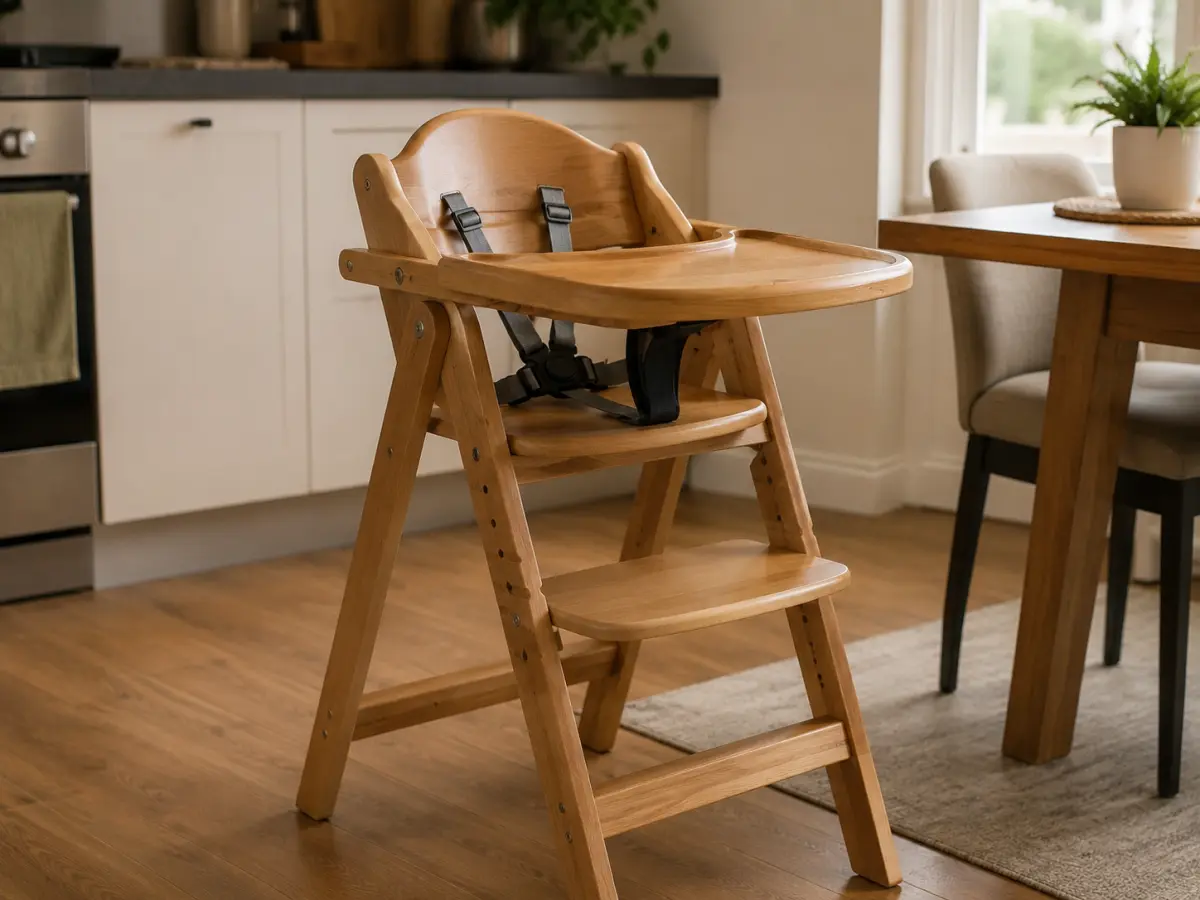
The wooden high chair’s whole appeal is that it looks like furniture, not baby gear. It sits well in a nice kitchen, it feels solid, and it does not shout “there is a baby here” the way a big plastic chair does.
The bigger practical win is how long it lasts. Many wooden chairs are the grow-with-child kind: you move the seat and footrest as your child grows, and the same chair goes from baby seat to a seat a big kid, or even an adult, can sit in. Buy once, use for years.
What you give up is money, weight, and often features. Wooden chairs usually cost more up front. They are heavier to move. And many have no recline and no tray, because the idea is that the child sits at the table with you. That is lovely for an older baby and less handy for a young one who needs to lean back.
What you gain and give up with plastic
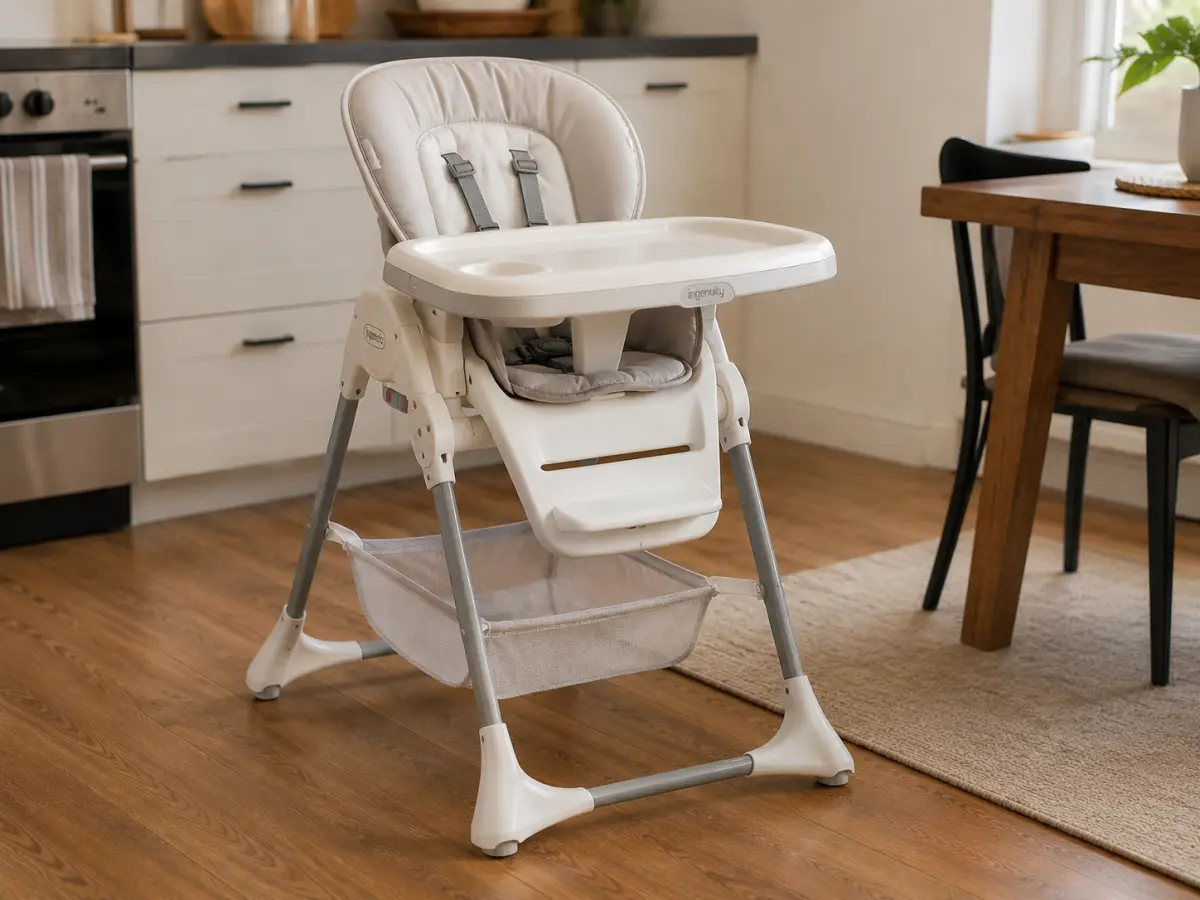
Plastic is what we use, so this part comes from real life. The wins are simple: it costs less, it is light enough to move with one hand, and it wipes clean fast. Ours also has several recline and height settings, which matters a lot in the early months when a baby cannot sit fully upright yet.
The trade-off is that plastic chairs feel less special and usually do not last as long. They are built for the baby-and-toddler years, not for a decade. Some fold away, though “folds compact” often means it leans against a wall rather than truly tucking out of sight. The compact plastic chairs we own that do fold flat are ranked in the best high chairs for small spaces.
Cleaning: the difference you will feel daily
This is the one that surprises people. Wood looks cleaner, but plastic is usually faster to clean.
Our plastic chair has a tray that pops off and goes straight in the dishwasher, and a seat that wipes down in seconds. Most wooden chairs ask you to clean by hand, and food gets into the wood grain and the grooves around the seat and footrest. Some wooden chairs have no tray at all, so the mess lands on your table and floor instead. If daily cleanup speed matters to you, and with a weaning baby it really does, plastic tends to win here.
Cost and how long it lasts
Wooden chairs cost more at the checkout, often quite a bit more. But because many grow with your child, you may buy one chair instead of two or three over the years. Plastic chairs are cheaper to buy and lighter to live with, but you are buying for the baby years, not for the long haul.
So the honest way to think about it: wood is more money now for a chair that may outlast the whole baby stage, and plastic is less money now for a chair that does the job while your child is small.
Safety features to check on both
Wood or plastic, you look for the same things: a harness that holds, ideally with a crotch strap, and a wide, stable base. One real point on wooden grow-with-child chairs is that some come with a simple harness or none at all, and add-on baby seats are sometimes sold separately, so check what is actually included for a younger baby.
Beyond the features, safe use is not our lane. The AAP’s high chair safety tips cover always using the straps, never leaving a child alone in the chair, keeping it away from counters and tables, and never letting a child stand in it. Read those, follow the manual for your chair, and ask your pediatrician about when your baby is ready.
Which we’d choose
For us, and for most families just getting started, plastic makes more sense: it costs less, it is easy to lift and clean, and the recline helped in the early months. That is why all three of our chairs are plastic.
We would look at wood if we wanted one chair to last for many years, cared about how it looks in the kitchen, and were happy to pay more and clean by hand. It is a lovely long-term buy for the right family. It just was not the right first chair for us.
The bottom line
Wooden vs plastic high chairs is really a question about money, cleaning, and how long you want the chair to last. Wood costs more, cleans slower, and lasts for years. Plastic costs less, cleans faster, and does the baby years well. Start by deciding which of those matters most to you.
When you’re ready to pick a specific chair, we’ve put a baby in three of them for months in our high chair reviews, and our high chair buying guide walks through every feature to check before you buy. All three of ours are plastic, and the one whose wipe-clean surface we rate highest is in our Graco high chair review.
Frequently asked questions
Are wooden or plastic high chairs better?
Neither is simply better. Wooden chairs tend to look nicer, feel solid, and last for years, and many grow with your child into a big-kid seat. Plastic chairs cost less, weigh less, wipe clean fast, and usually offer more recline and height settings for a young baby. The right one depends on your budget, your kitchen, and how long you want the chair to last.
Are wooden high chairs easier to clean than plastic?
Usually the opposite. Plastic chairs often have a smooth tray you can pop off and put in the dishwasher, so cleanup is quick. Many wooden chairs have grooves and a wood surface that you wipe by hand, and some have no tray at all because the child eats at the table. Wood can look cleaner, but plastic is usually faster to actually clean.
Do wooden high chairs last longer?
Often yes. A solid wooden chair can take years of use, and many are designed to adjust from a baby seat all the way to a chair an older child or even an adult can sit in. Plastic chairs are lighter and cheaper but usually have a shorter life. If you want one chair for the long haul and don't mind paying more up front, wood is the type built for that.
Can a newborn use a wooden high chair?
That's a readiness question for your pediatrician, not us. In general, many wooden grow-with-child chairs are made for a baby who can already sit up, and some need a separate baby seat or harness accessory for younger babies, while plastic chairs more often recline for earlier use. Check what each chair includes and follow the manual and your pediatrician on timing.