Diaper bag buying guide: how to choose a diaper bag
This post contains affiliate links. If you buy through them, we may earn a small commission at no extra cost to you.Learn more.
How to choose a diaper bag comes down to one trade-off that nobody puts on the box: pockets or space. You cannot have both, because every pocket is built out of the main compartment, and once you understand that the rest of the decision gets much easier. We carry two bags that sit at opposite ends of exactly that trade, one built around a big simple space and one built around a pocket for everything, so this is the checklist we would run before buying, in the order it actually matters on an outing.
One note on where our experience stops. Both of our bags are backpacks, so that is what we can speak to. And anything about how long milk or formula can safely sit in an insulated pocket is a question for the CDC and your pediatrician, not a bag review. What we can tell you is what to check on the bag itself.
Start with pockets or space, because they fight each other
This is the choice that shapes every other one. Pockets sound like pure upside when you are reading a listing, and that is the trap. A pocket is not added to a bag, it is carved out of it. Seams, linings and dividers all take volume from the main compartment, so a pocket-heavy bag is always a smaller bag on the inside than its dimensions suggest.
We own both versions of this and the difference is not subtle. The pocket-first bag we carry has a wipes dispenser pocket, a separate diaper pocket, insulated bottle pockets and a few spares, and every one of those has a real job. The cost is that its main compartment feels more constrained than the simpler bag’s, not roomier, despite the bags looking comparable from outside. The simpler bag has fewer pockets, and that is exactly why stacking things into it is easier.
Neither is wrong. A pocket-heavy bag suits you if you like knowing where everything is without looking, and it is the one we reach for on travel days. A simpler bag suits you if you would rather have one big usable space and accept that loose items will roam. Work out which of those two annoyances you would rather live with, then buy that bag. We put the two side by side in Skip Hop Forma vs. Ruvalino, where the split is the whole story.
Carry style, honestly
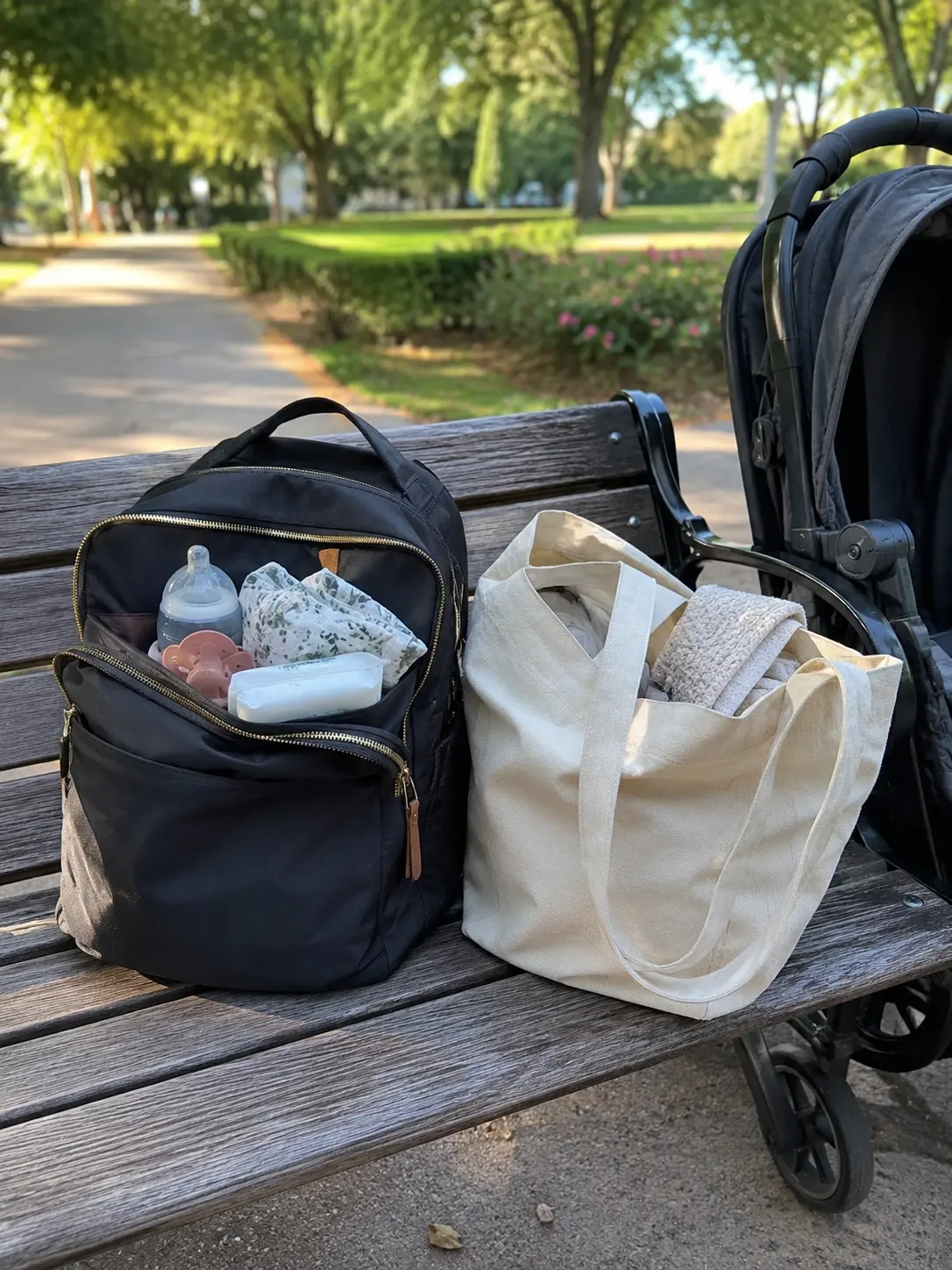
Backpack, tote, messenger. The case for a backpack is that it leaves both hands free, and that is not a small thing when you are holding a baby on one arm and a stroller handle with the other and still need to get a bottle out. It is why both of ours are backpacks and why we would tell most people to start there.
Totes and messengers have a real advantage we should not talk you out of: they are easier to reach into while the bag sits on a car seat beside you, without taking anything off your shoulders. Parents who mostly drive tend to prefer them for that. We have not carried either as a diaper bag, so we are not going to rank them for you. If you are on foot and pushing a stroller most days, a backpack is the safer bet.
Judge the main compartment, not the pocket count
Listings advertise pocket counts because they are easy to count. What you should be checking is whether the main compartment stays a usable shape when the bag is half empty.
Two things to look for. First, structure: a bag that holds its shape stays open on its own while you are digging through it one-handed, and a soft-sided bag collapses in on itself and needs a hand you do not have spare. Second, honest capacity. Ours takes roughly eight to ten diapers stacked with room for wipes, which is a useful benchmark to hold other bags against, because a day out rarely needs more than that and a bag that cannot manage it is too small.
If you can, put your actual gear in it before committing. A bag that swallows a day’s diapers, a change of clothes and two bottles without a fight is doing its job, whatever its pocket count says.
Straps and weight, the part nobody checks
This is the feature people skip in the listing and notice by hour three. Cushioned straps are the difference between a bag you wear and a bag you carry on one shoulder because it digs in.
Weight matters as much and gets advertised even less. Our two bags are not the same to carry, and the pocket-heavy one is noticeably heavier before anything goes in it. Empty weight is a tax you pay on every single outing, so it is worth caring about. Ours feels like it is somewhere around a kilo empty, though we have never put it on a scale and exact figures vary between listings, so treat any number you read as a rough guide rather than a spec.
Insulated bottle pockets
If you carry bottles, get a bag that has these. They are the one feature that is genuinely awkward to work around later, and an outside insulated pocket also means a bottle comes out without unpacking the whole bag. On our simpler bag a bottle slides into a side pocket without a fight, which sounds trivial until you are doing it one-handed in a car park.
Be clear about what insulation does, though. It slows a temperature change down. It does not hold milk at a safe temperature indefinitely, and no bag manufacturer is the right source on that question. Follow the CDC and your pediatrician on how long milk or formula can sit out, and treat the pocket as convenience rather than a cooler.
Liner, and what water resistant really means
You want a liner you can wipe out, because something will leak in there. That is not pessimism, it is just what happens to a bag carrying bottles and dirty clothes. A smooth polyester or nylon liner is the difference between a five minute wipe and an afternoon, which we go through step by step in how to clean a diaper bag.
Water resistance is where listings get slippery. Water resistant and waterproof are not the same claim, and they get used as though they are. Ours is water resistant and has shrugged off light drizzle without anything inside getting damp. We have never had it out in proper rain, so we would not tell you it survives that, and we would not assume it. If you walk in a wet climate, look for a bag that specifically says waterproof, or budget for a rain cover.
Changing pad, stroller straps and the rest
These are the extras worth a quick look rather than a long think.
A changing pad included in the bag is one less thing to remember, which is the whole argument for it, since a separate pad costs very little. Stroller straps or clips are worth checking for if you push a stroller daily, because clipping the bag on beats hanging it off a handle and tipping the whole thing. Neither of these should decide your purchase. If a bag fails the pockets-or-space test or the strap test, a bundled changing pad will not rescue it.
Whether it looks like a diaper bag
This sounds like vanity and turns out to be practical, because a bag that only one parent is willing to carry is a bag one parent carries every time. Neutral colors and minimal branding are what make the difference, and a bag that reads as a normal backpack gets shared much more evenly. It is the specific reason our everyday one gets picked up by both of us without any negotiation.
There is a related question worth settling early: whether the bag is only ever the diaper bag, or doubles as an everyday bag. Ours stays dedicated to the one job, which means it is always packed and we are never transferring things between bags before going out. That is a small habit that removes a recurring annoyance.
Two things we would skip
Diaper bags sold as part of a matching nursery set are usually the weakest item in the bundle. Buy the bag on its own merits and match the nursery separately.
Bags advertising a huge external pocket count are the other one. More pockets sound useful and mostly collect crumbs. Pocket counts work when each pocket has a job you can name, and a bag with fifteen small ones and no plan behind them just costs you main-compartment space for nothing. We went through the wider version of this in baby items you don’t need.
The order to decide in
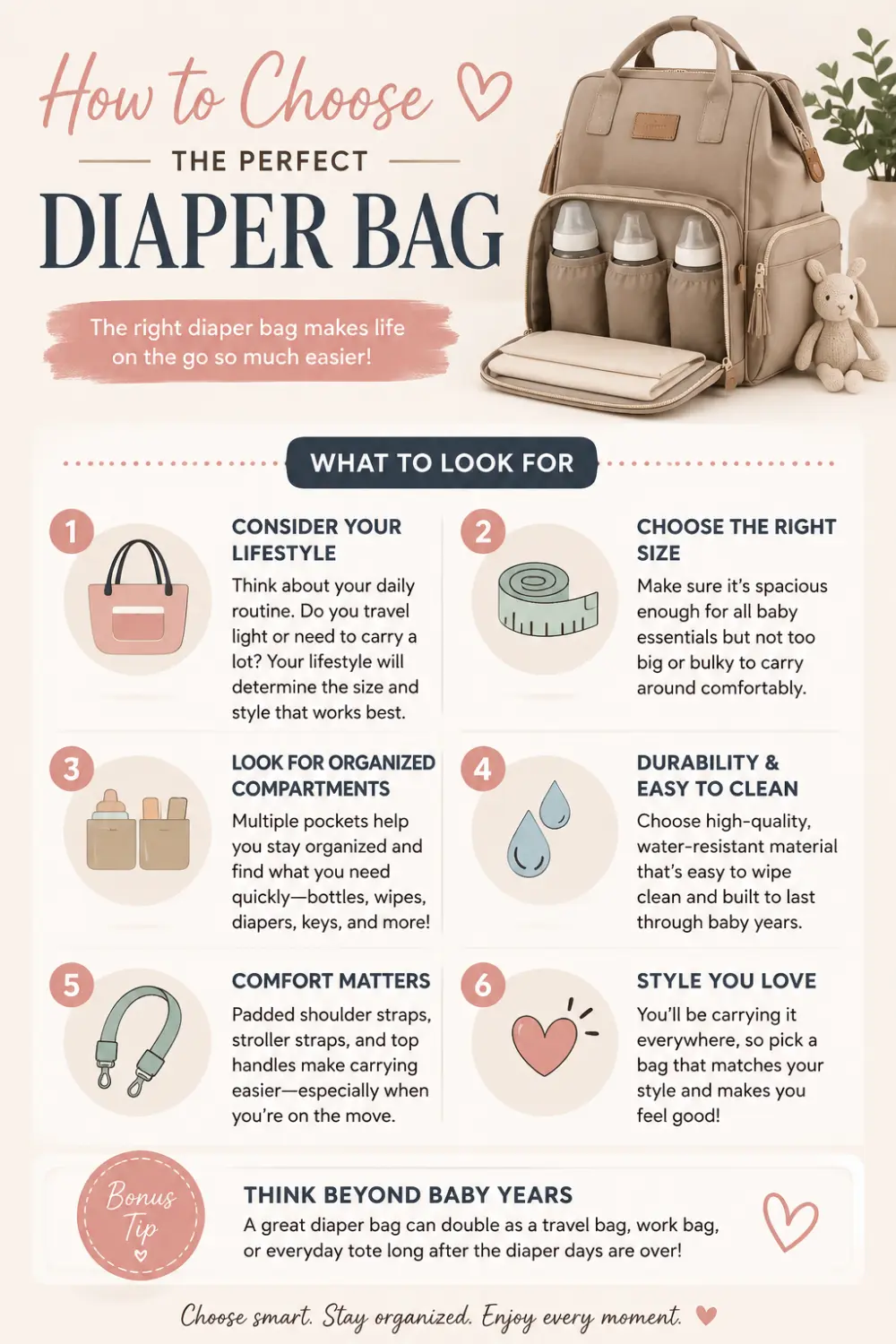
Answer pockets or space first, because it eliminates half the market in one go. Then pick the carry style that matches how you actually get around, on foot or by car. Then check the boring three: cushioned straps, empty weight, and a liner you can wipe. Then insulated bottle pockets if you carry bottles. Everything after that is a preference rather than a decision.
Once you have the bag, the next question is what goes in it, and that changes with how long you are out rather than staying fixed. We set that out trip by trip in what to pack in a diaper bag.
For the four bags we have run this checklist against, ranked and with what each one is actually for, see the best diaper bag backpacks we have carried. If your days out run long, the two with a built-in changing station are compared in best diaper bag for travel, and the two we carry every day are in Skip Hop Forma vs. Ruvalino. For what a bag has to do that a diaper caddy does not, the difference is simply that the caddy only has to survive one room. And for where a diaper bag sits against everything else you are being told to buy before the baby arrives, our realistic registry checklist has the short list of what earns its place.
Frequently asked questions
How do I choose a diaper bag?
Decide first whether you want pockets or space, because the two fight each other and everything else follows from that answer. A pocket-heavy bag gives every item a home but eats into the main compartment. A simpler bag gives you one big usable space but lets loose items roam. After that, check the carry style, the strap padding, whether the liner wipes clean, and whether a bottle fits an outside pocket without a struggle. Buy for the outings you actually do, not the ones you imagine.
Is a backpack better than a tote for a diaper bag?
A backpack keeps both your hands free, which is the thing you notice when you are carrying a baby, a stroller handle and a bag at once. That is why both of ours are backpacks and why we would start there. A tote is easier to reach into while it sits on a seat next to you, so parents who mostly drive tend to like them. We have only carried backpacks, so we will not pretend to a verdict on totes.
How many pockets should a diaper bag have?
Enough that the things you grab in a hurry have a dedicated home, and no more. Pockets are not free. Every seam takes volume out of the main compartment, so a bag with fifteen small pockets and no plan behind them costs you usable space for nothing. The test is whether each pocket has an actual job you can name before you buy.
Do I need insulated bottle pockets in a diaper bag?
They are genuinely useful if you carry bottles, and they are hard to add later, so it is worth buying a bag that has them. What an insulated pocket does is slow down a temperature change, not hold a safe temperature for hours. How long milk or formula can safely sit out is a question for the CDC and your pediatrician rather than a bag's product page.
Is a water-resistant diaper bag waterproof?
No, and the two words get used as though they mean the same thing. Water resistant means light drizzle beads off and you have time to get indoors. Ours has shrugged off exactly that and we have never had it out in proper rain. If you walk everywhere in a wet climate, look for a bag that says waterproof, or plan on a rain cover.
Do you need a dedicated diaper bag at all?
Not strictly. Any structured backpack with enough pockets can do the job. What a purpose-built bag adds is insulated bottle pockets, a liner you can wipe out, and a shape that stays open on its own while both your hands are busy with a baby. Once you are carrying bottles daily, those three are worth paying for.