How to clean a diaper bag
This post contains affiliate links. If you buy through them, we may earn a small commission at no extra cost to you.Learn more.
How to clean a diaper bag is mostly a question of what not to do. The bag is fabric with a water-resistant coating, foam padding in the back panel and straps, and insulated pockets built around more foam, and the cleaning methods that feel thorough are exactly the ones that ruin those things. A soapy cloth and a proper drying session will handle almost everything a diaper bag ever gets on it. The washing machine is the step to think hard about, not the step to start with.
Both of ours are backpacks that get carried most days, so this is the routine we run rather than a list of everything you could theoretically do to a bag.
Two notes before the steps. Check the care label on your own bag first, because manufacturers differ and the label beats anything written here. And if you are dealing with visible mold rather than a musty smell, that is a job for the manufacturer’s guidance and the EPA’s mold cleanup advice, not a gear blog.
What you need
Nothing you would have to buy.
- Warm water and a little dish soap
- A cloth or sponge, plus a second clean cloth for rinsing
- White vinegar, for smell
- Baking soda, for smell that survives the vinegar
- An old toothbrush for the zips and seams
- Somewhere with moving air to dry it
Skip the bleach, the stain removers and anything labelled heavy duty. They strip the water resistant coating, and a bag that has lost its coating soaks up the next spill instead of beading it off.
Start by emptying it completely
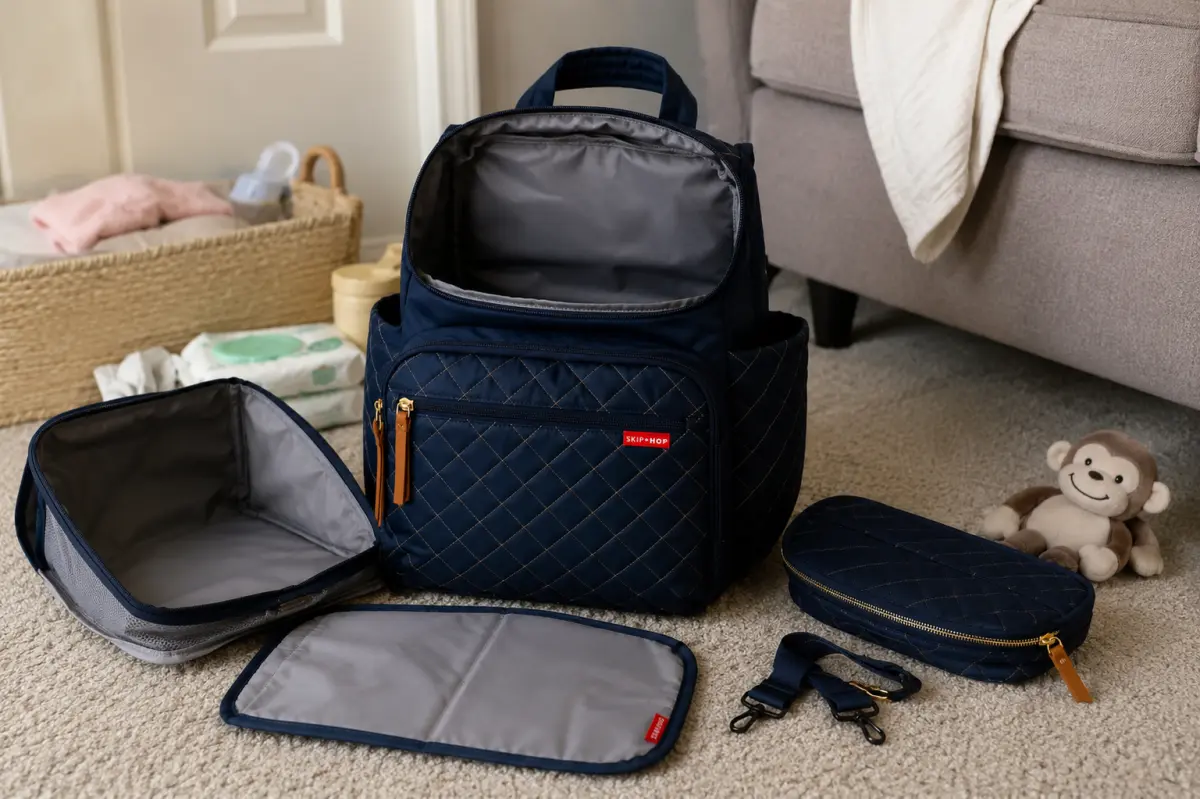
Everything out, including the things that live in the bag permanently. Unclip the changing mat, pull out the wipes case, take out any inserts or organizer pouches, and open every pocket you forgot the bag had. The small front pockets are usually where a squashed snack or an old nappy sack has been quietly composting.
Then turn the whole thing upside down over a bin and shake it properly. A surprising amount of what makes a diaper bag unpleasant is dry debris in the seams rather than anything that needs washing, and thirty seconds of shaking removes most of it. If your bag has a removable liner or a stiff base insert, take that out too and clean it separately, since it is easier to wipe flat than inside the bag.
This step alone is worth doing weekly even when nothing has spilled. It is also the moment to restock, which is why we tie it to the same routine as what we keep permanently packed.
Wipe the lining, which is where the actual mess is
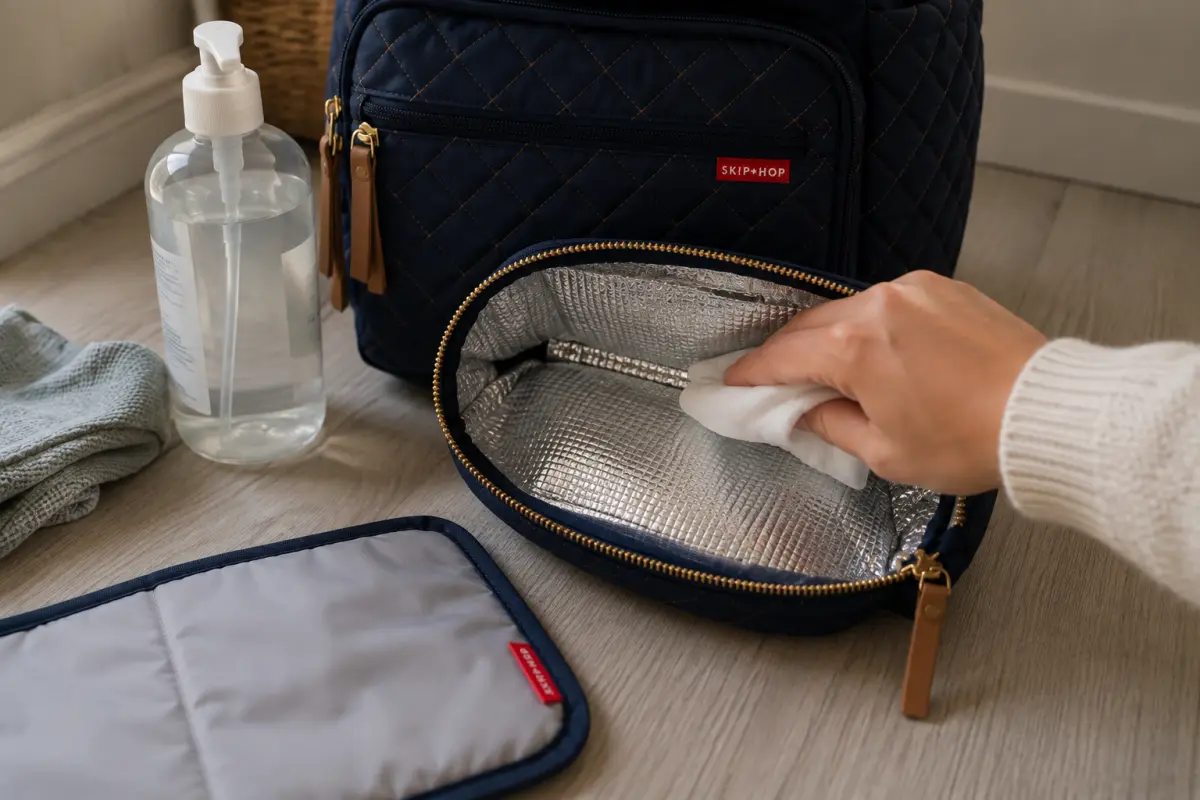
The inside is the part that matters. Most diaper bags use a smooth polyester or nylon lining specifically because it wipes clean, so warm water with a little dish soap on a cloth does the work. Go around the walls, then along the bottom seam, which is where milk drips and wipe juice collect and where a flat cloth tends to skate straight past.
Work the cloth into the corners with your fingers behind it. Corners are where a bag holds the smell you cannot find. If the lining has a stubborn mark, let the soapy cloth sit on it for a minute before you rub, rather than scrubbing harder, since rubbing a coated lining is how it starts to look worn.
Then go over the whole lining again with a second cloth wrung out in clean water. Leaving soap on the lining leaves a film that attracts the next lot of dust, and it is a two-minute step that makes the difference between a bag that stays clean and one that needs doing again next week.
Spot clean the outside rather than washing all of it
The outside is usually less dirty than it looks. Most marks on a diaper bag are scuffs and transfer from other surfaces, and they come off with the same soapy cloth. Work on the mark itself rather than washing the whole panel, because uneven cleaning on a coated fabric can leave a patch that looks lighter than everything around it.
Pay attention to the bottom of the bag. It is the panel that gets set down on floors, changing tables and the ground, and it is the one people never think to clean. Give it the same treatment as the lining, soapy cloth then a rinse with a clean damp one.
The insulated bottle pockets, which everyone skips
This is the part of the bag that most reliably smells, and it is the part that is hardest to reach, which is not a coincidence. Milk gets down the side of a bottle, runs to the bottom of the pocket, and sits there in a warm insulated space that was designed to hold temperature. Nothing about that ends well if you leave it a fortnight.
If the pocket lining will turn inside out, turn it out and wipe it flat. If it will not, push a soapy cloth all the way down with two fingers and work it around the bottom seam by feel. Then rinse it the same way with a clean damp cloth.
What you should not do is soak these pockets or run water into them. The insulation is foam, foam holds water for days, and a bottle pocket that never fully dried is the single most common source of a musty diaper bag. Wipe, rinse, then leave it propped wide open to dry.
Straps, back panel and handles
The parts that touch you get skin oil, sunscreen and sweat, and they are padded, which means they hold all of it. Wipe the shoulder straps along their length, the back panel, and the grab handle on top, using the cloth damp rather than wet so you are cleaning the surface and not saturating the padding underneath.
An old toothbrush earns its place on the zips. Run it along the teeth and into the pull tabs, where grit collects and eventually makes a zip feel like it is failing when it is only dirty. Do the same on the seams where the strap meets the body of the bag.
Can you put a diaper bag in the washing machine
Sometimes, and it depends entirely on the care label rather than on how dirty the bag is. Some manufacturers permit a gentle cold cycle and some are explicit that you should never do it. The label wins.
Here is what you are risking when the label says no. The water-resistant coating can delaminate, which is permanent and turns a bag that used to shrug off drizzle into one that wicks it up. The foam in the back panel and the insulated pockets gets compressed and can come out lumpy. Structured bags that hold their shape on their own lose that shape. And stitching that was engineered for load, not for tumbling, can pull.
If the label does allow a machine wash, stack the odds properly. Empty every pocket and remove every insert, close all the zips so they cannot catch, put the bag inside a laundry bag or a pillowcase, run a cold gentle cycle with a small amount of mild detergent, and skip the fabric softener, which coats fibers and undoes water resistance. Then air dry it. Never tumble dry a diaper bag, whatever the label says about washing, because heat is what warps the foam and shrinks the lining.
| Situation | What to do | What to avoid |
|---|---|---|
| Crumbs, dust, general use | Empty and shake out weekly | Nothing wet, it does not need it |
| Milk spill in a bottle pocket | Soapy cloth to the bottom seam, rinse, dry propped open | Soaking or running water into the foam |
| Marks on the outside fabric | Spot clean the mark only | Washing a whole panel, it can patch |
| Lingering smell, bag looks clean | Vinegar and water wipe, then baking soda overnight | Scented sprays, they sit on top of it |
| Blowout or full leak inside | Strip it, wash the lining properly, dry a full day | Zipping it shut before it is dry |
| Musty after storage | Vinegar wipe, then dry with all pockets open in moving air | Long spells in direct sun, it fades |
Getting the smell out
Deal with the cause first. A diaper bag almost never smells of itself. It smells of milk that got into the lining, or a dirty diaper that rode home in the bag because there was no bin, and washing the lining properly removes most of it before you reach for anything else.
For what survives that, white vinegar does the work. Wipe the lining with a half-and-half mix of vinegar and water, leave it a few minutes to sit, then rinse with a clean damp cloth. The vinegar smell goes as it dries and takes a lot of the milk smell with it. Do not combine vinegar with bleach, since the two together produce a dangerous gas.
If the bag still has a background smell once it is dry, put a couple of spoonfuls of baking soda in the bottom, leave it open overnight, and vacuum or shake it out in the morning. Baking soda absorbs odor rather than covering it, which is exactly what a scented spray does not do. A scented spray in a diaper bag gives you the old smell plus a new one.
The one that catches people out is a bag that was put away damp after a wash and now smells musty. That is a drying problem wearing a cleaning problem’s clothes, and no amount of extra washing fixes it. Clean it, then dry it properly, which is the next part and the part that matters most.
Drying it properly is most of the job
More diaper bags are ruined by bad drying than by bad cleaning. A bag that gets zipped shut while the seams are still damp will smell within days, and the smell will be in the padding where you cannot easily reach it.
Open every zip and every pocket. Prop the main compartment wide, turn the insulated pockets out or wedge them open, and stand the bag upside down so water runs out of the seams rather than into them. Then leave it somewhere with moving air for considerably longer than you think it needs. A wiped lining is dry in an hour. Foam padding and insulated pockets can take a full day.
Do not use a hair dryer, a radiator or a tumble dryer to speed it up. Heat is what delaminates coatings and warps foam, and you can undo a bag in twenty minutes that would have dried fine overnight. A little sun is genuinely useful for smell, but keep it short, because prolonged sun fades the fabric and eventually makes it brittle.
What to do when it happens out of the house
A blowout in a cafe is not a cleaning routine, it is damage control, and the goal is to stop it soaking in rather than to fix it. Get the soiled clothes into the wet bag, wipe the worst of it out of the lining with the wipes you already have, and leave the bag open in the car rather than zipping it shut for the drive home. That last one is the difference between wiping a lining that evening and washing a bag that has had two hours to set.
This is the argument for keeping a wet bag permanently packed, and for a bag whose lining actually wipes rather than one lined with fabric that absorbs. If you have not bought yet, the liner is one of the things we would check before buying in our diaper bag buying guide.
How often, in short
Empty and shake it out once a week. Wipe the lining every few weeks, or immediately after anything spills. Do the full routine, including the bottle pockets and the straps, every couple of months or whenever the bag starts to announce itself. The weekly empty is the habit that keeps everything else small, in the same way the ten-second wipe does for a diaper pail.
The bottom line
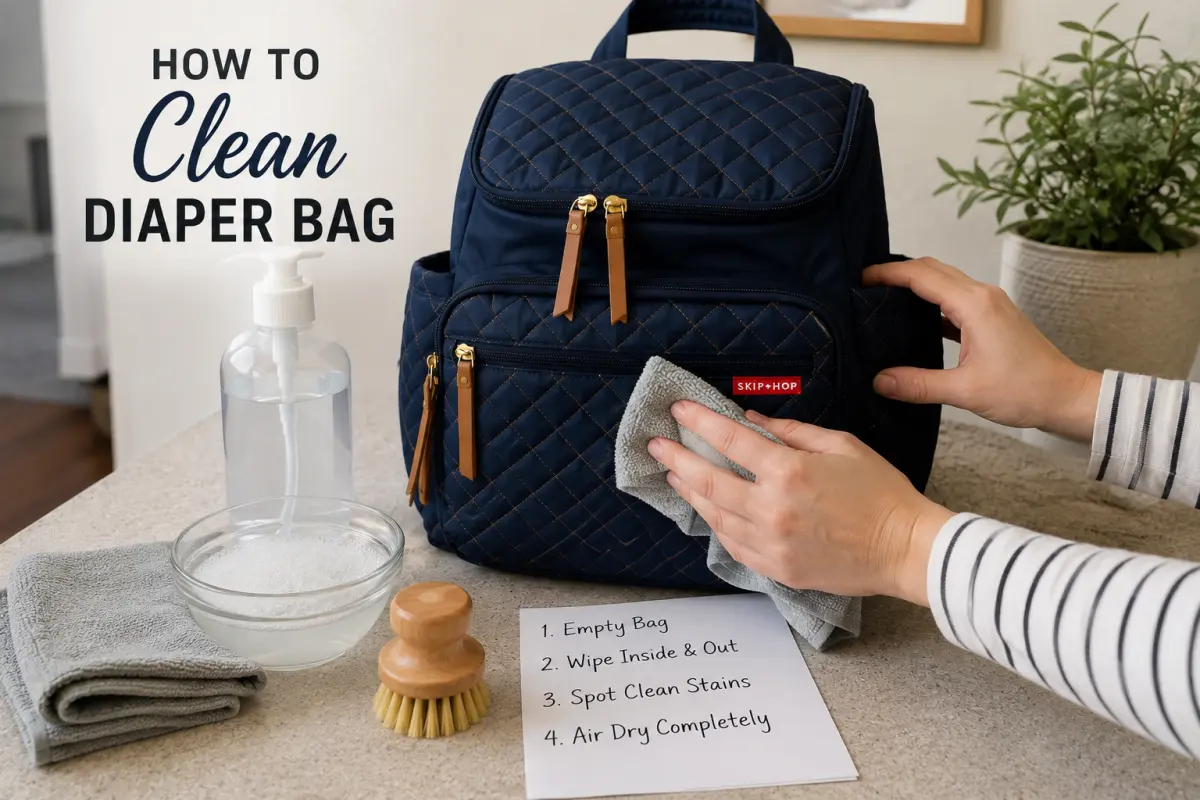
Cleaning a diaper bag is a soapy cloth, a rinse cloth, and a long patient dry. Empty it completely, wipe the lining and the bottom seam, get into the insulated pockets where the milk actually is, spot clean the outside rather than washing all of it, and only consider the machine if the care label on your bag says you can. Then dry it fully open for longer than feels necessary, because that is the step that decides whether it smells in a week.
If your bag is fighting you on all of this, the bag might be the problem rather than the routine. The lining, the pocket layout and whether the whole thing wipes out easily are things we compare across the two we carry in Skip Hop Forma vs Ruvalino, and across all four in the best diaper bag backpacks we have carried. Bags with a fold-out changing station have more fabric to keep clean than a plain backpack does, and the two we own are covered in best diaper bag for travel.
Frequently asked questions
How do you clean a diaper bag?
Empty it completely, turn it upside down and shake the crumbs out, then wipe the lining with warm water and a little dish soap. Spot clean any marks on the outside with the same soapy cloth, get into the insulated bottle pockets, and wipe the straps and the back panel where they sit against you. Rinse the soap off with a clean damp cloth, then air dry the bag fully open and upside down. Most bags need nothing stronger than that, and anything stronger risks the water-resistant coating.
Can you put a diaper bag in the washing machine?
Only if the care label on your bag says so, and plenty of them do not. Machine washing can delaminate the water-resistant coating, crush the foam in the back panel and the insulated pockets, and pull stitching apart on a bag built with a structured shape. If the label does allow it, use a cold gentle cycle, put the bag in a laundry bag or pillowcase, take out every insert first, and never tumble dry it. When the label is missing or unclear, hand wash instead.
How do you get the smell out of a diaper bag?
Wash the lining first, since the smell is almost always spilled milk or a diaper that sat too long rather than the bag itself. Then wipe the lining with a half-and-half mix of white vinegar and water, leave it a few minutes, and rinse with a clean damp cloth. Once it is dry, an open bag with a sprinkle of baking soda left in the bottom overnight absorbs what is left. Never mix vinegar with bleach, as the two together give off a dangerous gas.
How do you clean the insulated bottle pockets?
Turn the pocket inside out if the lining allows it, or push a soapy cloth right down to the bottom seam with your fingers, since that is where milk pools and gets missed. Wipe it, rinse it with a clean damp cloth, then leave the pocket propped open to dry, because a damp insulated pocket zipped shut is where mildew starts. Avoid soaking these pockets, as the insulation is foam and it holds water for days.
How often should you clean a diaper bag?
Empty and shake it out weekly, wipe the lining every few weeks, and do a full clean whenever something spills or leaks. The wipe is what keeps the job small. A bag that gets emptied and aired regularly rarely needs more than that, and a bag that never gets emptied turns into a full afternoon eventually.
Can you wash a diaper bag that is not machine washable?
Yes, by hand, and it is the safer default for any bag. Wipe the lining and the outside with warm soapy water rather than submerging the whole bag, since soaking saturates the foam padding and the insulated pockets and they take days to dry properly. Spot clean marks, rinse the soap off with a clean damp cloth, and air dry with every pocket unzipped.
How do you get mildew smell out of a diaper bag?
Mildew smell means the bag was packed away damp, so the fix is as much about drying as cleaning. Wipe it down with a vinegar and water mix, rinse, then dry it completely with all the pockets open, ideally in moving air. Sunlight helps, though prolonged sun fades fabric, so use it in short spells. If a bag has visible mold growth rather than a musty smell, follow the manufacturer's guidance and the EPA's mold cleanup advice rather than a blog.