Ubbi diaper caddy review: the portable changing station
This post contains affiliate links. If you buy through them, we may earn a small commission at no extra cost to you.Learn more.
Our verdict, if you don’t read another word: the Ubbi portable diaper caddy earns 4.5 out of 5 and it is the best caddy we have owned. Two things get it there. The handle is built into the shell, so you stop thinking about how much weight is in it, and the whole thing wipes clean with a baby wipe because there is no fabric anywhere to absorb a spill. It costs more than a fabric caddy and that is the honest reservation, but six months in ours is still in great condition, which is where the money goes.
One thing to be clear about up front. This is not really competing with the fabric caddies in our best diaper caddy roundup. Those are soft baskets you carry between rooms. This is a rigid plastic changing station with a drawer and a mat, and it is a different object solving a slightly bigger version of the same problem.
What the Ubbi caddy actually is
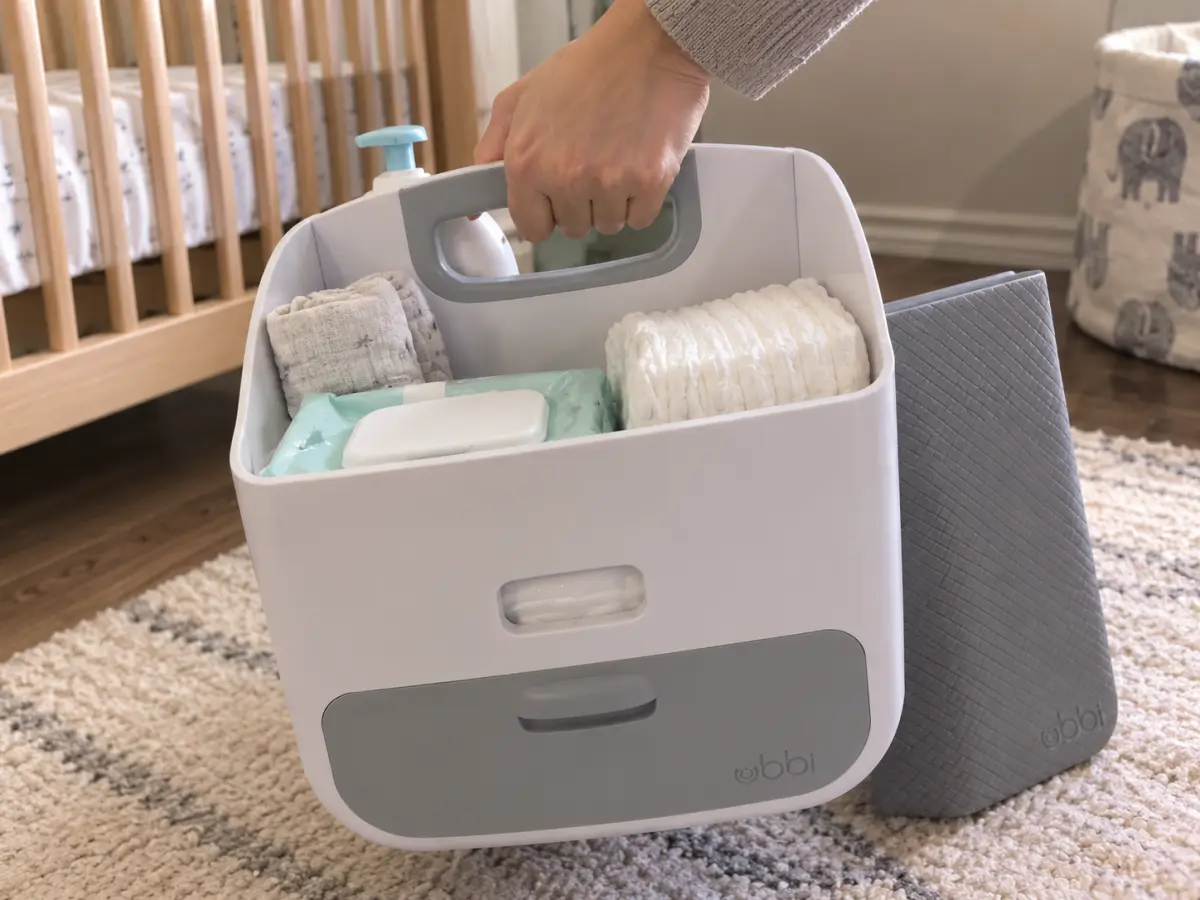
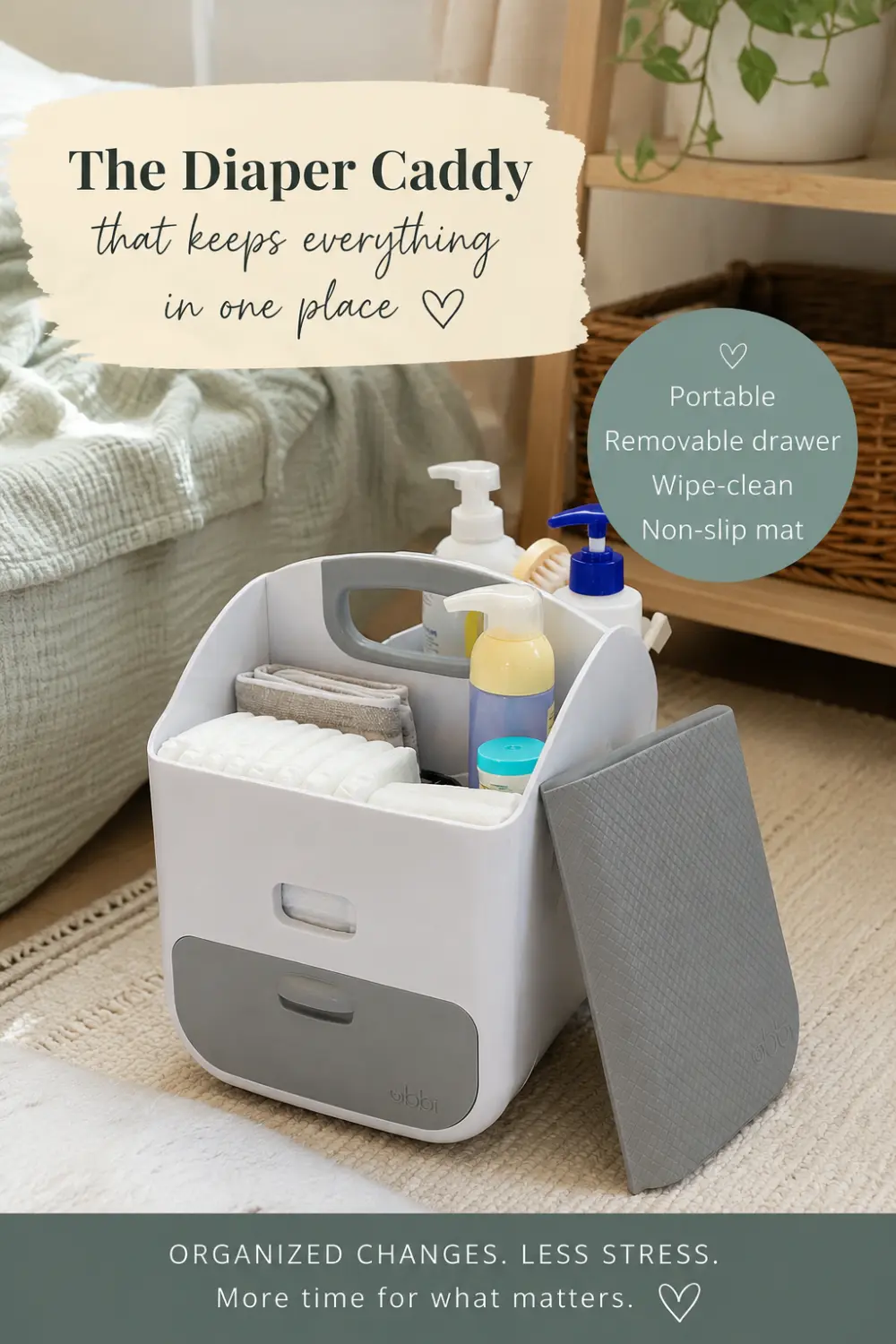
It is a hard plastic caddy with fitted compartments for diapers and lotions, a pull-out drawer in the base for small items, rubberized feet, a molded carry handle, and a changing mat included in the box. Ubbi describes it as a portable changing station rather than a caddy, and having used it, that is the more accurate word.
The compartments are fitted rather than open, so a stack of diapers goes in one side and bottles of lotion stand up in the other instead of falling over every time you lift it. The mat Ubbi includes is made from something close to standard yoga mat material, soft and wipeable. Follow the instructions that come with the caddy for how to use the mat rather than any blog, including this one.
The handle is the reason it works
This sounds like the least interesting feature on the list and it is the one that changes how you use the thing. A fabric caddy has rope or webbing handles stitched to the sides, which means there is always a weight in your head that you are carrying around: load it too heavily and you are thinking about the seams. You end up under-packing it slightly, without really deciding to.
The Ubbi’s handle is part of the molded shell, so there is nothing stitched on to give way. You stop rationing what goes in. That is the practical difference, and it is why this works as a genuine second changing station rather than a basket you move between rooms. The rubberized feet do the other half of the job, keeping it still on a dresser instead of sliding when you pull the drawer.
The drawer is the best idea in it
Every caddy has the same failure: small things sink. Nail clippers, teething gel, a thermometer, a spare pacifier, all of it works its way to the bottom of an open basket and under the diapers, and you find it by unpacking the whole caddy one-handed while a baby waits.
The Ubbi has a shallow pull-out drawer in the base, and putting those small items behind a closed front instead of in another open pocket solves the problem completely. It is the part we would miss most if we went back to a fabric caddy, and it is worth more than the extra pocket count that caddies usually compete on. We went through why pocket counts are mostly marketing in how to choose the right diaper caddy.
Cleaning is where plastic wins outright
This is the clearest advantage the material has, and it is not close. The shell is sturdy plastic with no fabric anywhere, so cleaning it means wiping it down with a baby wipe. That is the entire routine.
Compare that with felt and fabric, which stain, hold smells, and cannot really be cleaned once something has soaked in. A leaked bottle of lotion or a diaper that did not make it is a minor annoyance here and the end of a fabric caddy’s good looks. Over a couple of years of daily use that difference compounds, and it is a large part of why ours still looks new at six months.
What is not in the box
One honest note about the listing. Ubbi’s product photos and feature list mention a wipes dispenser, and it is sold separately. It is easy to read the spec sheet and assume it is included, so budget for it or plan to keep a normal wipes packet in the caddy.
The changing mat, on the other hand, genuinely is included, and it is not the flimsy afterthought that usually comes bundled with a caddy. That matters, because bundled changing pads are one of the two traps we tell people to avoid in the roundup, and this is the exception rather than the rule.
Plastic against fabric, plainly
| What you notice | Ubbi plastic caddy | Typical fabric caddy |
|---|---|---|
| Cleaning a spill | Wipe with a baby wipe | Stains, and holds the smell |
| Carrying it loaded | Moulded handle, weight is a non-issue | Stitched handles, you ration what goes in |
| Small items | Closed drawer in the base | Sink to the bottom of the basket |
| Holding its shape | Rigid whatever is inside | Slumps as it empties |
| Look on a shelf | Clean and modern, reads as plastic | Softer, warmer, easier to match a nursery |
| Cost | More than fabric | Inexpensive |
| Life span | Still like new at six months, built to outlast the diaper years | Usually looks tired by the end |
Neither material is simply better, and we own both. Fabric is lighter, cheaper and softer on a shelf. Plastic wipes clean, ignores what you load into it, and lasts. If you only want one caddy and you want it to survive the whole of the baby years, that is the argument for this one. We put it against our felt Parker Baby caddy in Ubbi vs Parker Baby.
What we like
- Moulded handle carries any load, so you stop rationing what goes in it
- Pull-out drawer in the base keeps nail clippers and teething gel from sinking
- Wipes clean with a baby wipe, no fabric to stain or hold smells
- Fitted compartments keep lotion bottles standing up instead of falling over
- Changing mat included, and a decent one rather than a bundled afterthought
- Still in great condition after six months of daily use
What we don't
- Costs more than a fabric caddy, which is the main thing to weigh
- Wipes dispenser is sold separately despite appearing in the feature list
- Rigid plastic will not match a soft nursery look the way felt or rope does
- Bulkier on a shelf than a fabric basket that can be squashed in
It keeps a job after the diaper years
This is a better argument than it first sounds. Because it is a rigid box with compartments and a drawer rather than a nursery-branded basket, it carries straight on as storage once the diapers are finished: toiletries, makeup, craft or sewing supplies, anything that benefits from a container that can be carried and wiped.
A fabric caddy tends to be visibly worn out by that point, so its second life is usually the bin. Ours is six months in with no sign of wearing out, which is the same reason the price stops looking steep once you count the years rather than the purchase.
Who it is for, and who should skip it
Buy this one if you want a single caddy that lasts the whole of the baby years, if cleaning fabric is the part of nursery gear you resent most, or if you want a real second changing station rather than a basket you carry around. It is also a sensible registry or baby shower gift, since it is the kind of thing people do not buy themselves and then end up using daily. For the rest of that list, see our realistic registry checklist.
Skip it if budget is the deciding factor, since a fabric caddy does the core job for much less, or if you want the caddy to disappear into a soft nursery. Worth knowing that Ubbi picks its materials per product rather than by habit: the caddy is plastic because it has to be wiped clean, and their pail is steel because plastic holds odor, which is the argument we make in Ubbi vs Diaper Genie.
The bottom line
The Ubbi portable diaper caddy takes 4.5 out of 5 from us. The half point off is the price, and nothing else. Everything it does, it does better than the fabric caddies we have used: the handle carries whatever you put in it, the drawer solves the small-item problem every other caddy has, and cleaning it takes one wipe. Six months of daily use has not marked it. If you are buying one caddy and want it to still be useful when the diapers are long finished, this is the one we would point you at. For what to actually put in it, we went through that in how to organize a diaper caddy.
Frequently asked questions
Is the Ubbi diaper caddy worth it?
In our use, yes, and we rate it 4.5 out of 5. It is the best caddy we have owned, mostly because the built-in handle means you never think about how much weight is in it, and because the plastic shell wipes clean with a baby wipe. It costs more than a fabric caddy, which is the only real reservation, and after six months of daily use ours is still in great condition, so the durability is what earns the price back.
What is the drawer on the Ubbi diaper caddy for?
It is a small pull-out drawer in the base, and it turns out to be the most useful part of the design. It is where the little things live that get lost in a fabric caddy: nail clippers, teething gel, a thermometer, anything small enough to sink to the bottom of an open basket. Having a closed drawer rather than another open pocket is the difference.
Does the Ubbi diaper caddy come with a changing mat?
Yes. Ubbi includes a soft changing mat made from a material similar to a standard yoga mat, and it wipes clean the same way the caddy does. Worth knowing that the wipes dispenser you see in some product photos is sold separately, which is the one thing about the listing we would call misleading.
How do you clean an Ubbi diaper caddy?
You wipe it down, and that is genuinely the whole job. The shell is sturdy plastic with no fabric to absorb anything, so a baby wipe handles most spills and a damp cloth handles the rest. This is the clearest advantage it has over felt and fabric caddies, which stain and hold smells and cannot really be cleaned once something soaks in.
Is a plastic diaper caddy better than a fabric one?
They are good at different things. Plastic wipes clean, holds its shape whatever you put in it, and lasts. Fabric is lighter, softer, cheaper and looks warmer on a shelf. We use both and would say buy plastic if you want one caddy that survives the whole of the baby years, and fabric if you want something inexpensive that matches the nursery.
Can you use the Ubbi caddy after the diaper stage?
That is one of the better arguments for buying it. Because it is a rigid plastic box with compartments and a drawer rather than a nursery-branded basket, it carries on as storage for toiletries, makeup, craft or sewing supplies once the diapers are done. A fabric caddy tends to look worn out by then. Ours is six months in and shows no sign of being ready to retire.