What is a diaper pail?
This post contains affiliate links. If you buy through them, we may earn a small commission at no extra cost to you.Learn more.
A diaper pail is a bin with one job: hold soiled diapers long enough between trash days without the room finding out. What makes it a pail rather than a can is the seal. It closes through a mechanism built to let a diaper in without letting the air back out, and it is sized for days of diapers instead of an evening of kitchen waste.
That is genuinely the whole product. Every pail on the shelf is a variation on two questions: how it seals, and what bags it takes. We own three, an Ubbi, a Diaper Genie and a Dekor EKO Classic, and everything below is what they have taught us about what the category actually is.
What separates a pail from a lidded trash can
Put a bag of diapers in an ordinary kitchen can and the problem is not the can, it is the lid. A resting lid moves air every time it opens and closes, so what is inside reaches the room within a day. Empty it daily and you never notice. Miss a day and you do.
A pail changes three things. The seal is a mechanism rather than a lid sitting on a rim, so the inside air mostly stays inside. The capacity is measured in days, not meals. And the body is built for a job that lasts two or three years, which matters more than it sounds, because a cheap plastic bin that holds diapers for two years becomes a smell of its own.
That last part is the one people discover late. The question is not what is in the pail this week, it is what the pail itself has absorbed by month eight.
How the sealing mechanisms differ
There are two common designs and they fail in opposite directions, and a third variation worth knowing about sits between them.
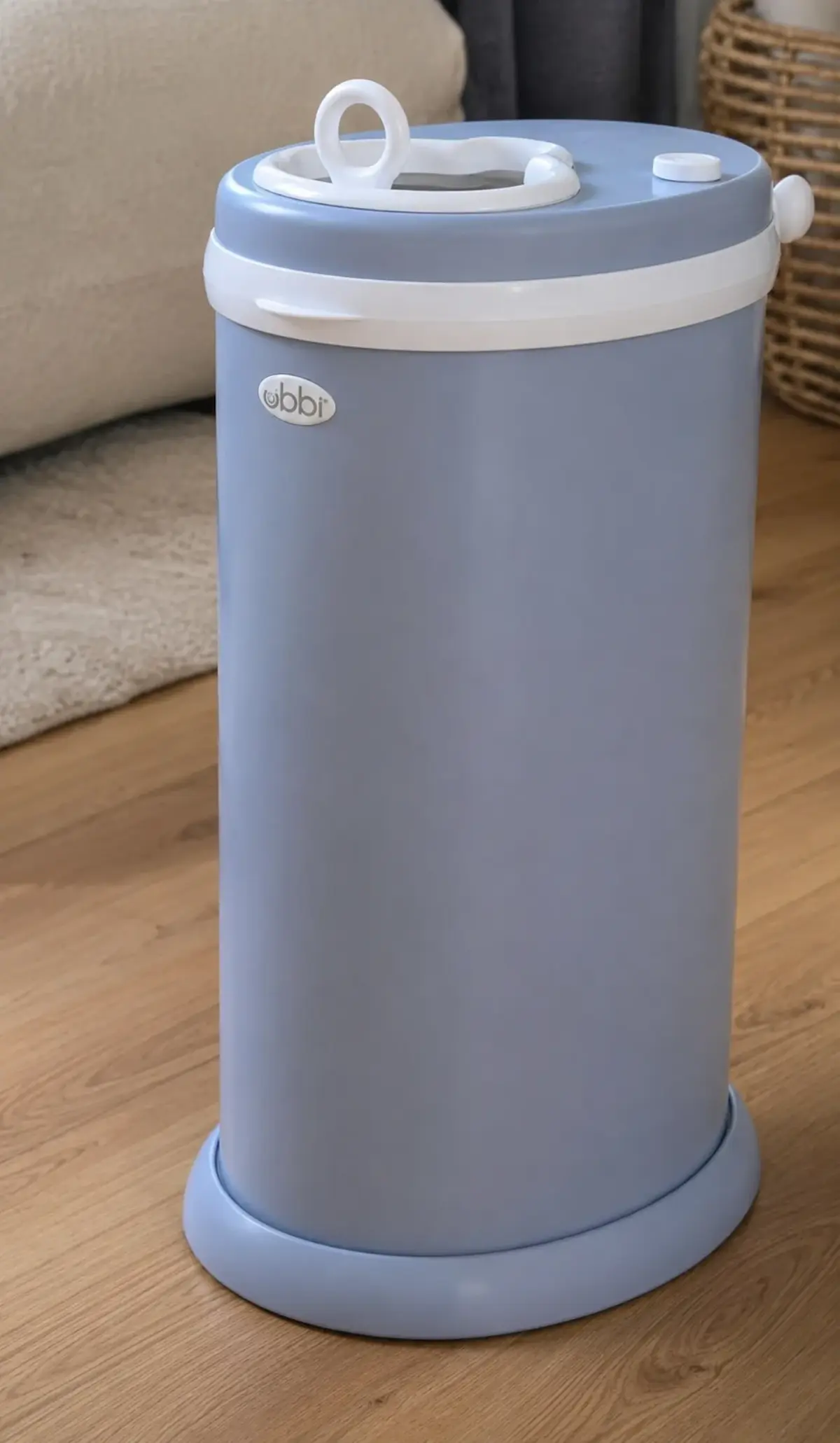
A sliding lid, which is what our Ubbi uses, opens a small hatch on the top surface. You slide it, drop the diaper, and it slides shut. There is very little moving air, though you do get a brief puff at the moment the hatch is open. The advantage is that there is almost nothing to break, and the opening is small enough that the pail is not really exposed to the room at any point.
A clamshell with a foot pedal, which is the Diaper Genie design, opens a hinged inner door when you press the pedal. This is the better version at the moment of drop-in, because your hands never touch the pail and the inner door does a genuinely good job of holding smell back while the outer lid is open. The cost is complexity. There is a pedal, a hinge and a clamp mechanism, and the clamp is exactly where residue collects over time.
The variation is a step pedal with a trap door, which is what our Dekor EKO Classic uses. It is the clamshell idea without the cartridge lock-in, and like the Genie it opens with a foot pedal, so you can work it with a baby on one arm.
All three work. If you want the detail on how they compare after months of use rather than in a shop, the three are side by side in our best diaper pail roundup, and the two older ones go head to head in Ubbi vs Diaper Genie.
The bag question is the one that costs you money
This is the single most important thing to check before buying, and it is easy to miss because it is not really a feature, it is a business model.
Some pails take any standard kitchen bag. The Ubbi takes a normal 13-gallon bag, which means the ongoing cost of owning it is whatever bags you already buy for the kitchen. Others take proprietary refill cartridges. The Diaper Genie uses ring refills, so alongside the pail you are buying its consumable for as long as you are in diapers, which is usually a couple of years and sometimes longer with a second child.
Neither approach is dishonest. A cartridge system is part of why the Genie seals as well as it does at drop-in. But the upfront price is the number people compare and the refill is the number that decides what the pail actually costs you, so it is worth doing that arithmetic once before you choose rather than discovering it at the store months later.
Steel or plastic, and why it decides how long it stays fresh
The body material is the other structural choice, and it is the one we would not compromise on again.
Plastic is porous at a microscopic level, and every open and close scuffs it a little more. Odor molecules and greasy residue work into the surface and stay there. You can scrub a plastic pail until it looks clean and it will still carry a background smell after a few months, because by then the smell is in the plastic rather than on it.
Powder-coated steel is non-porous and sealed. Nothing soaks in, so a wipe returns it to genuinely clean rather than clean-looking. For an object whose entire purpose is holding dirty diapers for years, that one property does more for how the nursery smells than any of the deodorizing features printed on the box.
Capacity, and why the number on the box is not the useful one
Pails advertise how many diapers they hold. Ours is rated well past what we have ever actually put in it, because capacity is not really the constraint. How much smell you are prepared to store is.
In practice a pail gets emptied long before it is full, and the useful habit is emptying on a rhythm rather than on a signal. By the time a pail is telling you it is full, it has been holding that for a while. Pick a day, or pair it with taking the kitchen trash out, and the pail stops being something you think about.
What capacity does affect is footprint. A pail that holds more takes more floor, and floor space next to a cot is not free.
Where it goes, and the footprint nobody measures
Both of ours live in different places for exactly this reason. The smaller steel pail is in the nursery, near where changes actually happen, which is where a pail is most useful. The bigger one sits outside the room because it takes more floor than we wanted beside a cot.
If you have room for one pail and it needs to be in the nursery, measure the space before you order. Capacity is printed in large type and dimensions are printed in small type, and it is the dimensions that decide whether you will keep the thing where you need it.
Do you actually need one?
Honestly, no. A diaper pail is a convenience product rather than a necessity, and a lidded can emptied every day does the same job for nothing.
What a pail buys you is the trip you do not make. If taking a bag out daily is genuinely fine in your house, the pail is optional and the money is better spent elsewhere. If you would rather deal with diapers every few days and have the room stay neutral in between, that is exactly what the product is for, and it does deliver. We own three and would buy again, and we would still not tell a parent on a tight budget that this is a thing they have to have.
The one place it shifts from convenience to genuinely useful is a small home, or a nursery on a different floor from the bins, where the alternative is a bag of diapers waiting somewhere for someone to carry it down.
What happens to it after diapers
A pail has a finite job, roughly two to three years per child, and it is worth a thought at purchase. A steel pail cleans up and carries on as a normal bin afterwards. A plastic one is usually finished when you are, because of what the plastic has absorbed by then. A proprietary refill system also ends the day you stop buying cartridges, so its resale life is shorter than it looks.
None of that changes which pail is right for you today. It is just worth knowing that the two designs age differently, and that the difference in what they are worth in three years is roughly the same difference that shows up in how they smell in six months.
Keeping one from smelling
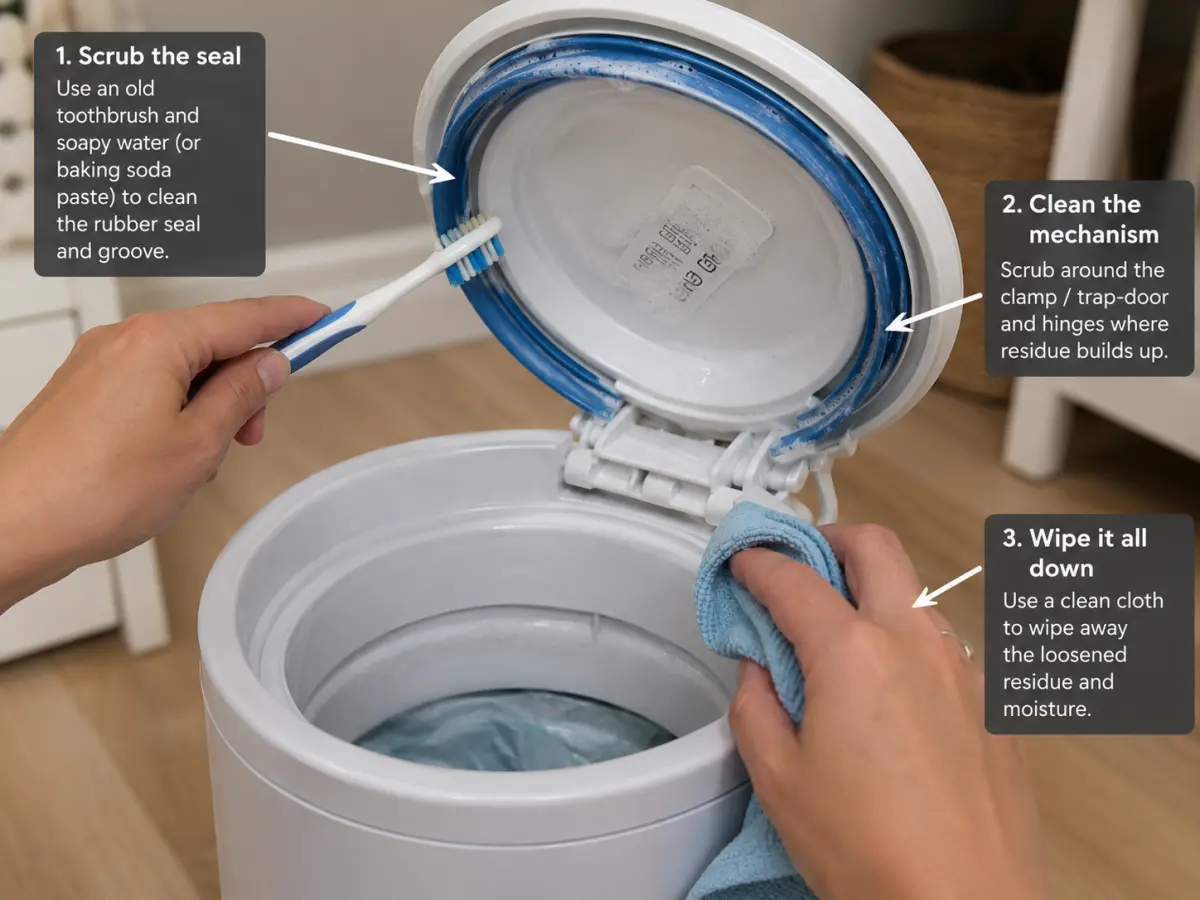
Whatever you buy, the pail’s performance is mostly maintenance rather than features. A ten-second wipe of the rim and lid when you change the bag, and a proper clean every week or two, is what keeps either of ours neutral. The seal and the mechanism are where smell actually lives, and they are the parts a cloth slides straight over.
We wrote the full routine, including what to use and what to keep away from a steel finish, in how to clean a diaper pail.
The bottom line
A diaper pail is a sealed bin sized for days of diapers, and the only two questions that matter are how it seals and what bags it eats. Check the bag question before you check anything else, because that is where the long-run cost hides. Prefer steel over plastic if the choice is open to you, since it decides how the thing smells in month eight. And be honest with yourself about how often you take the trash out, because if the answer is daily, you may not need one at all.
If you have narrowed it to the two most people ask about, our Ubbi vs Diaper Genie comparison is the one to read next. If you are still assembling the changing corner around it, what to put in a diaper caddy covers the part you carry, and baby items you don’t need covers the popular things you can skip.
Frequently asked questions
What is a diaper pail?
A bin built to hold soiled diapers between trash days without the room finding out. What separates it from an ordinary trash can is the seal: a diaper pail closes through a mechanism designed to let a diaper in without letting the air back out, usually a sliding lid or a clamshell with a foot pedal, and it holds days of diapers rather than hours. That is the whole product. Everything else on the box is a variation on how it seals and what bags it takes.
Is a diaper pail worth it?
It is a convenience product, not a necessity, and the honest answer depends on how often you take the trash out. A lidded can emptied every day does the same job. A pail earns its place if you would rather not make that trip daily, because it holds several days of diapers without the room smelling. We own three and would buy again, and we would not tell a parent on a tight budget that they have to.
What is the difference between a diaper pail and a regular trash can?
The seal and the bag. A trash can lid rests on top and lets air move every time it opens, so the smell is in the room within a day. A pail uses a sliding lid or a clamshell that keeps the inside air inside, and it is sized for days of diapers rather than a kitchen evening. The other difference is what happens over time: a good pail is built to be emptied and wiped clean, while a plastic can slowly absorbs the smell into the plastic itself.
Do diaper pails need special bags?
Some do, and it is the main thing to check before you buy. The Ubbi takes any standard 13-gallon kitchen bag, so the ongoing cost is whatever bags you already buy. The Diaper Genie takes its own ring refill cartridges, which means a purchase you keep repeating for as long as you are in diapers. Neither is wrong, but one has a cost that shows up on the shelf and one has a cost that shows up every month.
Where should you put a diaper pail?
Wherever you actually change diapers, as long as the footprint fits. Ours have split three ways: the Ubbi is smaller and is the one in the nursery, the bigger Diaper Genie started beside the cot and now sits outside the room because it takes more floor than we wanted there, and the Dekor lives in the washroom. If you only have space for one and it has to be in the nursery, measure the floor before you order, because capacity claims are printed much louder than dimensions.
How often do you empty a diaper pail?
Less often than you would empty a bin, which is the point of owning one, though the interval is really a question of how much smell you are willing to store. Our Genie can go for weeks on capacity alone and we empty it long before that. A rough habit that works: empty on a set day rather than waiting for a signal, because by the time a pail tells you it is full, you have been storing that for a while.