Portable vs electric bottle warmer: which do you need?
This post contains affiliate links. If you buy through them, we may earn a small commission at no extra cost to you.Learn more.
Portable vs electric bottle warmer is usually framed as a quality question, and it is not one. An electric warmer is a fixture and a portable is luggage. We keep three countertop warmers and two cordless ones in this house, and in three years the two categories have never really competed for the same job.
The useful question is not which is better. It is which problem you have: several bottles a day in one kitchen, or one bottle somewhere with no socket.
What each one actually is
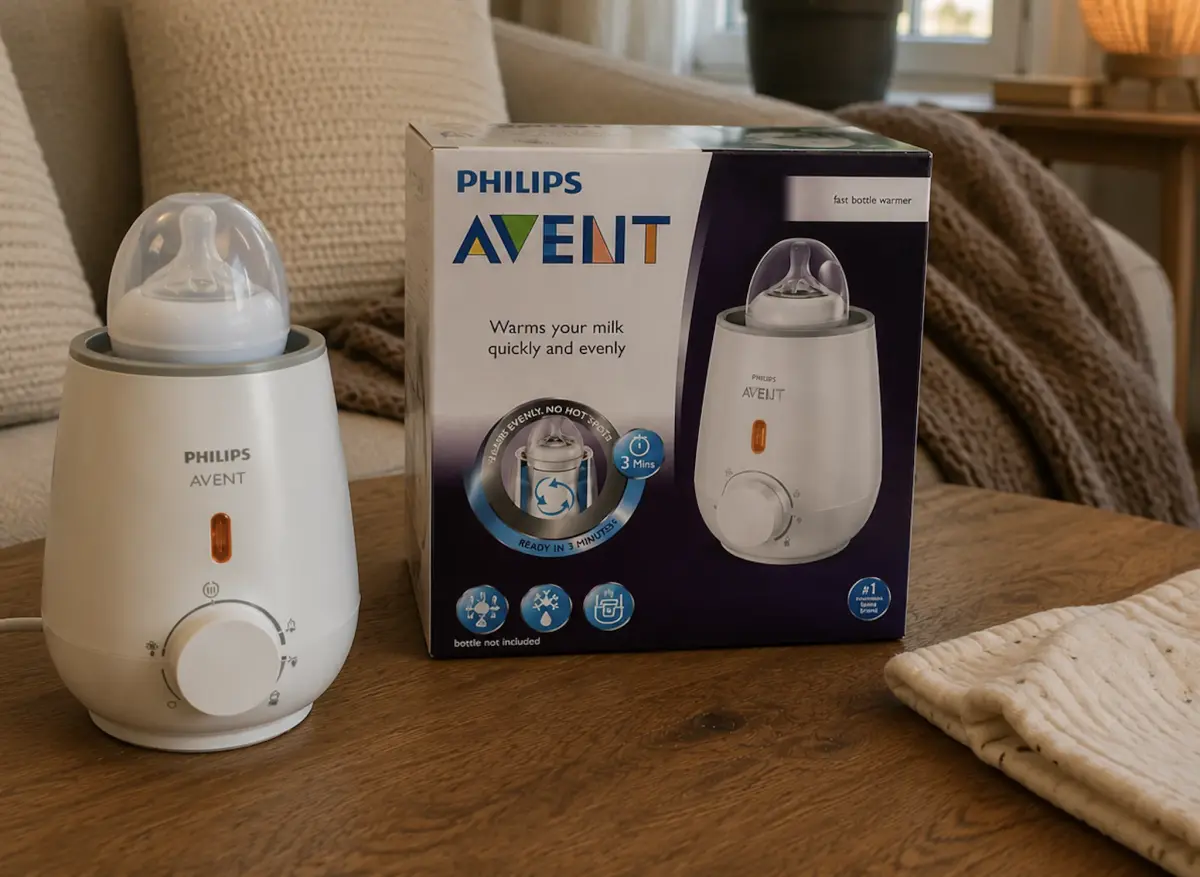
An electric warmer plugs in and stays where you put it. It warms the bottle in a bath of water or with steam, it can run for as long as it is plugged in, and because it has mains power behind it, makers can bundle in extras: thaw cycles, steam sterilising, keep-warm modes, temperature presets for bottle material and milk volume.
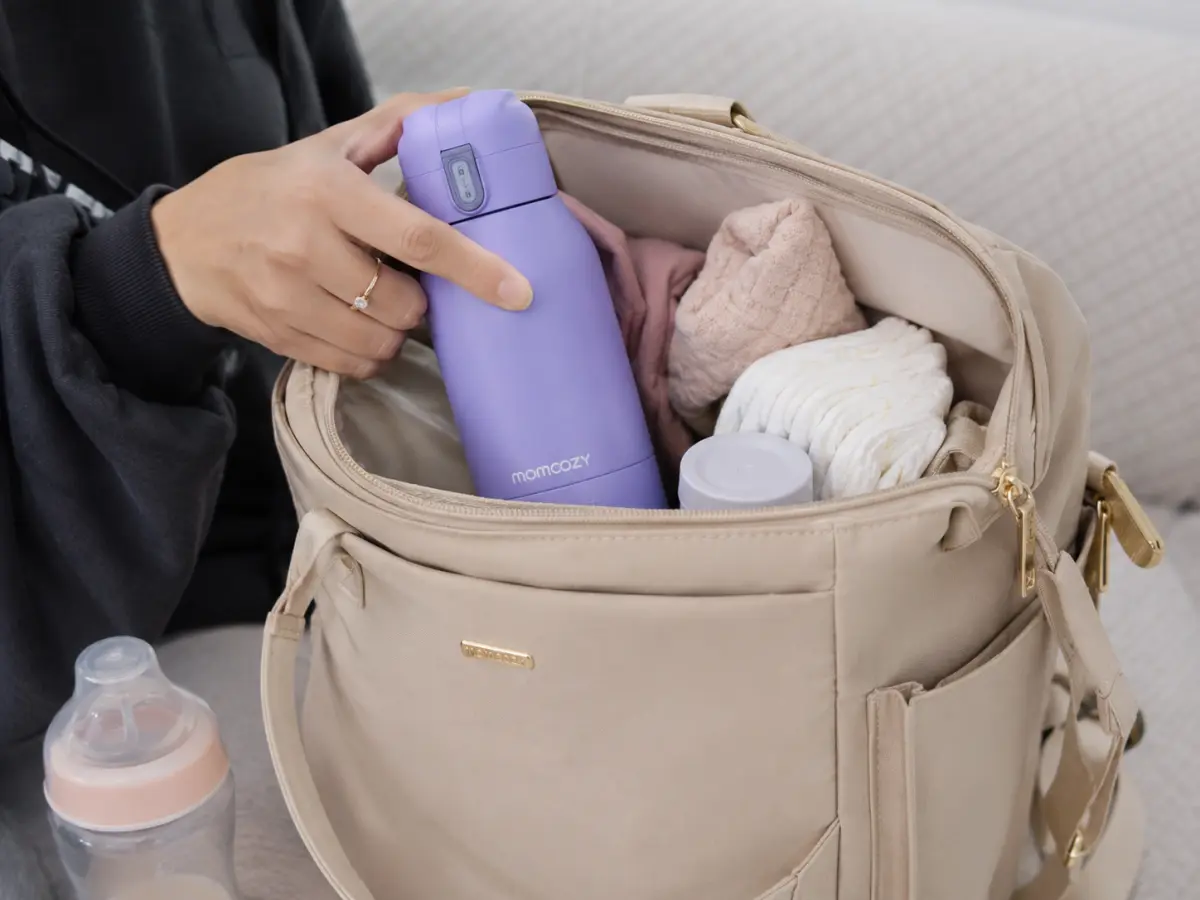
A portable warmer runs on a rechargeable battery and warms the liquid inside its own insulated cup rather than heating a bottle from the outside. That design choice is why it works in a car, and it is also the source of every limit it has.
| Electric countertop | Cordless portable | |
|---|---|---|
| Power | Mains, unlimited run time | Battery, a set number of warms |
| Where it works | Wherever there is a socket | Anywhere |
| Capacity | Whatever bottle fits the chamber | 9oz to 17oz across our two |
| Speed in our use | 3 to 4 min on our fast one, 8 to 10 on our gentle one | Rated 3 min for 8oz on one, 10 to 15 min for a 10oz bottle on the other |
| Extras | Thaw, sterilise, keep warm, presets | Temperature settings, and that is mostly it |
| What it asks of you | Counter space | Charging it the night before |
Speed is not the dividing line
The instinct is that the plug-in one must be faster, and our own gear says otherwise. Our Baby Brezza portable is rated at three minutes for 8oz from room temperature. Our Kiinde Kozii, which plugs into a wall, takes eight to ten minutes on a fridge-cold 5oz bottle because it is deliberately gentle.
So a cordless warmer can beat a countertop one outright, and the reason has nothing to do with the cord. Volume, starting temperature and the warming method decide the number, which is the argument we make at length in how long a bottle warmer takes.
What the cord does buy is endurance rather than speed. A countertop warmer will do the fourth bottle of the night exactly as it did the first. A portable is counting down: ours gives about three comfortable warms per charge on one unit, and the other is rated up to eight 6oz bottles from room temperature, four from cold.
What the countertop warmer does that a portable cannot
Three things, and only one of them is about warming.
Capacity is the first. A countertop chamber takes whatever bottle you own, including the big ones, while our portables cap out at 9oz and 17oz respectively. If your baby takes large bottles, that gap decides the question on its own.
Thawing is the second and the most genuine. Frozen milk is a different task from warming, and our Momcozy countertop warmer does it as its own gradual cycle rather than making you juggle bowls of water. No portable we own attempts it.
The third is everything else a mains machine can afford to include. Our Momcozy sterilises with steam, holds a keep-warm setting, and lets you set milk type, bottle material and volume so it adjusts the cycle. None of that is essential and all of it is impossible on a battery.
What the portable does that a countertop warmer cannot
One thing, and it is a big one: it works where there is no power.
That sounds narrow until you count the places it applies. A car park after an appointment. A plane tray. A beach. A relative’s house where you would rather not colonise their kitchen. In those places the alternative is not a slower warmer, it is no warmer, and a baby who is unimpressed by that distinction.
The secondary advantage is shape. Our Baby Brezza portable is 3 by 3 by 8.3 inches, which fits a cup holder or a bottle pocket, and our Momcozy portable locks shut so it can sit on its side in a bag among the wipes without emptying itself. A countertop warmer does not travel even if you are willing to carry it, because it needs a socket at the other end.
The order we would buy them in
Countertop first, for almost everyone. The bottles that happen at home outnumber the ones that happen out, night feeds are the hardest to improvise, and a mains warmer covers both without you thinking about charge levels.
Add a portable when the days out start to have a bottle in them. That is a genuinely different purchase rather than an upgrade, which is why we do not think of the second one as replacing the first.
Buy only the portable if you are out more than you are in, or if counter space is the constraint that governs your kitchen. It does work as a sole warmer for small volumes, as long as you know the charge arithmetic and accept there is no thaw cycle.
Cleaning splits them too
This is the part that does not appear in any comparison and shows up in week two.
A countertop warmer heats water, which means it builds limescale, which means it needs descaling on a rhythm or it heats slower and less evenly. That is a recurring job rather than a one-off, and it gets faster in hard water areas. The routine we use is in how to clean a bottle warmer.
A portable has the opposite problem. The milk goes directly into the cup, so it needs rinsing every single time rather than descaling occasionally, and part count is what decides whether that is a chore. Ours is four pieces, the thermos, the lid and two silicone seals, which keeps the after-outing rinse in travel mug territory.
Neither is worse. It is daily and small against occasional and bigger, and knowing which one suits your patience is worth more than another minute of rated warming speed.
The charge arithmetic nobody does before buying
Rated warm counts assume the friendliest conditions, which usually means small volumes starting at room temperature. Our own use bears that out: one of ours gives about three comfortable warms per charge rather than the higher figure on the listing, and it takes about an hour and a half to come back up.
Halve the rated number in your head, then ask whether the result covers your longest normal day. If it does not, you are looking at either the bigger capacity unit or a charge partway through, and a warmer you have to nurse is one you stop carrying.
What each one costs you beyond the price
A countertop warmer costs counter space, permanently, in a kitchen that is already losing ground to sterilisers and bottle racks. That is a real price in a small flat and it is the reason some families skip the category altogether and use a jug of warm water instead, which we argue through in bottle warmer vs hot water.
A portable costs attention. It has to be charged before you need it, which means remembering the night before, and a flat warmer in a diaper bag is worse than no warmer at all because you planned around it. One is a space you give up once and the other is a small recurring task, and people tend to underestimate the second.
The bottom line
Electric for the kitchen, portable for the bag, and the cord is not what decides speed. The countertop warmer wins on capacity, thawing and never running out. The portable wins the only argument that matters when there is no socket in sight. Most families end up with both, in that order.
If you are choosing a countertop one, ours are in the best baby bottle warmers. If it is the travel one, the two we carry are compared in the best portable bottle warmer and head to head in Momcozy vs Baby Brezza.
Frequently asked questions
What is the difference between a portable and an electric bottle warmer?
An electric warmer plugs into the wall and lives on a counter, warming the bottle in a bath of water or with steam. A portable one runs on a rechargeable battery and warms the milk inside its own insulated cup, so it works in a car, on a plane or at a park. The real difference is not power, it is that one is a fixture and the other is luggage.
Are portable bottle warmers as good as electric ones?
For their own job, yes, and the gap has closed more than we expected. Our Baby Brezza portable is rated at 3 minutes for 8oz from room temperature, which is quicker than one of our countertop warmers. What a portable gives up is capacity, unlimited run time and a thaw cycle, and what it gains is working somewhere there is no socket.
Do you need both a portable and an electric bottle warmer?
Most families who buy a portable already own a countertop one, and that is the order we would suggest. The countertop warmer handles the several bottles a day that happen at home, including night feeds. The portable handles the days out, which for most people are less frequent but harder to improvise around. Buying only the portable works if you are genuinely out more than you are in.
Is a portable bottle warmer slower than a plug-in one?
Not automatically, and the assumption trips people up. Our Baby Brezza portable is rated at about 3 minutes for 8oz, while our gentle countertop warmer takes 8 to 10 minutes on a fridge-cold 5oz bottle. Volume and the design of the warmer matter more than whether it has a cord. What a portable cannot do is keep going all day, since it is working from a battery.
Can a portable bottle warmer replace a countertop one?
It can if your feeding pattern is small volumes and few bottles, and it usually cannot otherwise. The limits are capacity, the number of warms you get from a charge, and the absence of the extras a countertop machine bundles in, like steam sterilising or a proper thaw cycle. We treat ours as travel gear rather than a substitute.