Glass vs. Plastic Baby Bottles: Which Is Better?
This post contains affiliate links. If you buy through them, we may earn a small commission at no extra cost to you.Learn more.
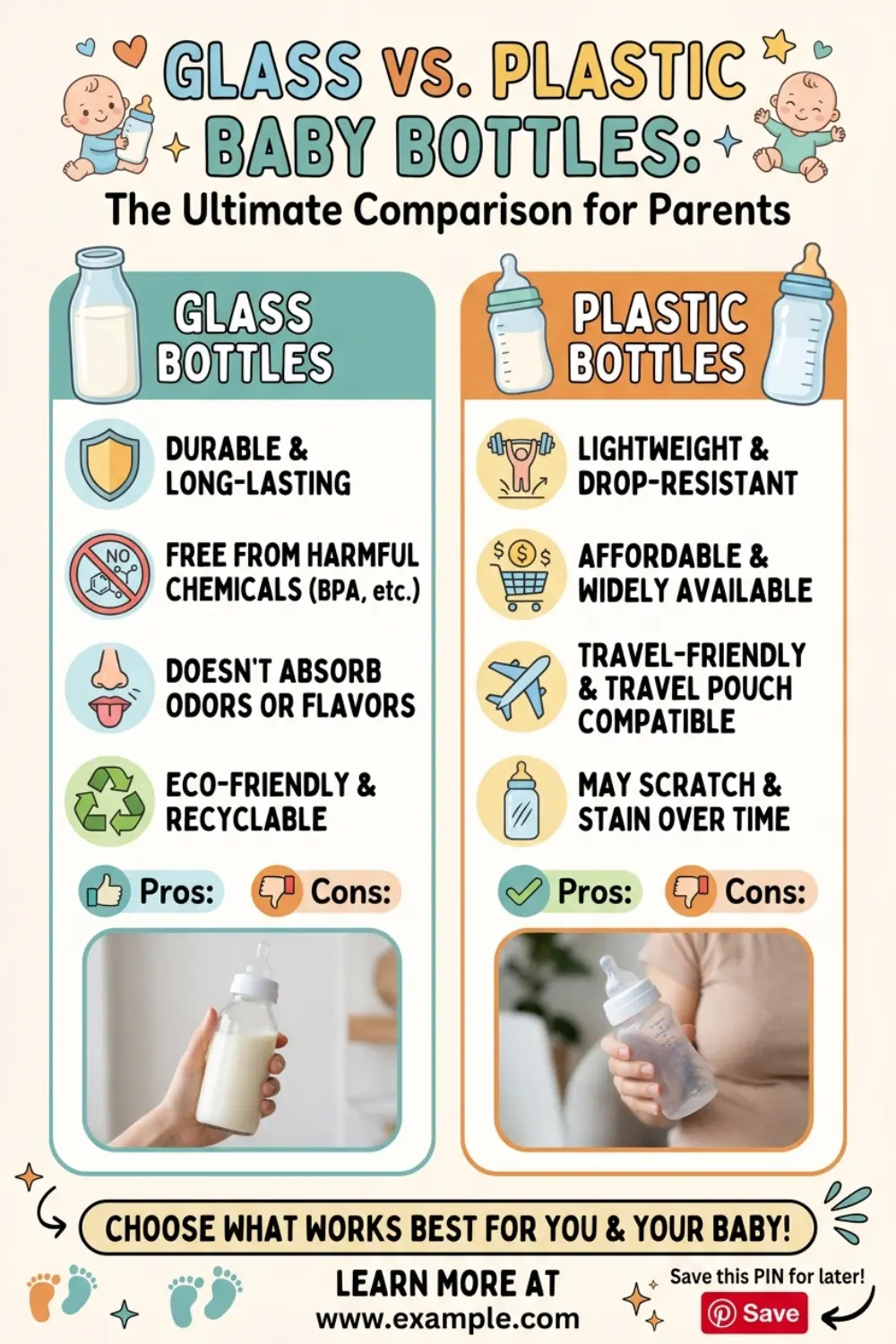
Glass vs plastic baby bottles comes down to this: glass is the bottle you want at home, and plastic is the bottle you want everywhere else. Glass does not stain, does not hold a milk smell and does not scuff, and it survives daily sterilizing for years. Plastic is lighter, costs less to replace, and does not shatter on the floor of a car park. Neither is simply better, and after two years of feeding we did not pick a side. We just worked out which bottle belongs in which room.
One honest note first. We own four glass bottles and one plastic one, so the glass side of this comes from more use than the plastic side. And anything touching health, from what plastics do in the body to how you prepare and store a feed, is a question for your pediatrician and the AAP rather than a gear review. What follows is what each material is like to fill, feed with and wash several times a day.
The quick answer: who each one is for
Buy glass if the bottles will mostly live in your kitchen, you plan to sterilize daily, and you would rather buy one set that lasts than replace a set every few months. It is also the easier choice if smells and stains bother you, because they simply never start.
Buy plastic if the bottles are going in a diaper bag, if a hard floor is a daily reality, or if you want a bottle design that glass cannot physically do. That last one is a real category and it is the reason our one plastic bottle exists.
Most people who try both end up owning both, and that is not a failure to decide. It is the actual answer.
Glass and plastic, side by side
| Glass | Plastic | |
|---|---|---|
| Stains and smells | Never starts | Gradually picks up both |
| Surface after a year | Still clear and smooth | Scuffed, sometimes cloudy |
| Weight | Heavier, noticeable once she holds it | Light enough for small hands |
| If dropped | Can break, and a chipped bottle is done | Bounces |
| Sterilizing | Takes years of daily heat cycles | Degrades gradually |
| Cost | More up front, longer life | Less up front, shorter life |
| Where it wins | The kitchen counter | The diaper bag |
What glass actually buys you
The case for glass is boring, which is exactly why it is easy to underrate in the shop and obvious by month six.
It does not pick up a milk smell. It does not stain from formula. It does not go cloudy in the dishwasher. And it does not scuff, which matters more than the other three put together, because every scuff inside a plastic bottle is somewhere residue can sit that a brush does not properly reach. A glass bottle that looks clean is clean, and there is a quiet relief in that at eleven at night.
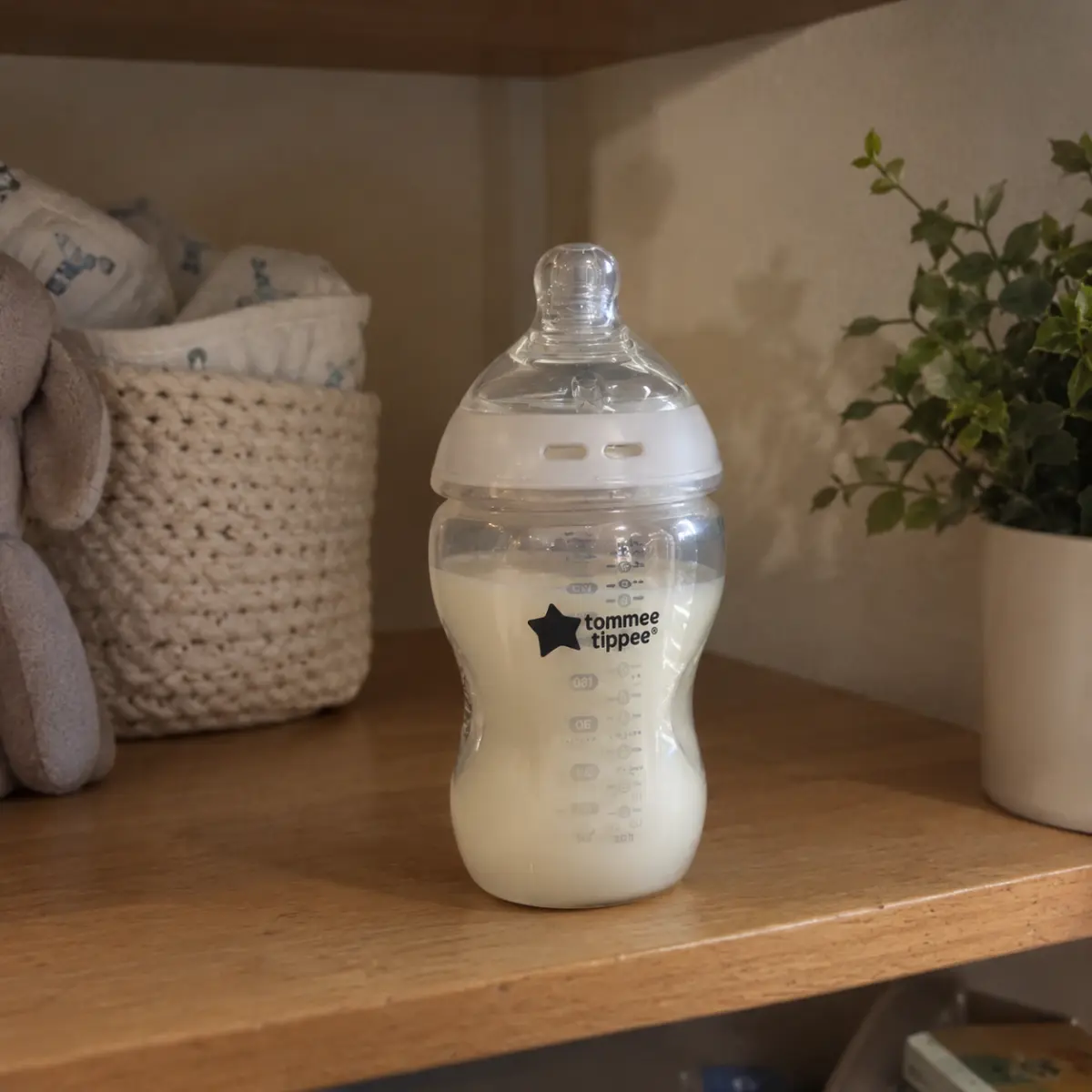
The bottles we use are borosilicate or medical-grade glass, the same family used in cookware and labs, which is what lets them take steam, boiling and UV sterilizing repeatedly without degrading. The cheapest way into glass we have found is the Tommee Tippee Natural Start, whose lids also turn the same body into fridge storage. Plastic does not fail at that, it just ages through it. A glass set can genuinely outlast more than one baby, and the maths on cost looks different once you think in those terms.
What glass costs you
Three things, and they are not small.
It is heavier. That is fine while you are holding the bottle and becomes a live question the week your baby starts holding it herself, which is also the week she discovers what happens when she lets go.
It breaks. Borosilicate handles heat well and it still breaks on tile. A bottle with a chip or a crack in it goes in the bin rather than back in the rotation, and that is not a judgment call you want to be making at speed. Silicone sleeves are sold for most glass lines and are worth having, both for grip and for containing a break if one happens. A glass bottle line that does not offer one is a line you will outgrow early.
It costs more. This is the reason most people who wanted glass ended up with plastic, and it is worth shopping around on, because the price range across glass bottles is wider than you would expect for what is essentially the same material.
What plastic buys you
The obvious answers are weight and price, and they are both real. The more interesting answer is that plastic lets a bottle be shapes and mechanisms that glass cannot be.
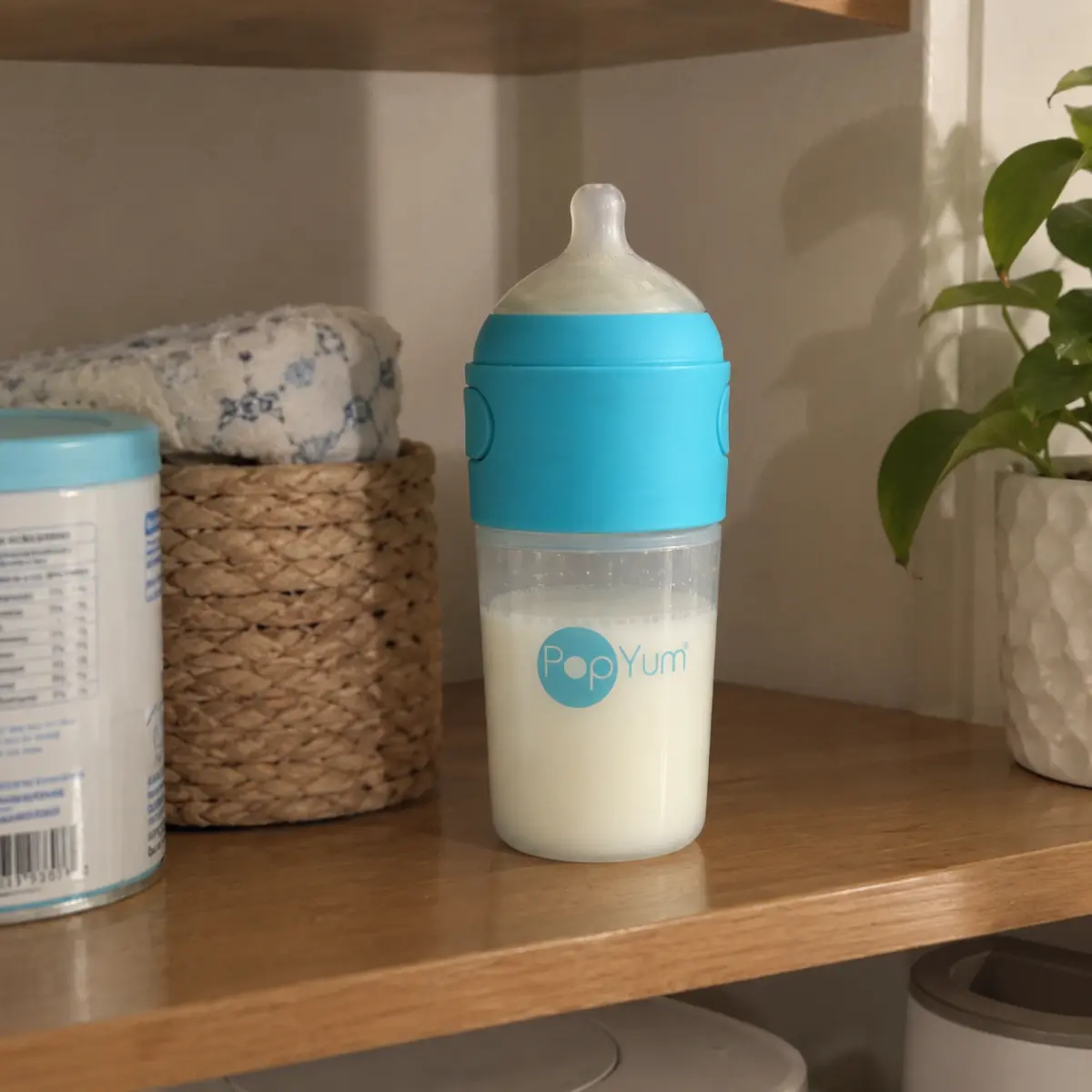
Past the newborn weeks, our one plastic bottle is a PopYum, which holds formula powder in a sealed chamber and water in the bottle, separately, until you press two buttons and shake. That is a moving mechanism in the wall of a bottle. You are not making that out of borosilicate. We bought it for exactly one situation, making up a feed one-handed somewhere that is not a kitchen, and it does that job in a way no glass bottle can.
The other thing plastic buys you is not caring. A plastic bottle in a diaper bag is a bottle you can be careless with, and being able to be careless with something is worth more on a day out than any material property.
What plastic costs you
It ages, visibly. Scuffs, then cloudiness, then in some cases a faint smell that survives the dishwasher. None of that happens in the first month, which is why nobody warns you about it, and all of it has happened by the time you are considering a second baby.
You are also realistically buying for one child. A plastic set does the bottle-feeding stage and then looks its age. Whether that matters depends entirely on whether there is another baby coming.
The BPA question, and the part we will not answer
This is the first thing most people think of, so it is worth being precise about what is actually known rather than vague about it.
Baby bottles sold in the US are not made with BPA. The FDA stopped providing for BPA-based polycarbonate resins in baby bottles and sippy cups in July 2012, after manufacturers had already abandoned the material. Today’s plastic bottles are typically polypropylene with silicone nipples, and the brands we own list themselves as free of BPA, BPS, phthalates, PVC and latex. Those are the makers’ own specifications rather than our testing.
What we are not going to do is tell you what that means for your baby. Whether plastics belong near a feed at all, what heat does to them, and what any of the ongoing research amounts to are health questions, and health questions belong with your pediatrician and the AAP rather than with two parents reviewing gear. We chose glass for the kitchen because of cleaning and longevity, which is a claim we can actually stand behind.
Cleaning and sterilizing, the difference you feel daily
Glass wins the cleaning comparison, but not by as much as the number of parts does.
Both materials go in the dishwasher, glass usually anywhere and plastic on the top rack. Glass does not stain, smell or scuff, so it stays properly clean rather than looking it. Plastic gradually stops doing that, and eventually that becomes a replacement question rather than a cleaning one. The CDC’s actual washing protocol, and which parts cause the most trouble, are in how to clean baby bottles properly.
But the thing that actually decides how long you spend at the sink is how many pieces the bottle comes apart into, and that has nothing to do with the material. A four-part glass bottle and a four-part plastic bottle are the same evening. A five-part plastic bottle with a vent insert is worse than either, and a three-part glass bottle is better than both. If cleaning time is what you are optimizing for, count the parts before you weigh the glass.
The same goes for whether it fits your warmer, which is decided by neck width rather than material. We go through that properly in how to choose a baby bottle warmer.
Cost, and the way to think about it
Glass costs more at the checkout and less per year. Plastic costs less at the checkout and gets replaced. That is the whole trade, and which side of it you want depends on something you may not know yet, which is whether there is another baby after this one.
There is one thing we would say plainly. Do not buy six of anything before your baby has fed from one. Every bottle ships a different nipple shape, the nipple is the part she has an opinion about, and it is the part you cannot return once the packet is open. Buy one or two, find out, then commit. That advice costs nothing and it is the mistake we see most often.
Where we actually landed
Glass at home, plastic in the bag. Four glass bottles on the counter where the dishwasher and the sterilizer are, and one plastic bottle in the diaper bag for the feeds that happen somewhere with a hard floor and no kitchen.
If you want one material only, buy glass and accept that some feeds away from home will be more awkward than they need to be. If you want to know which specific bottles we mean, the glass ones we feed with are ranked in best glass bottles for breastfed babies, and the mixed glass and plastic lineup we use for formula is in best baby bottles for formula feeding. For where bottles sit against everything else you are being told to buy, our realistic baby registry checklist has the short list of what earns its place.
Frequently asked questions
Are glass or plastic baby bottles better?
Neither is simply better, and we own both for different jobs. Glass does not stain, does not hold a milk smell, does not go cloudy and does not scratch, and it takes daily sterilizing for years, so it is the better bottle at home. Plastic is lighter, cheaper to replace and does not break on a tile floor or in a car park, so it is the better bottle in the diaper bag. Most households that try both end up splitting them the same way we did.
Are plastic baby bottles safe?
Bottles sold in the US today are not made with BPA. The FDA stopped providing for BPA-based polycarbonate in baby bottles and sippy cups in July 2012, after the industry had already abandoned it, and current bottles are typically polypropylene or silicone instead. Whether that settles every question about plastics is a health conversation for your pediatrician and the AAP, not for a gear review. What we can tell you is the mechanical part: plastic scuffs with use, and a scuff is somewhere residue can sit that a brush does not properly reach.
Do glass baby bottles break easily?
The glass bottles we use are borosilicate or medical-grade glass, the same family used in cookware and labs, which handles sudden temperature change far better than ordinary glass. It is still glass. It can break on a tile floor, and a bottle with a chip or a crack in it goes in the bin rather than back in the rotation. Silicone sleeves are sold for most glass bottle lines and help with grip and with containing a break if one goes down.
Are glass bottles harder to clean than plastic?
The opposite, in our experience. Both go in the dishwasher, but glass does not stain from formula, does not hold a smell and does not scuff, so a glass bottle that looks clean is clean. Plastic gradually picks up all three, and every scuff inside it is somewhere residue can sit. The thing that actually decides cleaning time is not the material at all, it is how many parts the bottle has.
Are glass baby bottles too heavy for a baby to hold?
They are heavier, and it becomes a real consideration around the time a baby starts holding her own bottle. It is also the point at which the bottle starts getting dropped. That combination is most of why we keep plastic in the diaper bag and why silicone sleeves exist. Whether your baby can manage the weight is something you will see for yourself well before it matters.
Which lasts longer, glass or plastic?
Glass, comfortably. It takes repeated steam and boiling sterilizing for years without clouding or degrading the way plastic gradually does, so a glass set can outlast more than one baby. Plastic bottles are cheaper up front and are realistically bought for one baby's bottle-feeding stage. The exception is a plastic bottle you bought for a specific job, like one-handed mixing away from home, where the design is the reason you own it rather than the material.
Should you buy glass or plastic bottles for a registry?
Put glass on the registry and buy the plastic yourself. Glass is the more expensive set and the one people are happy to gift, and it is the one that lasts long enough to be worth gifting. The plastic bottle you end up wanting is usually a specific one solving a specific problem you have not met yet, which is not something a registry guesses well.