How to choose a baby bottle warmer
This post contains affiliate links. If you buy through them, we may earn a small commission at no extra cost to you.Learn more.
Learning how to choose a baby bottle warmer is mostly one decision made well: the warming method. Get that right and the rest, the fit, the speed, the shut-off, falls into place around it. We have warmed hundreds of bottles across a few different warmers, at home and in a car, so this is the checklist we would run before buying, in the order it actually matters day to day.
One honest note first. We cover the gear here. How to store, thaw and warm your baby’s milk safely is a question for the CDC and your pediatrician, not a blog, and we link their guidance where it touches the choice. What we can tell you is what to check on the warmer itself, because we have lived with the results of getting it right and wrong.
Start with the warming method
This is the choice that shapes everything else, the way material does on a caddy or a car seat. There are two common approaches, and they feel different in real use.
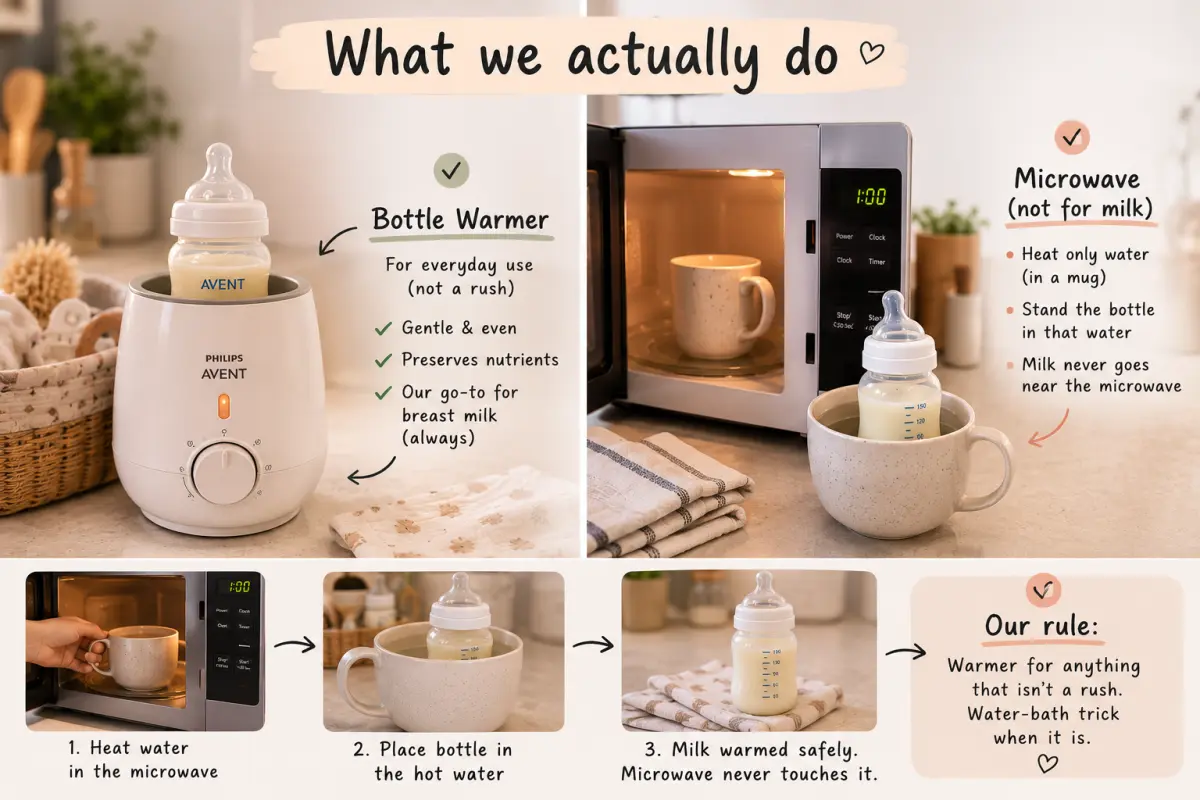
A warm-water bath sits the bottle in heated water and brings it up gently and evenly. It is slower, and it is the one parents feeding breast milk tend to reach for, because even heating is easier on the milk. A rapid steam warmer heats faster by surrounding the bottle with hot steam. It is quick, which is its whole appeal at 3 a.m., but it can heat unevenly if you wander off and leave it running past the beep.
Neither is simply better. The water bath trades speed for gentleness, the steam warmer trades gentleness for speed, and which trade suits you depends on what is in the bottle and how patient you are on no sleep.
Worth knowing that speed and gentleness also vary a lot inside the water-bath category, so the choice is not simply bath or steam. Both warmers we own are water baths, and they still sit at opposite ends of that trade: we put them side by side in Philips Avent vs. Kiinde Kozii, where the Avent is the fast one and the Kozii is the gentle one. If you want the gentleness of a bath without the wait, that comparison is the more useful one to read.
Make sure it fits your bottles and bags
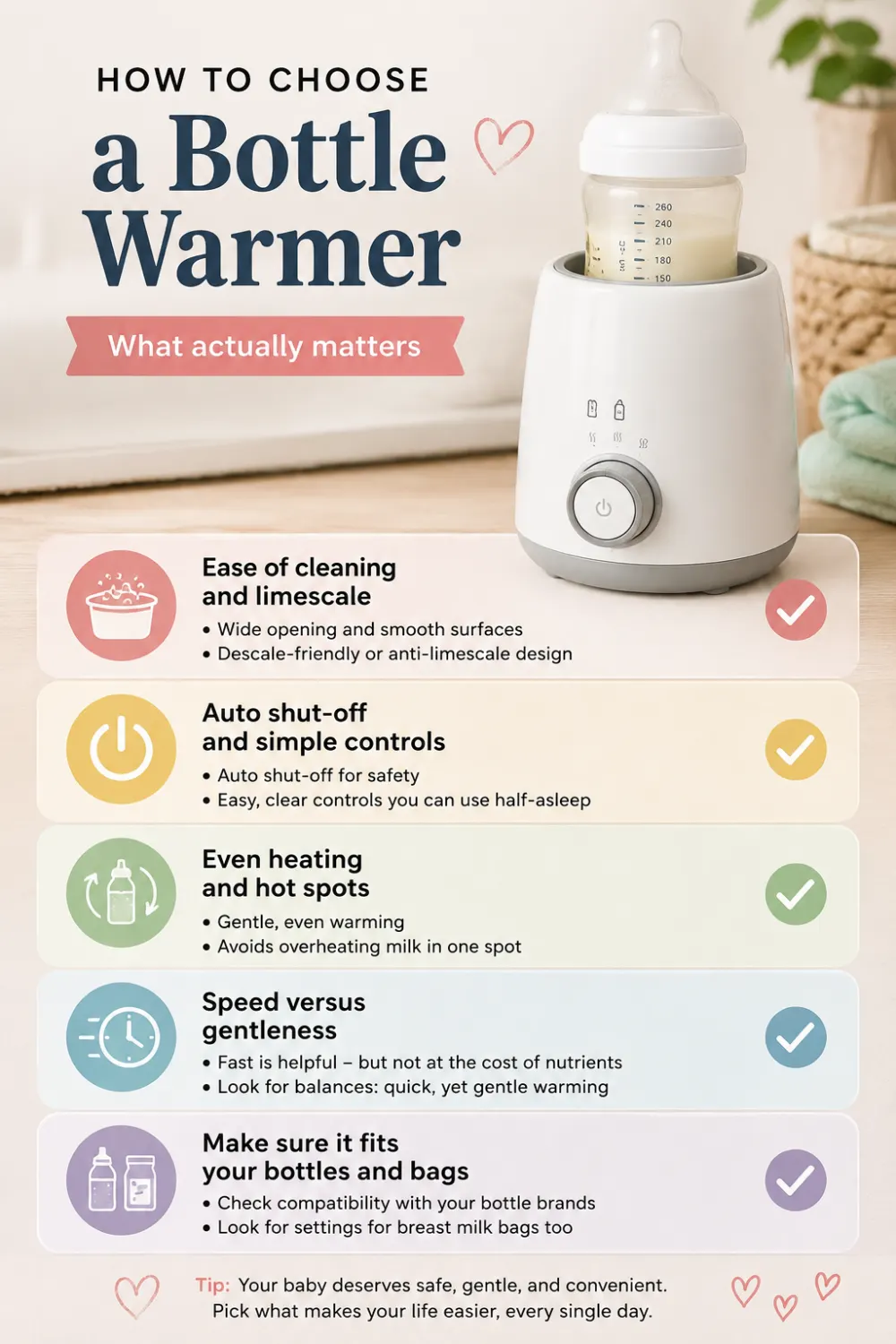
Here is the check most buying advice skips, and the one that causes the most returns: a warmer has to physically fit the bottles you own. Wide bottles, tall bottles and slim ones do not all drop into the same chamber, and some warmers are built around one brand’s system. Measure your bottle against the warmer’s chamber, or check the listing for your bottle brand by name, before you spend anything.
Bottle material is part of this check too. A wide-neck glass bottle is a different shape and a different weight from the plastic one a warmer was probably designed around, so if you feed with glass, look for a warmer that names it. The Philips Avent Natural Response glass bottle we use is a wide-neck design, and wide is the dimension that catches people out. All three of the glass bottles we feed with are wide neck, which was not an accident. The warmers we would pick for glass, ranked, are in the best bottle warmer for glass bottles.
If you store breast milk in bags rather than bottles, this matters even more, because many warmers take bottles only. A few are designed to warm bags as well, and if that is how you feed, that feature moves from nice-to-have to non-negotiable. Buying a warmer your milk does not fit is the single most avoidable mistake here, and it happens constantly.
Speed versus gentleness, and which you need
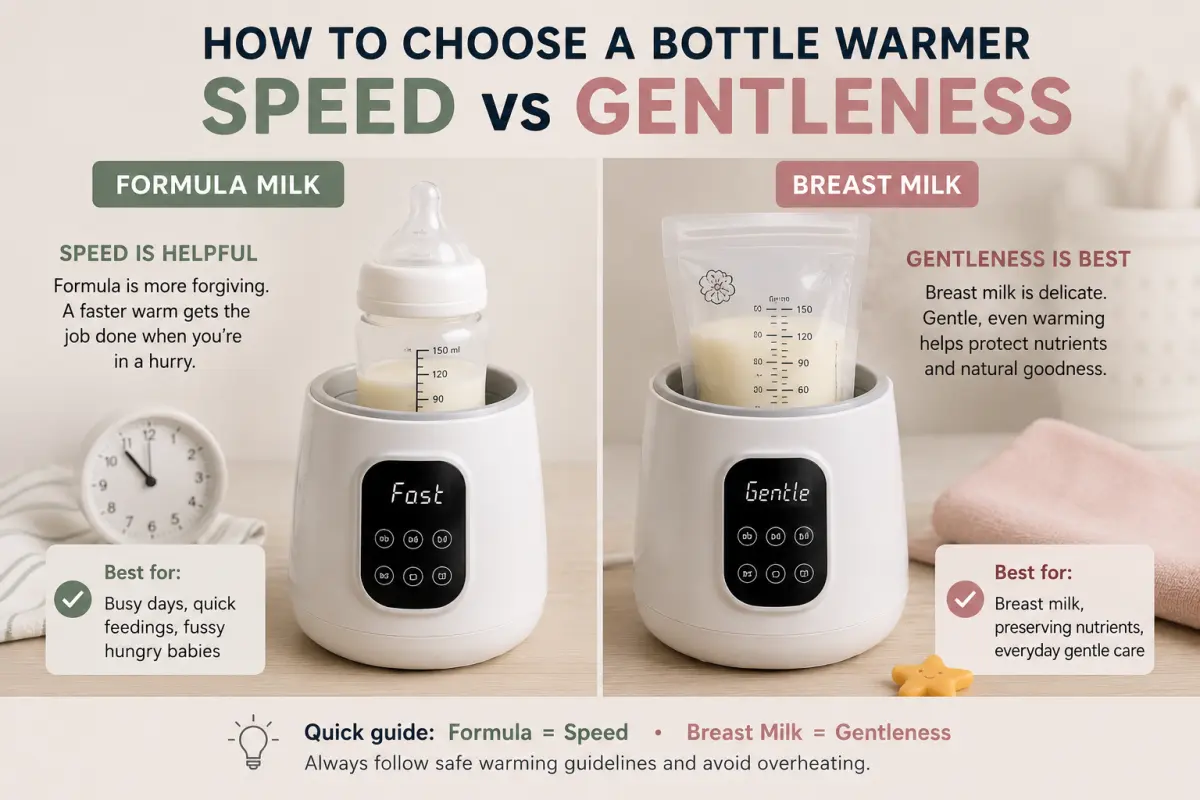
Once the method and fit are sorted, be honest about the trade you actually want. A screaming newborn at 2 a.m. makes speed feel like the only thing that matters, and a fast warmer really does take the edge off those minutes. But faster warming is also where uneven hot spots creep in, so speed is not free.
For formula, a quicker warmer is usually fine as long as you stay with it and give the bottle a swirl. For breast milk, most parents lean toward the gentler, more even water bath and accept the extra minute. Work out which side of that line you sit on before you shop, because it points you straight at a type of warmer rather than leaving you comparing thirty of them. For what the trade costs in real minutes, we published our own stopwatch times in how long a bottle warmer takes, where the same cold bottle runs four times longer in the gentle warmer than the fast one.
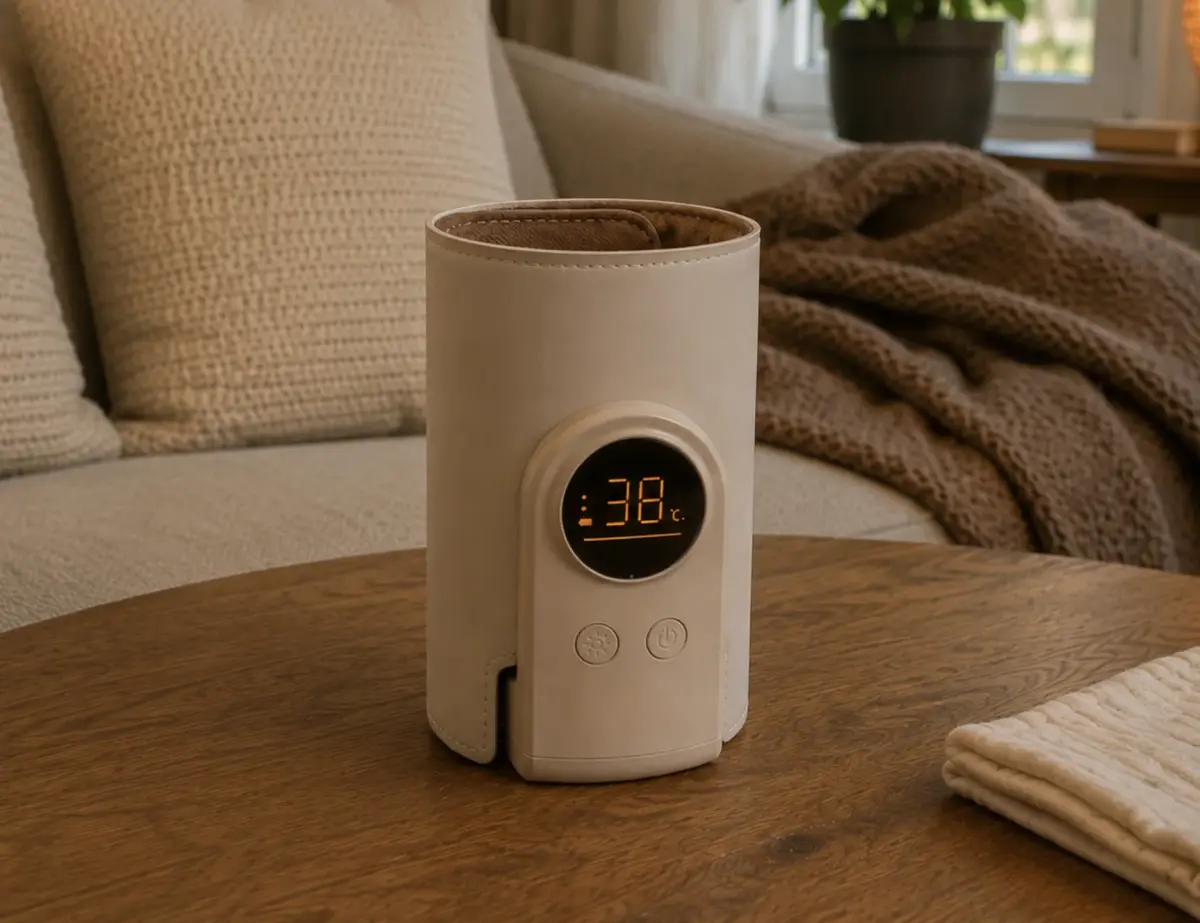
If the warmer you need has to work away from an outlet, that is a different shortlist again, and we compare the two cordless ones we carry in the best portable bottle warmer for travel.
Even heating and hot spots
Even heating is a real feature to look for, not a nicety, because a bottle that comes out hot in one spot and cool in another has to be swirled and tested every time. Warmers that heat with a water bath tend to be more even by nature, while fast steam models are the ones most likely to leave a hot patch if you overshoot the time.
Where we stop is the safety of it. Whether milk is at a safe temperature, and how to handle and warm it, are the CDC’s job and your pediatrician’s, not ours. The CDC is clear that you should never microwave a baby’s milk, and we walk through why in that article, but for the actual how-to of safe warming, follow them and the manual that ships with your warmer rather than a blog.
Auto shut-off and simple controls
The controls are where a warmer is either a relief or a small nightly fight. An auto shut-off is the one we would not give up: it stops the warmer on its own instead of leaving it sitting hot, which matters most in the night feeds when you are least likely to stand over it. What each of ours does when you walk away is in can you leave a bottle in a bottle warmer. It is also worth checking what a shut-off switches off: on our Tommee Tippee Easiwarm, the timer stops by itself but the water keeps heating until you turn the dial off. Alongside it, simple controls beat clever ones. A dial or a couple of clear buttons you can work half asleep is worth more than a screen full of modes.
Be wary of app-connected warmers and long menus of programs. In real use you warm a bottle to roughly the same point every time, so the extra settings mostly go unused while adding parts that can fail. Even-heating and a reliable shut-off are the two features that earn their place.
Ease of cleaning and limescale
Anything that heats water builds up limescale over time, and that is the maintenance job people do not see coming. Look for a warmer with a smooth, wipe-clean chamber and check whether the manual gives a simple descaling routine, usually a rinse with water and a little vinegar every so often. A warmer caked in scale heats slower and less evenly, so cleaning is not just tidiness, it keeps the thing working the way you bought it to. We wrote the routine out step by step in how to clean a bottle warmer, including the vinegar descale and the things that will wreck a warmer.
Fewer crevices help here too. A simple chamber with no fiddly inner basket to scrub is one less place for water residue and milk drips to collect. Match the cleaning effort to how much patience you will realistically have on a bad week, which is to say, not much. If you live somewhere with hard water, expect to descale more often than the manual suggests, because scale builds faster there, and factor that into whether you want a water-bath warmer at all.
Do you need portable, or a warmer at all
Two honest questions before you buy anything. First, portability: a plug-in warmer stays on the counter, so if you want to warm a bottle in the car or at a relative’s house, that is a different tool, a travel or USB warmer, rather than something a big countertop model does well. We use a small portable one only for trips, as a second warmer, not a main one.
The two categories are genuinely different purchases rather than better and worse versions of one, and we set them against each other in portable vs electric bottle warmer.
Second, and more honest still: you may not need a warmer at all. Plenty of babies take milk at room temperature or cool, and a jug of warm water does the job for the rest. We lay out when a warmer earns its place and when it does not in the best baby bottle warmers we’ve used, and the case for skipping one entirely sits in baby items you don’t need. Buy the warmer if it fits how you feed, not because a registry list told you to.
What we’d skip
The warmer-and-sterilizer combo units, which usually do both jobs adequately and neither one well, and take up the counter of two appliances. The one exception we have found is the Momcozy, which earned its place in our Momcozy bottle warmer review, so judge any combo on whether the warming still holds up on its own. The app-connected models, for the reasons above. And any warmer that only fits one narrow range of bottles unless you already own exactly those bottles. Every extra mode is one more part that can break or trap residue, and the simplest warmer that fits your milk is almost always the one you will still be using in a year.
The bottom line
Choose your bottle warmer by method first: a gentle water bath if you feed breast milk or want even heating, a fast steam warmer if speed wins and you will stay with it. Then check it fits your bottles and bags, has an auto shut-off and simple controls, and wipes clean without a limescale fight. Treat portability as a separate travel decision, and be willing to skip a warmer entirely if a jug of warm water already works for you.
When you are ready to pick a specific one, we have warmed hundreds of bottles with the warmers we actually use, and if you are torn between the two best-known models, Avent vs. Kozii settles it. Still building the feeding corner? The registry checklist has the short list of what earns its place.
Frequently asked questions
How do I choose a baby bottle warmer?
Start with the warming method, because it decides the rest: a gentle water bath heats evenly and suits breast milk, while a fast steam warmer is quicker but can heat unevenly if you walk away. Then check it actually fits your bottles and any milk-storage bags, has an auto shut-off for night use, and wipes clean without a limescale battle. Match speed against gentleness for how you feed, and skip the app-connected extras.
What type of bottle warmer is best?
There is no single best, there is best for how you feed. A warm-water-bath warmer heats gently and evenly, which parents feeding breast milk tend to prefer. A rapid steam warmer is faster and fine for formula if you stay with it. The best one for you is the method that matches your milk and your patience at 3 a.m., in a size that fits your bottles.
Do bottle warmers fit all bottles?
No, and this is the check people skip. Wide bottles, tall bottles and milk-storage bags do not fit every warmer, so measure your bottle against the warmer's chamber before you buy. Some warmers are built around one brand's system. If you use bagged breast milk, look specifically for a warmer that takes bags, since many only take bottles.
Is an auto shut-off worth it on a bottle warmer?
Yes, more than almost any other feature. An auto shut-off means the warmer stops on its own instead of sitting hot, which matters most in the half-asleep night feeds when you are least likely to babysit a machine. Even-heating and shut-off are the two features we would not give up. Follow the CDC and your pediatrician on safe milk handling around it.