Nursery organization ideas that hold up in a real, small-ish nursery
This post contains affiliate links. If you buy through them, we may earn a small commission at no extra cost to you.Learn more.
The nursery organization ideas that actually work are boring ones: give every kind of thing one home, and put the things you reach for most where your hands already are. We’ve tried this in our own small-ish nursery, with caddies, closet dividers, bins and three different diaper pails, and what follows is what stuck. The short version is to organize by zone, not by room. The changing things live in one place, the clothes in another, the small things in a third, and the diaper pail goes where it fits and where you can use it one-handed.
You don’t need all of these at once. Pick the zone that’s the worst mess today and start there.
1. Think in zones, not in furniture
A nursery has four jobs that need storage: changing, clothes, the small things that go missing, and dealing with dirty diapers. Treat each one as its own zone with its own home, and the room stays organized because nothing has to share a space with something it doesn’t belong with.
The zones don’t have to match the furniture. In our house, the changing zone is a caddy that moves around, the clothes zone is the closet, the small things live in a dresser drawer and on the back of a door, and the pail sits where there’s room for it.
2. Make a diaper caddy your changing station
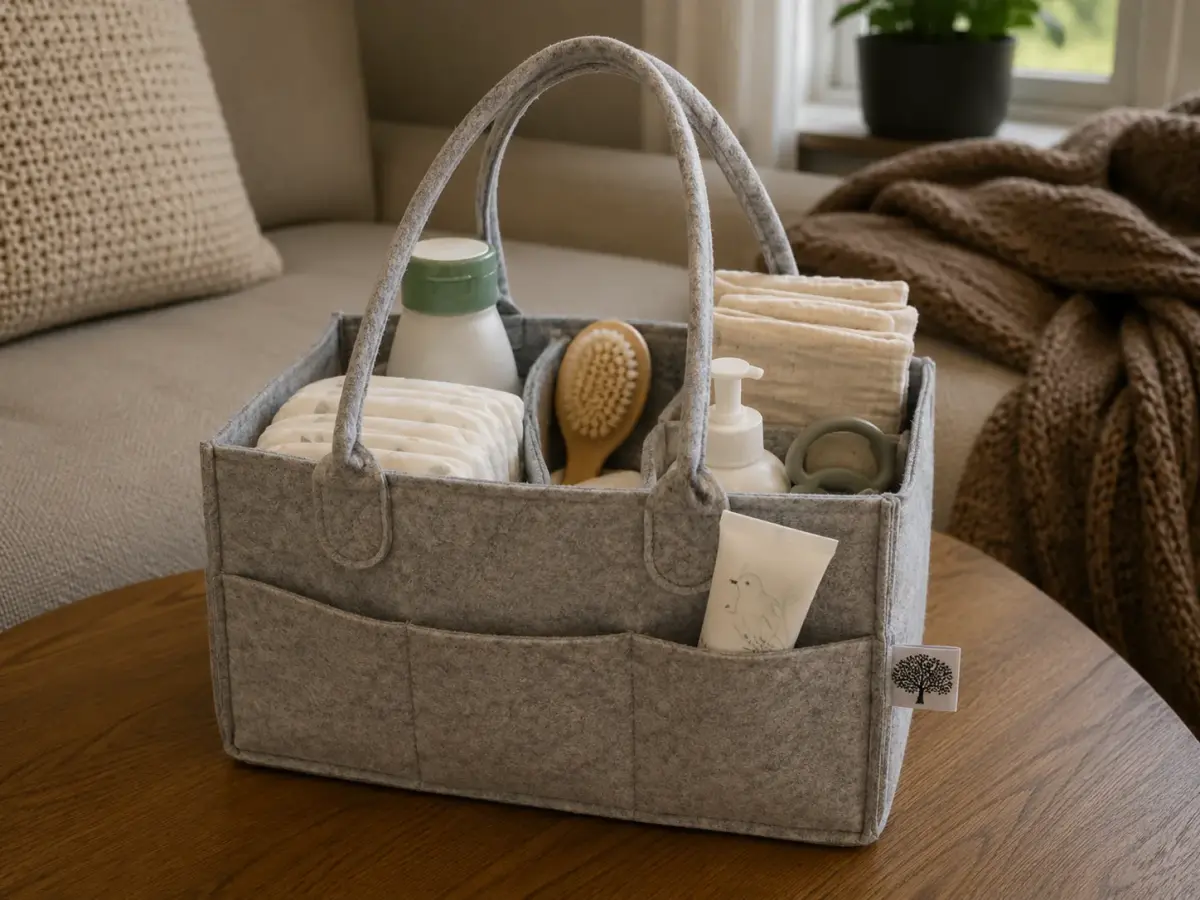
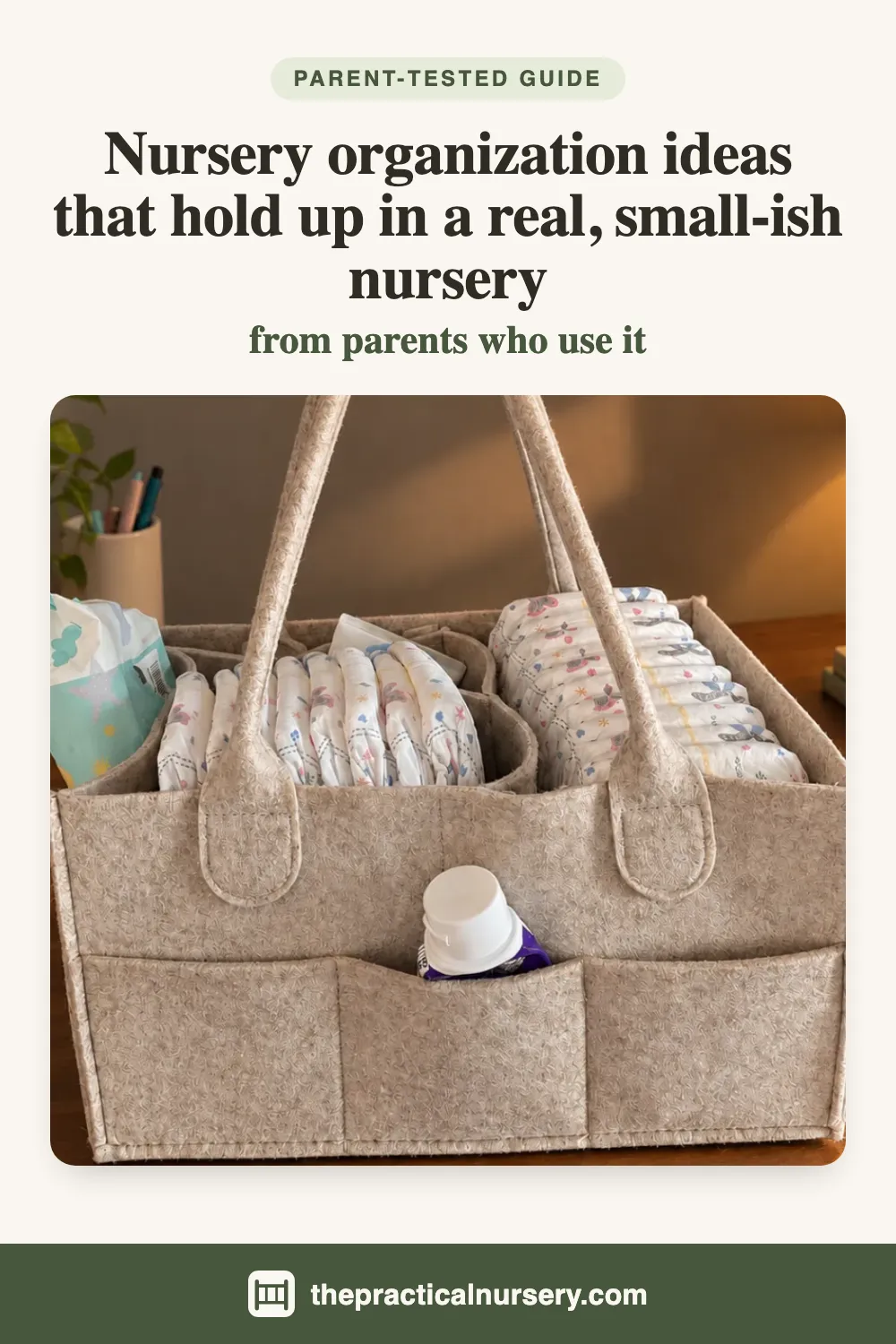
The single most useful thing in our nursery is a well-stocked diaper caddy. Ours is the Parker Baby, and it’s been our main caddy for seven or eight months. We keep its divider in permanently, so the baby’s accessories, the wipes and the diapers each get their own section and nothing gets buried. It holds its shape even when it’s half empty, which matters more than it sounds once you’re reaching into it a dozen times a day.
A caddy beats a fixed changing spot for one reason: it goes where the change happens. A good chunk of our changes happen on the sofa, not in the nursery. If you have a changing table too, think of the table as the shop and the caddy as the trolley: the bulk of the supplies live on the table, and the caddy gets topped up from it most evenings. We compare the two properly in diaper caddy vs changing table, and our caddy picks are in the best diaper caddy, and the Parker on its own is in our Parker Baby diaper caddy review.
3. Zone the caddy, and keep the list short
A caddy only stays organized if everything in it has a section. Diapers in one, wipes in another, and the small things that used to vanish go in the outside pockets. That last change is the one that made the biggest difference to how fast a change goes in our house.
Keep the list short, too. Ours has got shorter every few months rather than longer. We used to keep two spare outfits in there and never needed the second, so now it’s one, rolled, and the drawer handles anything worse. The only thing we swap out regularly is the toy. What earns a spot, and how many of each, is in what to put in a diaper caddy, and how to lay it out, including standing diapers up rather than stacking them flat, is in how to organize a diaper caddy.
4. Use a second caddy for the things you rarely reach for
Not every caddy has to be the everything-caddy. We also own the Blissful Diary caddy, and we like its color and its dividers, but in practice it holds the things we don’t reach for often rather than the daily essentials. That’s a useful job in its own right: it keeps the main caddy short and fast, and the occasional things still have a home instead of piling up on a shelf. A gift caddy we were given, a bohemian rope basket, works best the same way, carrying a handful of things rather than everything.
5. Divide the closet rod by age
The biggest closet complaint is not being able to find the right size quickly. The fix is a set of size dividers on the rod. Ours are a seven-piece wooden set, one for each of newborn, 0-3, 3-6, 6-9, 9-12, 12-18 and 18-24 months. Instead of printed labels, each tab has a carved icon, so you can find the right section at a glance, even at 2 a.m.
Sorting by age range is easier to keep up than sorting by the exact size on each tag, because for the first two years size roughly tracks age. The full step-by-step, from emptying the closet to rotating sizes as your baby grows, is in our guide to how to organize a nursery closet, and the dividers, the over-the-door organizer, the baskets and the drawer organizer below are rated side by side in the best baby closet organizers.

6. Put what you rarely need on the top shelf
The top shelf is the space you reach into least, so it should hold what you need least: out-of-season clothes, the next size up, spare towels, toy overflow. Ours has four storage baskets up there, one for out-of-season clothes, one for towels and two for toys and overflow. Baskets with a frame stay upright when they’re full, where plain fabric bins slump. Keeping the clothes your baby wears now off the top shelf, and on the rod at a glance height, is what makes the rest of the closet work.
7. Use the back of the door
If there’s no shelf or closet space left, the back of a door is storage you’re not using. We hung an over-the-door organizer on the closet door, no tools and no drilling. Its deep front pockets take diaper packs and wipes, and the small mesh side pockets catch the things that always go missing: the thermometer, the nail clippers, the hand sanitizer. It hasn’t sagged or pulled at the door since we hung it. It needs a standard hinged door, so it won’t work on sliding or bifold closet doors.

8. Give small things their own drawer cells
Socks, mittens and hair bows sink to the bottom of a drawer and disappear. A drawer organizer with separate cells stops that. Ours lives in the top dresser drawer, and we pulled a couple of its adjustable dividers to make room for folded onesies. The small stuff has no business taking up rod or shelf space, and giving it cells is the difference between finding a matching pair of socks and not.

9. Pick a diaper pail that fits the room
The pail is the one piece of nursery storage that also has to deal with smell, so size and how you open it matter as much as capacity. We own three, and where each one lives tells you a lot.
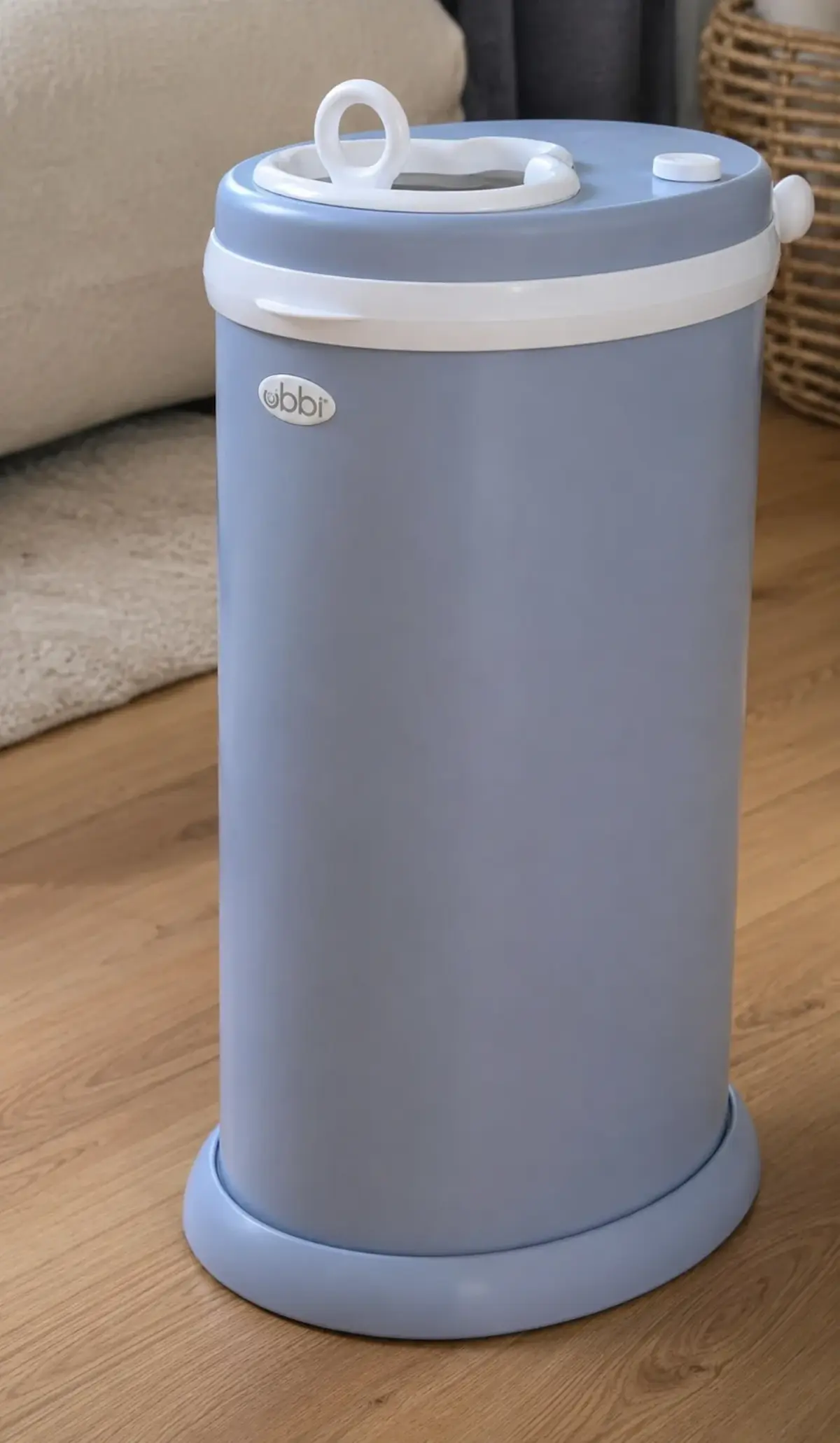
The steel Ubbi is the smallest of the three, and it’s the one that lives in the nursery. It takes the same kitchen bags as everything else in the house, so there are no special refills to store. The Diaper Genie is the biggest, and it lives outside the nursery. The Dekor has a foot pedal, so it opens without putting the baby down, which has turned out to matter more than we expected, and an ordinary bag fits it too. All three are compared in the best diaper pail, each has its own review, the Ubbi, the Diaper Genie and the Dekor, and if you’re still deciding whether you need one at all, start with what is a diaper pail.
10. Keep the refills next to where you change
Whatever pail you use, the bags or refills belong within reach of the change, not in a cupboard in another room. A pail that runs on kitchen bags, like our Ubbi, or that takes an ordinary bag, like our Dekor, makes this easy, because there’s nothing special to stock.
11. Skip the complete storage systems
Matching bundles of a dozen boxes look tidy in photos and usually mean buying storage you won’t use. Nursery closets are small, and you don’t need six kinds of storage before you know which one you’ll use every day. Start with one divider set and one kind of bin, then add only what you run out of space for. Most nursery closets end up using two organizers, not four. The same thinking runs through our realistic registry checklist and baby items you don’t need.
12. Clean on a rhythm, not when it’s bad
Organization falls apart when the things that get dirty stop getting cleaned. A caddy and a pail both need a regular clean, and it’s quicker done often than rescued later. Our routines are in how to clean a diaper caddy and how to clean a diaper pail.
Where to start
Look at the room and pick the worst zone. If changes are chaotic, start with a caddy. If you can never find the right size, start with closet dividers. If there’s nowhere left to put anything, start with the back of the door. If small things keep vanishing, start with a drawer organizer. If the room smells, start with the pail. One zone at a time is how a small nursery gets organized and stays that way.
The bottom line
The nursery organization ideas worth copying all come down to the same rule: one home for each kind of thing, with the things you use most closest to hand. For us that means a stocked diaper caddy with its divider in, a closet rod divided by age, rarely used things on the top shelf, grab-and-go items on the back of the door, small things in drawer cells, and a diaper pail that fits the room. Start with whichever zone is the worst mess, and add the rest only when you need them.
Frequently asked questions
How do you organize a small nursery?
By zone rather than by room. Give the changing things one home, usually a diaper caddy, divide the closet rod by age, put what you rarely need on the top shelf, use the back of the door for grab-and-go items, and give small things like socks their own drawer cells. Then pick a diaper pail that fits the space you have.
What is the most useful nursery organization idea?
For us, a well-stocked diaper caddy with its divider kept in permanently, so diapers, wipes and small accessories each have their own section. Ours is the Parker Baby, which we have used as our main caddy for seven or eight months. It goes wherever the change happens, which matters because a good chunk of ours happen on the sofa.
How do you organize baby clothes in a nursery closet?
Divide the hanging rod by age with size dividers, newborn through 18 to 24 months, so the current size is always the first thing your hand lands on. Keep out-of-season and next-size clothes in bins on the top shelf, and small things like socks and mittens in a drawer organizer rather than on the rod. Our full method is in our guide to organizing a nursery closet.
Where should the diaper pail go in a nursery?
Where it fits and where you can use it with a baby in your arms. Our smallest pail, the steel Ubbi, is the one that lives in the nursery. Our biggest, the Diaper Genie, lives outside it. Our Dekor has a foot pedal, so it opens without putting the baby down.
Do you need a lot of storage products to organize a nursery?
No. Start with one product for whichever zone is the worst mess, then add only what you run out of space for. Most nursery closets end up needing two organizers, not four, and complete matching storage systems usually mean buying things you will not use.